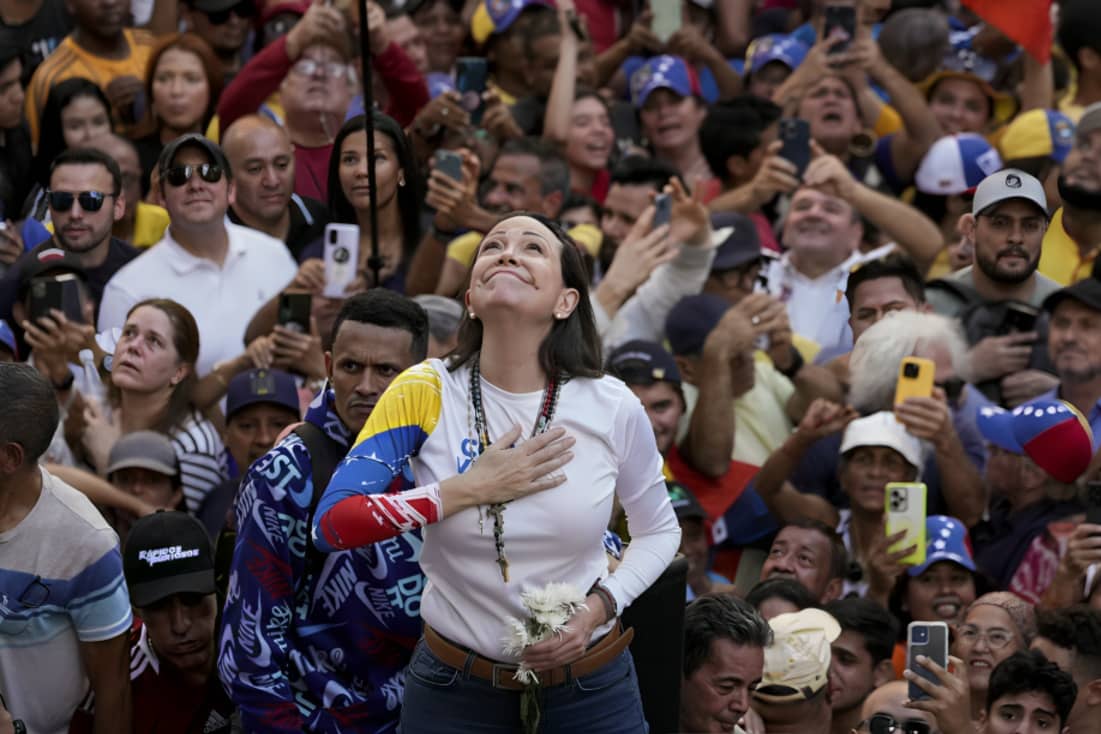
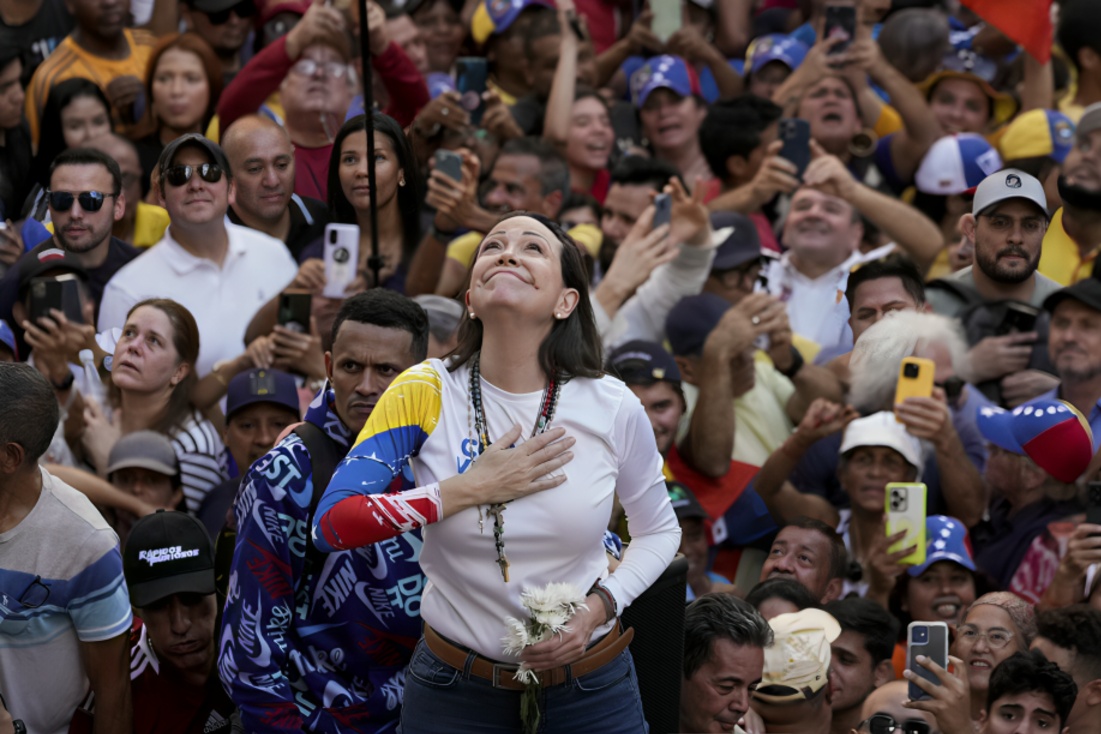
Venezuelan opposition leader Maria Corina Machado has raised concerns over a major oil agreement between the United States and Venezuela’s interim government, led by Delcy Rodriguez. Her response reflects the difficult political position facing the Venezuelan opposition as Washington deepens its economic and energy engagement with Caracas.
The agreement has attracted considerable attention because Venezuela possesses the world’s largest proven crude oil reserves. The proposed arrangement is expected to provide US companies with a major role in developing Venezuelan oil resources, while Caracas would receive revenues from oil production and sales.
Machado has argued that Venezuela’s natural resources belong to the Venezuelan people and should not be treated simply as an asset to be negotiated by a government she considers illegitimate. Her criticism has focused on the political legitimacy and transparency surrounding the agreement rather than on cooperation with the United States in Venezuela’s energy sector as a whole.
Recent reports indicate that the agreement involves 17 oil fields and could give US interests access to more than 65 billion barrels of Venezuela’s oil reserves. The arrangement has been described as a long term framework aimed at increasing production and attracting substantial investment into Venezuela’s damaged oil industry. The full terms of the agreement have not been made publicly available, which has contributed to questions about transparency.
The Venezuelan government has defended the agreement. Interim President Delcy Rodriguez has argued that the arrangement could generate major economic benefits for Venezuela, including increased oil production, investment and employment. Her administration has presented greater international participation in the oil sector as a way to rebuild infrastructure and restore the country's energy industry.
Rodriguez has also maintained that Venezuela retains sovereignty over its natural resources. Government statements have sought to counter criticism that the agreement amounts to a transfer of control over the country’s oil wealth.
The debate comes after years of economic and political crisis in Venezuela. The country's oil industry, once one of the most productive in the world, has suffered from declining production, ageing infrastructure, economic instability, sanctions and years of political turmoil.
The oil sector remains central to Venezuela’s economic recovery. Increasing production could provide the government with additional revenue and help finance infrastructure, public services and other economic activities. Supporters of greater foreign investment argue that international companies can provide capital, technology and expertise that Venezuela currently needs.
However, critics worry that large energy agreements made during a political transition could create long term consequences before Venezuela has established stable democratic institutions. Machado and other opposition figures have therefore called for greater transparency and legal certainty surrounding major economic decisions.
Machado has also stressed that Venezuela requires more than financial investment. She has called for a democratic transition and stronger institutions, arguing that political stability and the rule of law are important for sustainable investment in the country's energy industry.
Her position places her in a complicated relationship with the Trump administration. Machado has previously supported strong US involvement in Venezuela’s political crisis and has advocated international pressure against the previous government. At the same time, she has become increasingly critical of aspects of Washington’s approach to the country's post crisis transition.
The oil agreement has also generated criticism from Venezuelans who fear that foreign interests could receive excessive influence over the country's most important natural resource. Others argue that the scale of Venezuela’s economic problems makes international investment essential for rebuilding production.
The United States has a strong interest in Venezuela’s oil sector because of the country's enormous reserves and its geographic proximity to the US market. Greater access to Venezuelan crude could also have implications for regional energy supplies and global oil markets.
For Washington, cooperation with Caracas could serve several objectives, including stabilising Venezuela’s economy, rebuilding its oil production and reducing the influence of other international powers in the Venezuelan energy sector.
For Caracas, the agreement offers the prospect of significant investment and increased oil revenues. Rodriguez has said the country could receive substantial financial benefits from the arrangement, while also arguing that Venezuela maintains sovereignty over its resources.
The political question surrounding the agreement remains more complicated. Machado and other opposition figures want economic recovery to be accompanied by democratic reforms and institutional guarantees. They fear that a large energy agreement could strengthen the interim authorities without resolving the country's broader political problems.
The debate also highlights the tension between short term economic recovery and long term political legitimacy. Venezuela needs investment to restore its oil industry, but opposition leaders argue that investment decisions should take place within a transparent legal and democratic framework.
The full economic impact of the agreement will depend on several factors, including the amount of investment, future oil production, international oil prices, sanctions policy and the ability of companies to operate securely in Venezuela.
The agreement could potentially increase Venezuela’s oil output after years of decline. However, rebuilding the country's energy infrastructure will require significant capital, technical expertise and long term stability.
Machado's response therefore represents a cautious position. She has not rejected the importance of US involvement in rebuilding Venezuela’s oil industry, but she has questioned the terms, transparency and political context of the agreement.
The controversy is likely to continue as more details of the arrangement become available. The key issues will include how the oil fields are managed, how revenues are distributed, what role Venezuelan institutions play and whether the agreement contributes to a broader democratic transition.
For now, the US Venezuela oil agreement remains one of the most significant economic developments in Venezuela’s political transition. While the government in Caracas views the deal as an opportunity for investment and economic recovery, Machado and other opposition voices are demanding that Venezuela’s natural resources be managed transparently and ultimately in the interests of the Venezuelan people.
The disagreement demonstrates that Venezuela’s oil sector is not only an economic issue but also a major political question. Any future investment strategy will need to balance the country's urgent economic needs with concerns over sovereignty, transparency, institutional independence and democratic governance.