
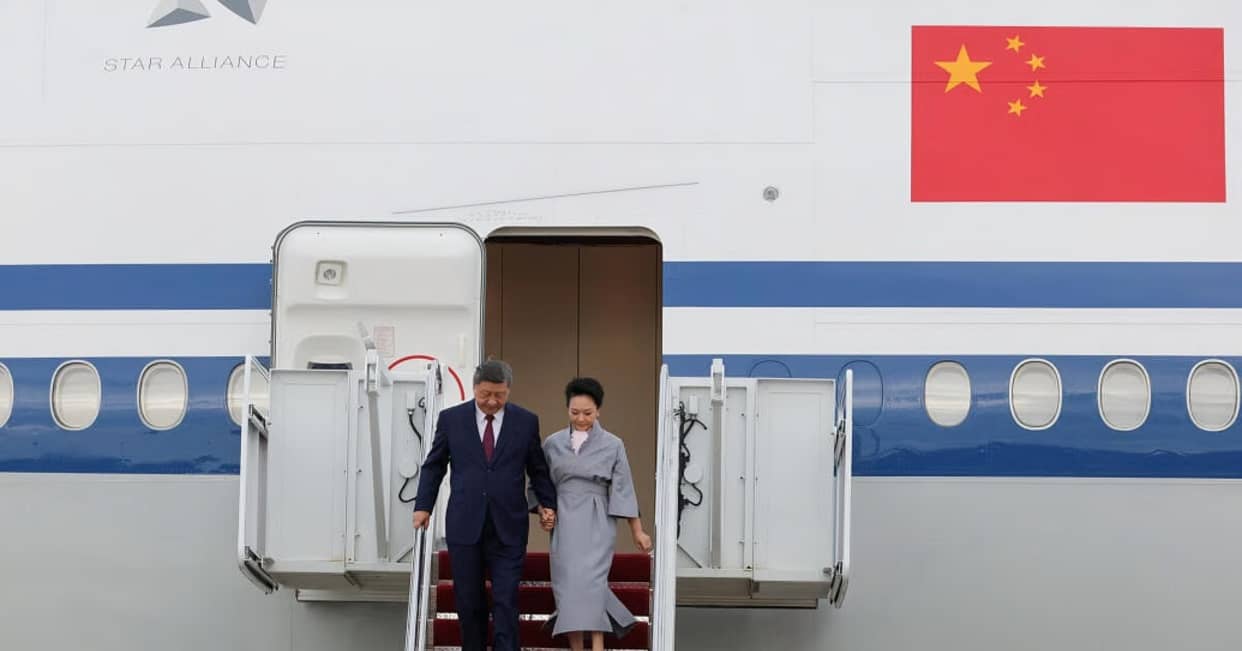
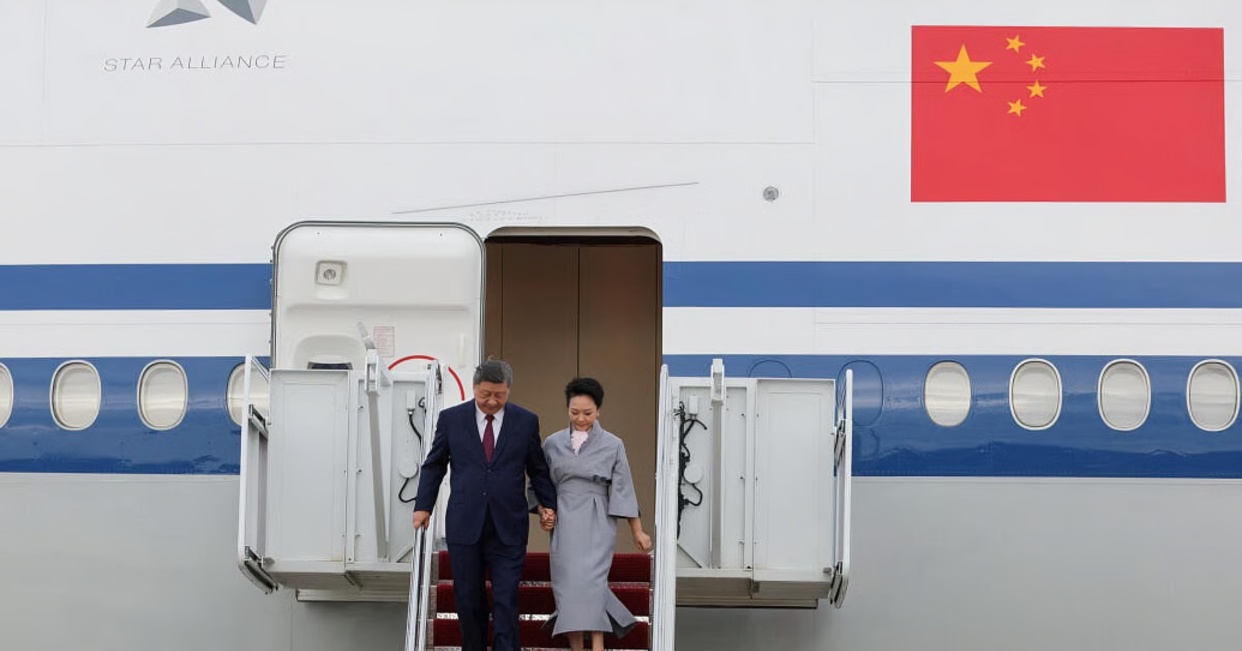
Chinese President Xi Jinping has called for China and the United States to maintain a relationship based on partnership rather than rivalry after arriving in Washington for a three day state visit.
Xi arrived at Joint Base Andrews in Maryland on September 23, 2026, accompanied by his wife, Peng Liyuan. US President Donald Trump and First Lady Melania Trump personally received Xi and Peng at the airport in a formal welcome ceremony. The visit is taking place at a time when relations between the world's two largest economies continue to involve disagreements over trade, technology, artificial intelligence, Taiwan and other international issues.
In a written statement released after his arrival, Xi said China and the United States should be partners rather than rivals. He said the interests of the two countries are deeply intertwined and argued that China's development objectives and the US goal of making America great again can coexist and contribute to wider international well being.
Xi also called for the two countries to work in the same direction and build a stable relationship in which cooperation remains a major element. At the same time, he referred to competition and differences between the two countries, saying that competition should be moderate and differences should be manageable. He also expressed the view that both countries should work toward maintaining peace.
The remarks came ahead of Xi's scheduled discussions with Trump at the White House. According to reports, the two leaders are expected to address a range of bilateral and international issues. Trade and tariffs remain important areas of discussion, while technology and artificial intelligence have become increasingly significant elements of the relationship. Taiwan and wider geopolitical issues are also expected to feature in the talks.
Xi's arrival marks his first state visit to Washington in more than a decade, according to reports. His visit comes after several years of tensions between Beijing and Washington, including disputes involving tariffs, technology restrictions and strategic competition.
The two governments have also continued diplomatic engagement despite these differences. Reuters reported that the United States and China were working to extend their existing trade truce as Xi arrived in Washington. The arrangement has been viewed as an effort to prevent further escalation in trade tensions while the two governments continue negotiations.
The welcome given to Xi at Joint Base Andrews was notable. Trump personally greeted the Chinese president at the airport, accompanied by First Lady Melania Trump. The ceremony included military honours, national anthems and a formal reception. The White House had previously announced that Trump would greet Xi at Joint Base Andrews before hosting a formal state arrival ceremony at the White House.
Xi's message focused on the need to manage differences between the two countries while expanding areas of cooperation. He said the two sides should find an appropriate way to coexist in what he described as a changing international environment.
The Chinese president also referred to the importance of long standing people to people exchanges between the two countries. He said the historical basis for peaceful coexistence and friendly exchanges between the Chinese and American peoples remains important. He expressed confidence that continued engagement could expand cooperation in different areas.
The visit comes against a complicated strategic background. The United States and China remain major economic and military powers, but they have different positions on several international and security issues. Competition in advanced technology and artificial intelligence has become a particularly important area of bilateral relations. The two countries have also maintained different positions concerning Taiwan and other geopolitical matters.
Trade is another major issue. Although both sides have taken steps to reduce the intensity of recent tariff disputes, disagreements over market access, technology restrictions and economic policy remain part of the broader relationship. Reuters reported that officials were considering an extension of the trade truce as the leaders prepared for their meeting.
Xi's call for partnership does not mean that all differences between Beijing and Washington have been resolved. His statement itself acknowledged the existence of competition and differences, while arguing that they should be managed through dialogue and cooperation.
The US administration has also continued to emphasise the importance of maintaining high level communication with Beijing. US Secretary of State Marco Rubio has said that Washington and Beijing need to maintain their relationship at the highest level because of the importance of the two countries to the global economy and security environment.
The Washington visit is therefore being closely watched for its potential impact on bilateral relations. The immediate focus is on the talks between Xi and Trump, while longer term issues include trade policy, technology competition, artificial intelligence, Taiwan and broader international security.
Xi said he looked forward to detailed discussions with Trump on major issues involving bilateral relations and the global situation. He also expressed support for expanding exchanges and cooperation in different areas.
The outcome of the talks will depend on the discussions between the two governments and any agreements or understandings that may subsequently be announced. Xi's arrival statement establishes his stated preference for a relationship in which cooperation is prioritised, competition is controlled and differences are managed through continued engagement.