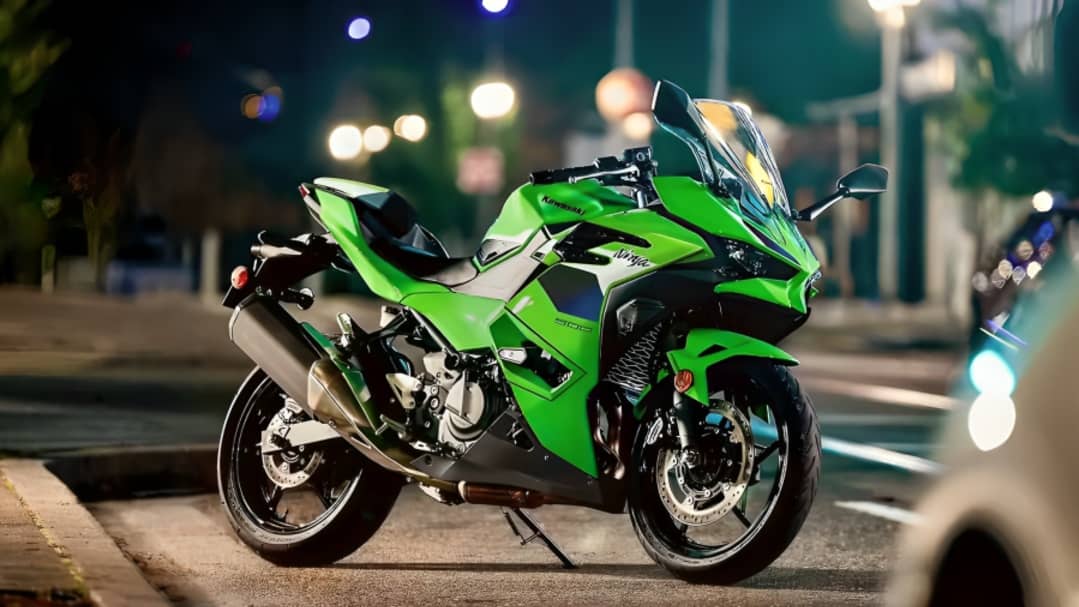
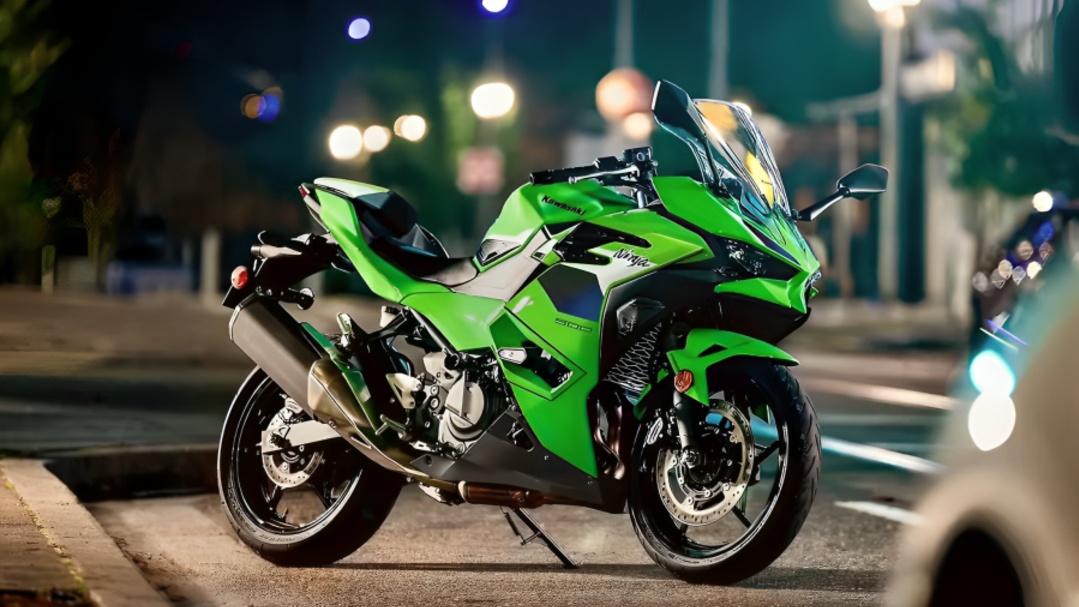
Kawasaki has introduced the 2027 Ninja 500 in the Indian market at an ex-showroom price of Rs 5.76 lakh. The latest model-year version continues Kawasaki's middleweight fully faired sportbike offering, but the update is relatively limited. The main change for Indian buyers is a new Lime Green colour scheme with contrasting graphics. The motorcycle's engine, chassis and major equipment remain unchanged from the previous version.
The 2027 Kawasaki Ninja 500 is available in India in a single colour option. The Lime Green finish is paired with white and blue graphics, giving the motorcycle the familiar appearance associated with Kawasaki's performance-oriented models. The sharp front fairing, twin LED headlamps, slim tail section and side-mounted exhaust continue to be part of the design.
Despite the new model-year designation, Kawasaki has not made a major mechanical revision to the motorcycle. The Ninja 500 continues to use a 451cc liquid-cooled parallel-twin petrol engine. Depending on the source and specification reporting, the engine is rated at around 45 PS, with peak torque of 42.6 Nm. It is paired with a six-speed transmission and an assist and slipper clutch.
The assist and slipper clutch is designed to make clutch operation easier while also helping reduce rear-wheel locking during aggressive downshifts. This combination is intended to provide a balance between everyday usability and the sporty riding characteristics expected from a Ninja motorcycle.
The chassis of the 2027 Ninja 500 also remains unchanged. The motorcycle uses a lightweight trellis frame, with a telescopic fork at the front and a rear suspension system using a linked monoshock. The setup is designed to provide a balance between handling and comfort for both city riding and longer journeys.
The motorcycle continues to ride on 17-inch wheels at both ends. Disc brakes are used at the front and rear, while dual-channel ABS is provided as standard. This safety equipment is particularly important for a motorcycle positioned in the middleweight performance segment.
Kawasaki has also retained the existing instrument and equipment package. The Ninja 500 gets a high-contrast LCD instrument console, LED lighting and smartphone connectivity on the applicable specification. The overall equipment list therefore remains familiar to buyers of the outgoing model.
One of the notable points about the 2027 model is that Kawasaki has not significantly changed its price. The motorcycle continues to be listed at Rs 5.76 lakh ex-showroom in India. This makes the new model effectively a colour and model-year update rather than a comprehensive product revision.
Bookings for the motorcycle have been opened through Kawasaki's authorised dealerships in India. Reports indicate that deliveries are scheduled to begin around the end of August 2026 or soon after the launch period. Buyers should confirm delivery timelines and availability directly with their nearest Kawasaki dealership because these can vary by location.
The Ninja 500 occupies an interesting position in India's middleweight sportbike segment. It competes with motorcycles such as the Aprilia RS 457 and other performance-oriented models in the sub-500cc category. The Kawasaki offers a parallel-twin engine configuration, while some of its rivals use different engine architectures.
The 451cc engine is one of the key characteristics of the Ninja 500. The parallel-twin configuration is designed to deliver a smoother and more substantial power delivery than smaller single-cylinder motorcycles. The engine's torque output also makes the motorcycle suitable for both urban riding and highway use.
The motorcycle's riding position is sporty but intended to remain manageable for everyday use. The relatively compact design, slim bodywork and low-seat approach can help riders feel more comfortable when manoeuvring the bike at lower speeds or while parking.
For Kawasaki, continuing the existing mechanical package may allow the company to maintain the Ninja 500's established characteristics without introducing major engineering changes. At the same time, the new Lime Green colour gives the motorcycle a visual refresh for the new model year.
The limited nature of the update also means that existing Ninja 500 owners are unlikely to find a significant difference in performance or riding dynamics. The main attraction of the 2027 version is therefore its updated colour scheme and continued availability as a middleweight Kawasaki sportbike.
The Indian market version is offered in a single Lime Green shade, whereas Kawasaki offers different colour choices in some international markets. This means Indian buyers have fewer colour options but receive the brand's signature green finish.
Another important factor is the motorcycle's pricing compared with its competitors. At Rs 5.76 lakh ex-showroom, the Ninja 500 sits at a premium position within the sub-500cc sportbike category. Buyers will therefore need to consider its twin-cylinder engine, Kawasaki branding, design and equipment against competing motorcycles.
The motorcycle is sold in India through the completely built-up import route, which contributes to its relatively high price compared with some locally manufactured competitors. This positioning means the Ninja 500 is aimed more at enthusiasts looking for a particular combination of performance, styling and brand appeal than at mass-market commuters.
For customers considering the 2027 Ninja 500, the lack of major mechanical changes is not necessarily a disadvantage. The existing 451cc engine, six-speed gearbox, trellis chassis and dual-channel ABS continue to provide a well-established package. The new colour simply gives buyers a fresher visual option.
The motorcycle also retains Kawasaki's sharp Ninja styling. Twin LED headlights, a compact rear section and aggressive bodywork continue to give it the appearance of a larger performance motorcycle. The side-swept exhaust further contributes to its sporty profile.
Overall, the 2027 Kawasaki Ninja 500 should be viewed as a model-year update rather than a completely new generation. Kawasaki has focused on introducing a new Lime Green colour while retaining the existing mechanical and equipment package.
For Indian buyers, the motorcycle is priced at Rs 5.76 lakh ex-showroom, and bookings are currently open through authorised dealerships. The core specifications remain centred around the 451cc parallel-twin engine, six-speed gearbox, assist and slipper clutch, trellis frame, dual-channel ABS and 17-inch wheels.
With the middleweight motorcycle segment becoming increasingly competitive in India, the Ninja 500 will continue to rely on Kawasaki's established Ninja identity, twin-cylinder engine and premium positioning. The new Lime Green finish adds a fresh appearance, but customers expecting major performance or technology upgrades will find that the 2027 model remains largely familiar.
The final choice will therefore depend on what buyers value most. Those looking for a Kawasaki-branded twin-cylinder sportbike with established mechanicals may find the updated Ninja 500 appealing, while buyers focused primarily on equipment, pricing or outright value may also compare it with competing motorcycles before making a decision.