
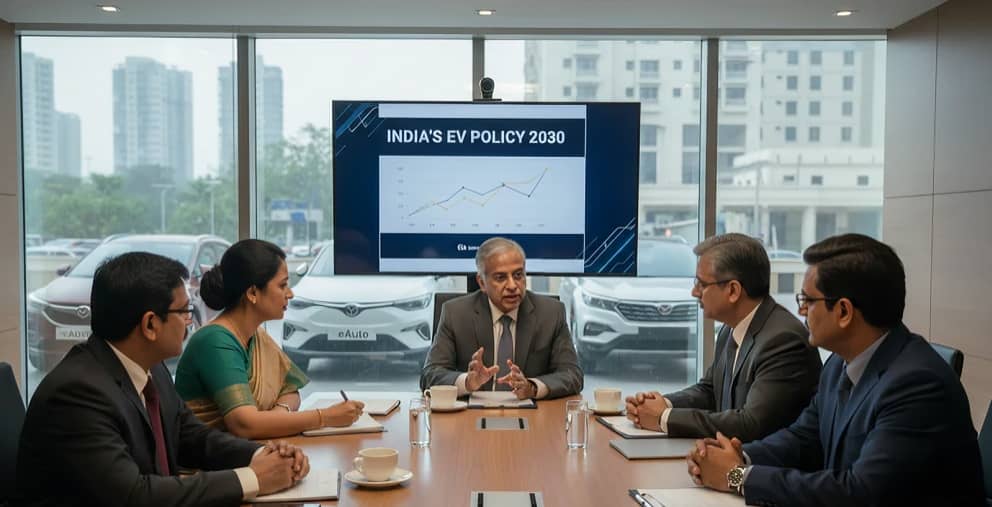
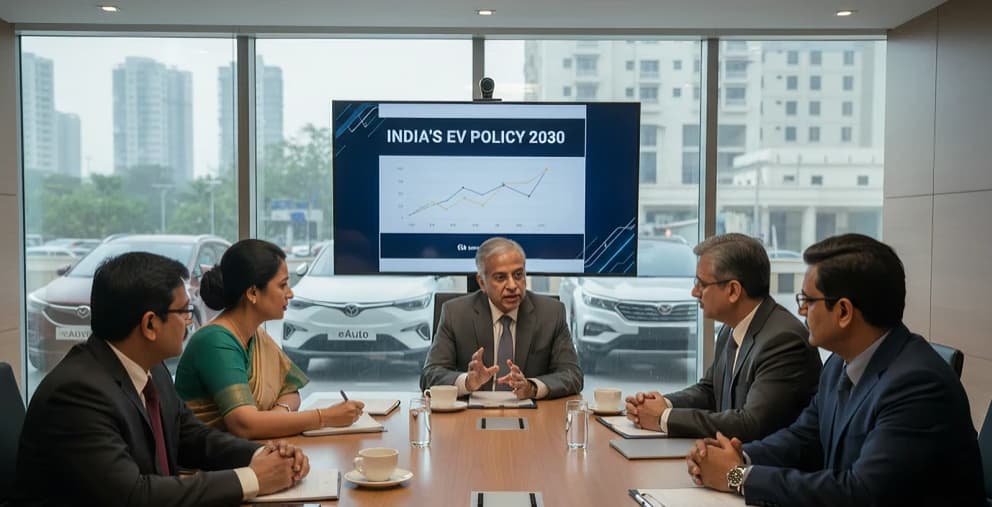
Major automobile manufacturers such as Hyundai Motor India, Tata Motors, Mahindra and MG Motor India have approached the government seeking the removal of special emission concessions currently extended to small cars. The automakers argue that the policy distorts market competition and gives a disproportionate advantage to Maruti Suzuki, which holds a dominant share in the entry-level and small-car segments.
At present, India’s emission framework provides relaxations for small cars based on engine size and vehicle dimensions. These concessions reduce compliance costs for manufacturers operating largely in this category. However, rival carmakers contend that the policy no longer serves its original purpose and instead discourages innovation and fair competition. They believe all vehicles should be subjected to uniform emission standards irrespective of size.
According to industry representatives, maintaining different benchmarks for small and larger passenger vehicles results in unequal cost structures. Maruti Suzuki, which commands a significant share of India’s small-car market, benefits the most from these relaxations. Competing manufacturers argue that this creates a structural imbalance, especially when the industry is already facing rising costs due to stricter safety regulations, fuel efficiency standards, and the transition toward electric mobility.
The issue has gained traction at a time when India is continuously tightening its emission norms under the Bharat Stage framework to align with global environmental standards. Automakers opposing the concession believe that relaxing standards for any category slows down the adoption of cleaner technologies and contradicts the country’s broader climate goals. They argue that a uniform regulatory framework would encourage manufacturers to invest more aggressively in low-emission engines, hybrids, and electric vehicles.
From the government’s perspective, the small-car concession was originally intended to promote affordable mobility and support mass adoption of personal vehicles. Small cars have historically played a key role in India’s automobile growth by making vehicle ownership accessible to a wider population. However, market dynamics have shifted significantly over the last decade, with consumers increasingly favouring larger vehicles such as SUVs and crossovers.
Industry experts note that removing the emission concession could slightly increase production costs for small cars, potentially leading to higher prices for entry-level models. This may impact budget-conscious buyers and rural customers. At the same time, policymakers must balance affordability with environmental responsibility and fair competition.
Maruti Suzuki has not made any aggressive public statements on the matter, but analysts believe the policy change, if implemented, could impact its cost structure and pricing strategy in the future. Other manufacturers see this as an opportunity to level the competitive landscape, especially in a market that is slowly moving toward alternative fuel and electric vehicles.
The government is currently reviewing multiple industry representations as part of its broader automotive policy evaluation. A final decision on the small-car emission concession is expected after consultations with stakeholders, environmental experts, and policymakers. Any policy shift is likely to be implemented gradually to avoid sudden disruption in the market.
In conclusion, the demand by Hyundai, Tata Motors, Mahindra and MG Motor to withdraw small-car emission concessions reflects growing concern over regulatory parity and environmental accountability. As India’s auto industry prepares for a greener and more competitive future, the government’s decision on this issue could have far-reaching implications for both manufacturers and consumers.


