Honda Elevate Facelift vs Hyundai Creta: Price, Engine, Features and Specifications Compared
The updated Honda Elevate and Hyundai Creta are two options for buyers considering a mid-size SUV in India. Honda unveiled the refreshed Elevate on October 6, 2026, introducing revised exterior styling, a more premium cabin and additional comfort and safety features. The Hyundai Creta, meanwhile, offers a wider selection of engines and transmissions, along with a range of technology and convenience features.
Both SUVs have their own advantages. The Elevate focuses on naturally aspirated petrol performance, ground clearance and cabin comfort, while the Creta provides petrol, diesel and turbo-petrol options. Buyers should compare the price, features, performance and everyday usability of both models before making a decision.
Honda Elevate Facelift vs Hyundai Creta: Price
The updated Honda Elevate is priced from Rs 11.80 lakh to Rs 18.40 lakh, ex-showroom Delhi, depending on the variant and transmission. The lineup includes SV, V, VX, ZX and ZX+ grades with manual transmission, while CVT options are offered from the V grade onwards.
The Hyundai Creta has a broader variant and powertrain range. Its official website lists a starting price of approximately Rs 10.91 lakh, ex-showroom, with prices reaching around Rs 20.14 lakh for selected higher variants.
The Creta's lower starting price may appeal to buyers looking for an entry-level model, while the Elevate offers a straightforward petrol-engine lineup. However, the final cost depends on the selected variant, transmission, insurance, registration charges and applicable taxes.
Prices can change, so buyers should confirm the latest quotation with their local dealership before booking either SUV.
Engine and Transmission Comparison
The Honda Elevate facelift continues with a 1.5-litre, four-cylinder i-VTEC naturally aspirated petrol engine. It produces 121 PS of power and 145 Nm of torque. Buyers can choose a six-speed manual gearbox or a CVT automatic transmission with paddle shifters.
The Hyundai Creta offers three engine choices in its current range. These include a 1.5-litre naturally aspirated petrol engine producing 115 PS and 144 Nm, a 1.5-litre diesel engine producing 116 PS and 250 Nm, and a 1.5-litre turbo-petrol engine producing 160 PS and 253 Nm.
The Creta's naturally aspirated petrol engine is available with manual and automatic transmission options, depending on the variant. The diesel range includes manual and torque-converter automatic choices, while the turbo-petrol engine is paired with a seven-speed dual-clutch transmission.
This broader engine selection gives the Creta an advantage for buyers who prefer diesel efficiency or stronger turbo-petrol performance. The Elevate, on the other hand, offers a simpler petrol-only range for customers who do not require a diesel or turbocharged engine.
Exterior Design and Dimensions
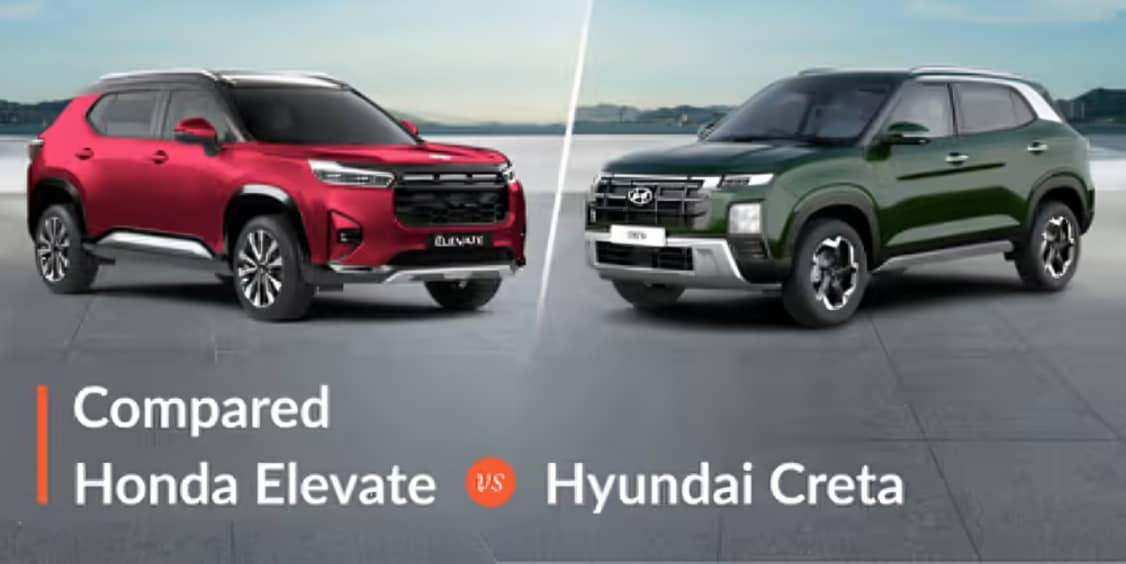
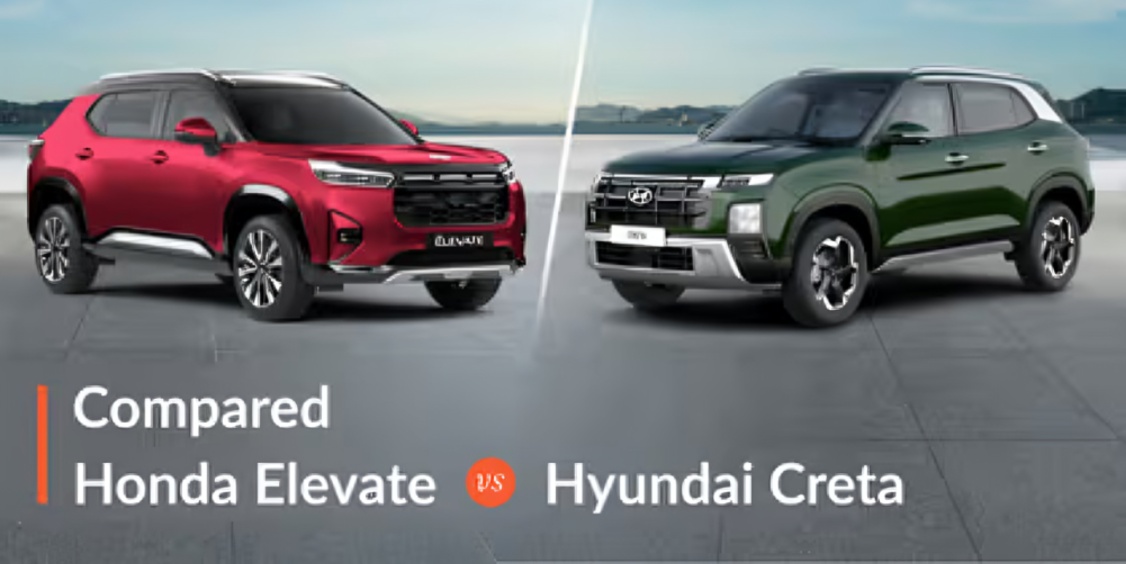
Honda has given the updated Elevate a more prominent front grille, revised LED lighting details, gloss-black exterior elements and redesigned 17-inch alloy wheels. A connected LED tail-lamp design adds a more contemporary appearance at the rear.
The Creta features a distinctive front grille, LED lighting and connected rear lamps. Selected variants also offer 18-inch alloy wheels and additional exterior styling elements.
In terms of dimensions, the Elevate measures 4,312 mm in length, 1,790 mm in width and 1,650 mm in height. It has a 2,650 mm wheelbase and 220 mm ground clearance.
The Creta measures 4,330 mm in length and 1,790 mm in width, with a height of approximately 1,635 mm. Its wheelbase is 2,610 mm, and its ground clearance is approximately 190 mm.
The Elevate therefore offers greater ground clearance and a longer wheelbase, while the Creta is slightly longer overall. Ground clearance can be useful on uneven roads, although actual suitability depends on road conditions, vehicle loading and driving style.
The Elevate also provides approximately 458 litres of boot space, compared with around 433 litres in the Creta, according to published specifications.
Interior Comfort and Technology
The updated Elevate receives a dual-tone ivory-and-black cabin, premium upholstery, ambient lighting and an upgraded feature package. Its equipment includes a 10.25-inch touchscreen infotainment system, a seven-inch driver information display, wireless Apple CarPlay and Android Auto, and an eight-speaker audio system.
One of the notable additions is ventilation for both the front and rear seats. The front seats are power-adjustable, with eight-way adjustment for the driver and four-way adjustment for the front passenger. The SUV also features a single-pane electric sunroof, front and rear USB Type-C charging ports and a PM2.5 air-quality display.
The Creta offers a 10.25-inch infotainment display and a fully digital driver display in selected higher variants. Other available features include a panoramic sunroof, ventilated front seats, dual-zone automatic climate control, wireless charging, rear-seat recline and a premium Bose audio system on selected trims.
The Creta also offers additional convenience features such as a powered front passenger seat, driver-seat memory and rear window sunshades on selected variants.
While the Elevate's rear-seat ventilation is a notable addition, the Creta's panoramic sunroof and wider range of cabin features may appeal to buyers prioritising premium equipment.
Safety and Driver Assistance
Both SUVs offer six airbags, electronic stability control, tyre-pressure monitoring and advanced driver-assistance features on selected variants. Both also offer a 360-degree camera system and front and rear parking sensors in their updated or higher-specification configurations.
Honda equips the Elevate with its Honda SENSING driver-assistance suite. Features include collision mitigation braking, adaptive cruise control, lane-keeping assistance and road-departure mitigation. The updated model also adds low-speed follow functionality to applicable CVT variants.
The Creta offers Hyundai SmartSense Level 2 advanced driver-assistance features on selected variants. Depending on the trim, these can include forward collision avoidance assistance, lane-related assistance, blind-spot warnings and adaptive cruise control functions. A factory-fitted dashcam is also available on the relevant variant.
Equipment can differ significantly between variants, so buyers should check the exact safety specification of the vehicle they intend to purchase. The presence of driver-assistance technology should not replace attentive driving.
Which SUV Should You Choose?
The Honda Elevate facelift may suit buyers who prefer a naturally aspirated petrol engine, higher ground clearance, a larger boot and a cabin that now includes front and rear seat ventilation. Its simpler powertrain range may also make the variant selection easier.
The Hyundai Creta may be a better match for buyers who want more engine choices, including diesel and turbo-petrol options. Its panoramic sunroof, digital driver display and wider selection of premium convenience features are other considerations.
Neither SUV is the automatic choice for every buyer. The best option depends on budget, annual driving distance, city and highway usage, preferred transmission and the features available in the selected variant. A test drive of both models and a comparison of on-road prices can help buyers make an informed decision.