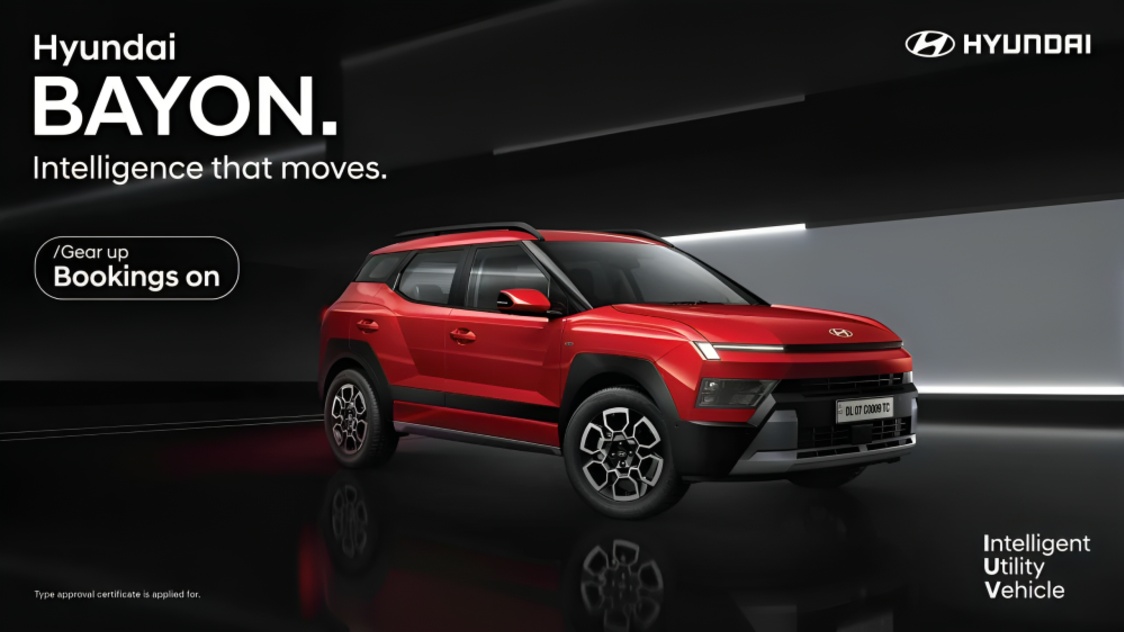
Hyundai Bayon Engine and Gearbox Details Revealed Ahead of India Launch
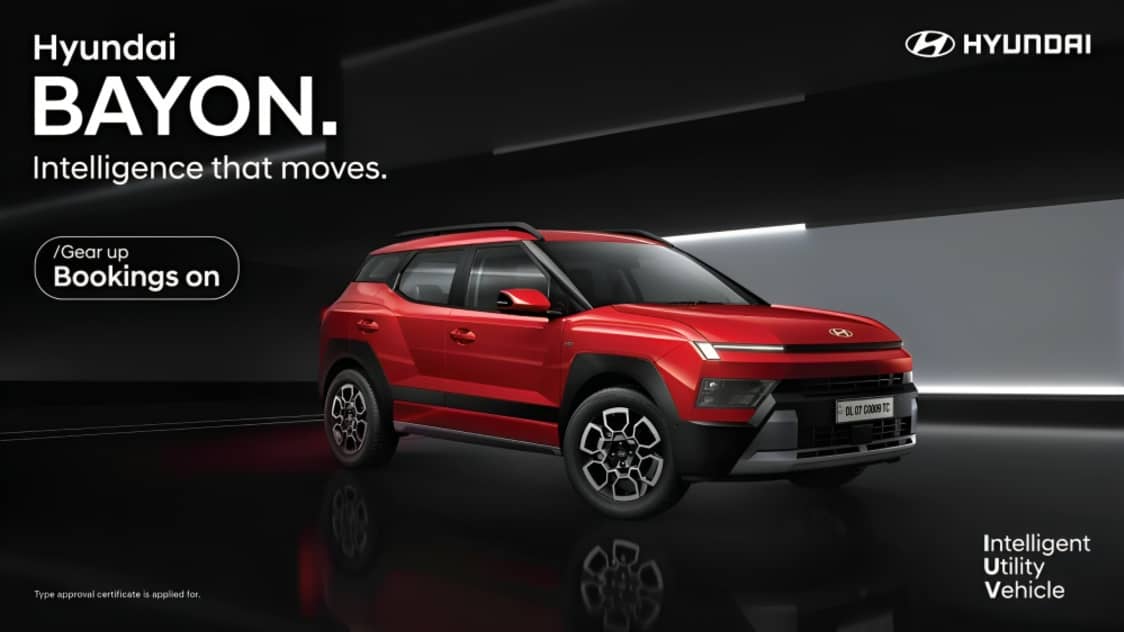
Hyundai Motor India has revealed the engine and transmission specifications of the upcoming Hyundai Bayon SUV ahead of its scheduled launch on October 26, 2026. The new model will feature a 1.5-litre petrol engine, two transmission options and a special Dash Boost Mode designed to provide quicker acceleration when required.
The Bayon is expected to sit between the Venue and Creta in Hyundai's Indian SUV lineup. With its combination of petrol power, automatic transmission technology and connected features, the vehicle is aimed at buyers looking for a modern SUV suitable for everyday driving.
According to Hyundai's specifications, the Bayon will use a four-cylinder, naturally aspirated 1.5-litre MPi petrol engine. It produces 115 PS of maximum power, equivalent to approximately 113.4 bhp, and 143.8 Nm of peak torque. The engine will be offered with a six-speed manual gearbox or an Intelligent Variable Transmission, commonly known as iVT.
Hyundai Bayon Engine Specifications
The 1.5-litre MPi petrol engine is a familiar powertrain within Hyundai's Indian vehicle range. The naturally aspirated setup is designed to provide progressive power delivery without relying on a turbocharger.
The engine's output of 115 PS and 143.8 Nm of torque places the Bayon within a familiar performance category for buyers considering petrol-powered SUVs. Hyundai has not announced the vehicle's official fuel-efficiency figures at the time of this report.
The company will initially offer the Bayon with petrol power. A diesel option has not been announced for the Indian market. Reports have also suggested the possibility of a CNG version in the future, but this should not be treated as a confirmed launch variant unless Hyundai makes an official announcement.
Manual and iVT Gearbox Options
Hyundai will offer two transmission choices with the Bayon. The first is a six-speed manual gearbox intended for drivers who prefer direct control over gear selection.
The second option is Hyundai's Intelligent Variable Transmission, or iVT. This automatic transmission is designed to deliver smooth acceleration and reduce the need for frequent manual gear changes, particularly in congested urban traffic.
The iVT version will also receive paddle shifters, allowing drivers to adjust transmission response using controls mounted behind the steering wheel. These controls can offer additional convenience when the driver wants more direct input during acceleration or when navigating changing road conditions.
The availability of both manual and automatic transmissions gives customers the flexibility to choose a configuration that suits their driving habits and daily travel requirements.
What Is Dash Boost Mode?
One of the key powertrain features announced for the Hyundai Bayon is Dash Boost Mode, available with the iVT transmission. The feature is designed to provide a quicker acceleration response when the driver needs additional performance.
This can be useful during situations such as overtaking slower vehicles on highways or accelerating into moving traffic. Rather than changing the engine's fundamental specifications, the mode focuses on improving how the vehicle responds when stronger acceleration is requested.
The automatic transmission also includes Sporty Drive technology, which is calibrated to deliver a more direct acceleration feel. Together, these features are intended to give the Bayon a more responsive driving character when required.
However, the actual driving experience will depend on road conditions, vehicle load and driving style. Official fuel-efficiency figures and detailed performance testing will be needed to assess how the transmission behaves in everyday Indian driving conditions.
Eco, Normal and Sport Driving Modes
The Hyundai Bayon will also offer Eco, Normal and Sport driving modes. These settings allow drivers to adjust the vehicle's response according to their preferences and driving environment.
Eco mode prioritises efficiency, making it suitable for routine commuting where fuel consumption is an important consideration. Normal mode aims to balance acceleration response and everyday usability.
Sport mode is intended to deliver a sharper response when the driver wants a more engaging driving experience. The selected setting can influence how the powertrain responds to accelerator inputs.
Drivers will be able to select the available modes using a dedicated steering-wheel button. These modes complement the iVT transmission and Dash Boost Mode, providing additional flexibility without requiring a different engine configuration.
Positioning in Hyundai's SUV Lineup
The Bayon will be positioned between the Venue and Creta in Hyundai's Indian SUV portfolio. This positioning is intended to provide buyers with another option in the competitive SUV market.
The vehicle's powertrain combines an established naturally aspirated petrol engine with modern transmission features. Buyers comparing the Bayon with rival models are likely to consider its driving performance, comfort, fuel efficiency, equipment and final price.
Hyundai has also highlighted the Bayon's technology package, including dual 12.3-inch displays, connected-car features and an integrated generative artificial intelligence voice assistant. These features are intended to make the cabin more convenient and connected.
The SUV is expected to appeal to customers who want a vehicle with modern technology but also value a familiar petrol powertrain and the choice of a manual or automatic transmission.
Hyundai Bayon Launch Date and Bookings
Hyundai has scheduled the Bayon's India launch for October 26, 2026, when the company is expected to announce its prices and detailed variant information.
Bookings are already open through Hyundai's official Indian website and authorised dealerships. The initial booking amount is Rs. 11,000.
The final price will be an important factor in determining how the Bayon competes with other SUVs in the Indian market. Buyers should wait for the official price announcement and variant-wise equipment list before making a purchase decision.
Hyundai has not yet provided all the information required for a complete comparison, including official mileage figures and final variant pricing. These details are expected to help buyers assess the vehicle's overall value.
Final Outlook
The Hyundai Bayon will enter the Indian SUV market with a 1.5-litre petrol engine producing 115 PS, a choice of manual and iVT transmissions, and features such as Dash Boost Mode and selectable driving modes.
The automatic transmission's quicker-response functions could make the Bayon appealing to drivers who frequently travel on highways or want a more responsive driving experience. Meanwhile, the manual option gives buyers an alternative for those who prefer conventional gear selection.
With its launch scheduled for October 26, 2026, the Bayon's pricing, fuel-efficiency figures and variant-wise features will be important factors in evaluating its competitiveness. The official launch announcement should provide a clearer picture of what buyers can expect from Hyundai's new SUV.