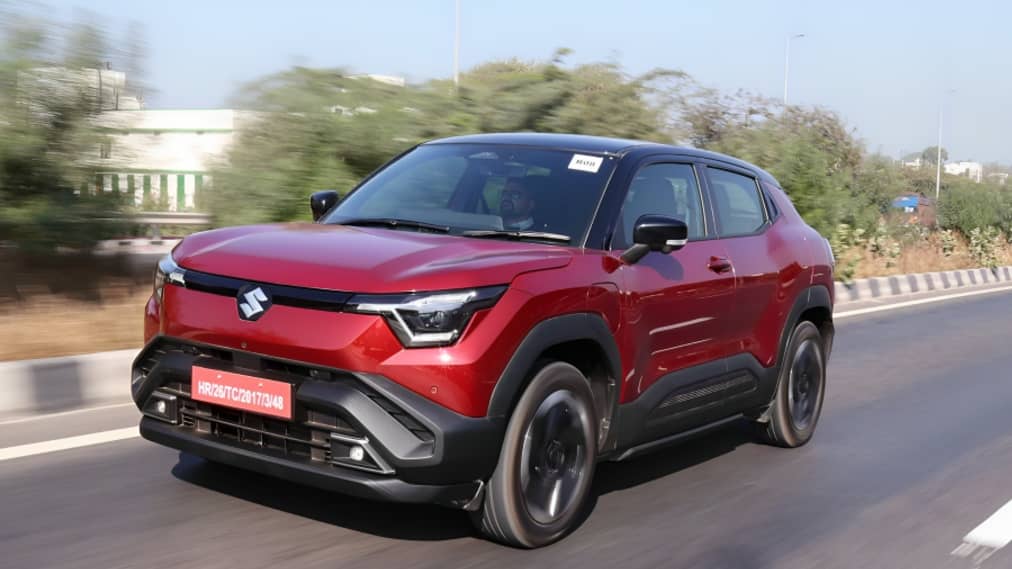
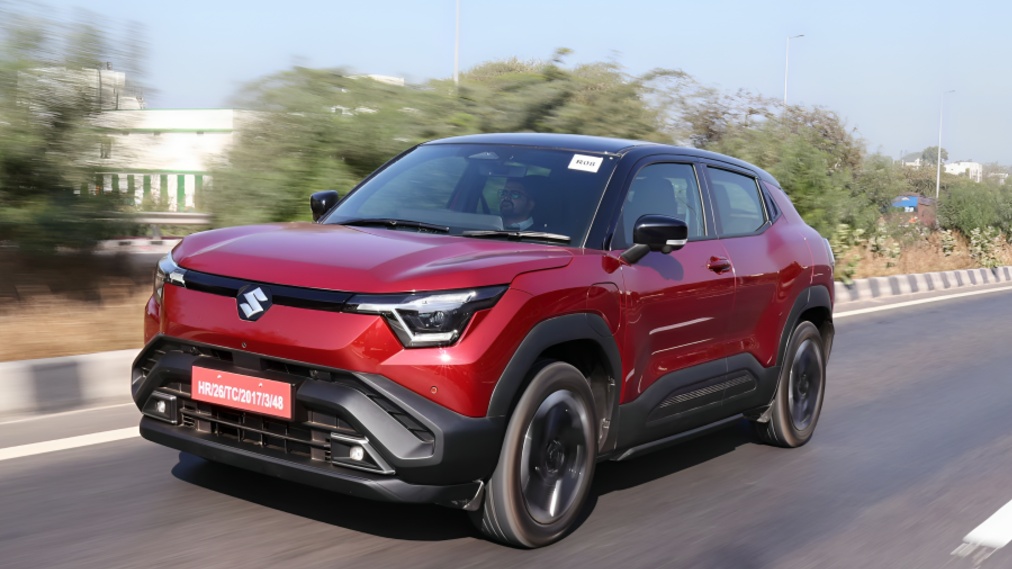
The India-made Suzuki e Vitara electric SUV has received a four-star overall safety rating in Japan’s 2026 Automobile Safety Performance Assessment. The result was announced on October 20, 2026, by Japan’s Ministry of Land, Infrastructure, Transport and Tourism and the National Agency for Automotive Safety and Victims’ Aid.
The e Vitara earned an A grade for preventive safety and a B grade for collision safety. Its automatic emergency notification system also received an Advanced II classification. The result highlights the vehicle’s performance across several safety categories, including collision avoidance technology, occupant protection and emergency notification after an accident.
The e Vitara is manufactured in India and exported to international markets, including Japan. The assessment relates to the model evaluated under Japan’s safety testing programme, and its results should be distinguished from ratings issued by other organisations.
Suzuki e Vitara: Japan NCAP Safety Rating
The Japan assessment awarded the Suzuki e Vitara an overall four-star rating out of five. The vehicle received an A grade in preventive safety and a B grade in collision safety.
Preventive safety evaluates technologies intended to help avoid or reduce the severity of accidents. Collision safety focuses on the protection offered to vehicle occupants during crashes. Japan’s assessment also considers the performance of the automatic emergency notification system, which can help alert emergency services after an accident.
The Advanced II classification for emergency notification indicates the result achieved by the vehicle under the programme’s assessment criteria. These grades are part of Japan’s national vehicle safety evaluation and should not be directly compared with star ratings from other testing programmes without accounting for differences in methodology.
Preventive Safety Features
According to the Japanese authorities’ published assessment, the e Vitara received an A grade for preventive safety. Its safety equipment includes features designed to assist drivers in avoiding certain types of collisions and maintaining control of the vehicle.
The listed systems include a collision-mitigation braking function that can detect relevant road users in specified situations, including certain intersections. The vehicle also offers lane-departure suppression technology that can assist steering to help prevent unintended movement beyond the road lane or edge. An adaptive high-beam system adjusts headlight illumination according to driving conditions.
These systems are designed to support the driver rather than replace driver attention. Their effectiveness depends on factors such as road conditions, visibility, system limitations and the circumstances of a potential collision.
The assessment also includes individual tests for different preventive safety functions. Results can vary by test category, so the overall grade should be considered alongside the detailed results published by the Japanese safety agency.
Collision Protection Results
The e Vitara received a B grade for collision safety in Japan’s assessment. The programme evaluates occupant protection in multiple crash scenarios, including frontal and side impacts.
The published results show that the vehicle achieved Level 5 out of 5 for driver protection in the full-width frontal impact test. Rear-seat protection in the same test received Level 4 out of 5. The newer offset frontal collision assessment also recorded Level 4 out of 5 in the reported results.
The vehicle achieved Level 5 in the driver-side side-impact assessment and in the listed rear-impact neck-protection tests for the driver and front passenger. The pedestrian protection results varied by test area, with Level 3 recorded for head protection and Level 5 for leg protection.
These individual results offer more detail than the overall star rating alone. They show that safety performance can differ between test scenarios and between the protection provided to different occupants and road users.
Automatic Emergency Notification System
The Suzuki e Vitara received an Advanced II classification for its automatic emergency notification system. Such systems are designed to transmit an emergency notification after a serious collision, helping emergency services receive information that may assist their response.
The classification forms a separate part of Japan’s safety assessment and contributes to the broader evaluation of the vehicle’s safety systems. It should not be interpreted as a guarantee that every accident will trigger a successful notification, as operation depends on the system’s design, connectivity and the circumstances of the incident.
Made in India for Global Markets
The e Vitara is an important model in Maruti Suzuki’s electric vehicle strategy. It is manufactured in India and exported to several international markets. Japan is one of the destinations for the Indian-made model.
Maruti Suzuki has previously announced that the e Vitara is part of its export portfolio, alongside other India-manufactured vehicles. Its presence in Japan places the model in a market with established vehicle safety assessment procedures and demanding consumer expectations.
The four-star Japan assessment is a separate result from the vehicle’s ratings in other regions. The e Vitara has also been assessed under Bharat NCAP and Euro NCAP, which use their own testing protocols and scoring systems. A rating from one programme should not be substituted for the result awarded by another.
How the Japan Rating Compares With Other Safety Assessments
The Suzuki e Vitara has received different safety ratings under different regional assessment programmes. Bharat NCAP awarded the India-market model five stars in its assessment, while Euro NCAP published a separate four-star rating for the Suzuki e Vitara.
These results are not necessarily contradictory. Testing protocols, equipment specifications, vehicle variants and scoring rules can differ between programmes. Some assessments may place different weight on adult occupant protection, child occupant protection, preventive safety technology or emergency notification systems.
For this reason, buyers should check the exact model and variant covered by each rating. They should also read the detailed results rather than relying only on the number of stars.
What the Result Means for Indian Buyers
The Japan NCAP result provides additional information about the safety performance of the India-manufactured e Vitara tested for the Japanese market. However, the result alone does not establish that every variant sold in India has exactly the same equipment or performance in every test.
Indian buyers should refer to Bharat NCAP’s published results and Maruti Suzuki’s official specifications for the local model. Safety equipment can differ by variant and market, so the vehicle’s specific configuration matters when comparing ratings.
The four-star Japan assessment highlights the e Vitara’s performance in that programme, including its preventive safety technology and collision protection. Buyers should consider the full assessment details alongside vehicle specifications, safety equipment and other ownership requirements before making a purchase decision.