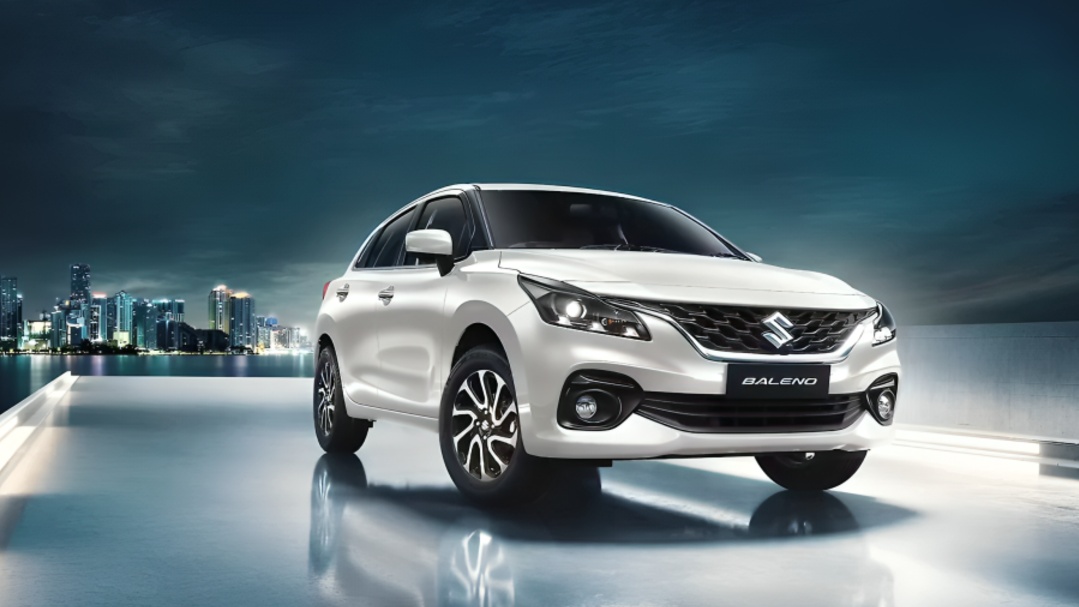
Maruti Suzuki is preparing to launch the Baleno facelift in India on September 5, 2026. The updated premium hatchback will receive its first major refresh since the current second generation Baleno was introduced in 2022. The facelift is expected to focus mainly on exterior styling, cabin improvements and additional equipment rather than introducing a completely new vehicle.
The Baleno has remained an important model in Maruti Suzuki's premium Nexa range. With increasing competition from models such as the Hyundai i20, Tata Altroz and Toyota Glanza, the facelift is expected to help Maruti Suzuki keep the Baleno competitive in the premium hatchback segment.
Exterior Changes
The most noticeable changes are expected at the front of the Baleno facelift. Test vehicles seen on Indian roads have indicated revisions to the grille and front bumper. The overall shape of the hatchback is expected to remain familiar, but the revised front-end design could give the car a fresher appearance.
The facelift is also expected to receive a redesigned set of alloy wheels. At the rear, changes are likely to be more limited, with a revised bumper expected while the basic design of the tail lights could remain unchanged. These updates are intended to give the Baleno a more contemporary appearance without significantly changing its established proportions.
Interior and Feature Updates
The cabin of the Baleno facelift is expected to retain much of the existing dashboard layout. However, Maruti Suzuki could introduce revised seat upholstery, updated trim materials and a refreshed interior colour theme.
Several reports also indicate that the updated model could receive additional convenience features. A larger 10.1 inch touchscreen infotainment system has been reported as one possibility, potentially based on equipment available in other newer Maruti Suzuki models. Wireless smartphone charging is also expected.
Other features that could continue include Apple CarPlay, Android Auto, a head-up display, automatic climate control, a 360 degree camera, connected car technology, an auto dimming interior rear view mirror and a six speaker audio system. A single pane sunroof and ambient lighting have also been reported as possible additions, although the complete feature list has not been officially confirmed before the launch.
Engine and Transmission
The Baleno facelift is expected to continue with the existing 1.2 litre naturally aspirated petrol engine. The petrol engine currently produces around 90 PS of power and 113 Nm of torque. It is expected to remain available with a five speed manual transmission and a five speed automated manual transmission.
The factory fitted CNG version is also expected to continue. The CNG powertrain produces approximately 78 PS and 99 Nm and is currently paired with a five speed manual transmission.
There have been reports about possible changes to the transmission lineup, including a potential CNG automated manual transmission. However, this should be treated as an expectation until Maruti Suzuki officially confirms the specifications at the launch.
Expected Price
The current Baleno is positioned in the premium hatchback segment, and the facelift is expected to be priced slightly higher if additional equipment is added. Reports have indicated that the existing model's ex showroom price is around Rs 5.99 lakh to Rs 9.48 lakh, depending on the variant.
The final price of the facelift will be announced by Maruti Suzuki at the launch. The company may revise prices across variants depending on the equipment, transmission and fuel options offered. Buyers should therefore wait for the official announcement before making comparisons based on expected prices.
Competition
After the update, the Maruti Suzuki Baleno will continue to compete in India's premium hatchback market. Its key rivals include the Hyundai i20, Tata Altroz and Toyota Glanza.
The Baleno and Glanza are closely related models, while the Hyundai i20 and Tata Altroz offer alternative choices for customers looking for premium hatchbacks with different styling, features and powertrain options.
The facelift comes ahead of the festive season, a period when automobile manufacturers typically introduce new products and updates to attract buyers. The timing could therefore be important for Maruti Suzuki as it seeks to maintain demand for the Baleno.
What Buyers Should Expect
The 2026 Baleno facelift is expected to be an evolutionary update rather than an entirely new generation. The basic platform, body proportions and engine options are likely to remain familiar, while the company is expected to concentrate on styling and equipment improvements.
For buyers, the biggest changes could be the revised exterior design, updated cabin materials, additional technology and improved convenience features. If the expected equipment is confirmed, the facelift could make the Baleno more competitive against newer and recently updated rivals.
However, it is important to distinguish between confirmed information and pre launch reports. Maruti Suzuki is expected to reveal the final specifications, variant structure, equipment list and pricing during the September 5 launch. Features such as the sunroof, larger infotainment system, ambient lighting and possible CNG AMT should therefore be considered expected rather than officially confirmed until the company announces them.
The launch will also provide clarity on whether Maruti Suzuki has made any changes to the suspension, safety equipment, fuel efficiency or other mechanical components. The existing Baleno already offers features such as a head up display and 360 degree camera, so the facelift could focus on expanding the technology package rather than completely redesigning the cabin.
Overall, the Maruti Suzuki Baleno facelift is expected to bring a refreshed appearance and additional features while retaining the practical formula that has made the hatchback a major model in the company's premium portfolio. The official launch on September 5, 2026, will confirm the final price, specifications and equipment available to Indian customers.