
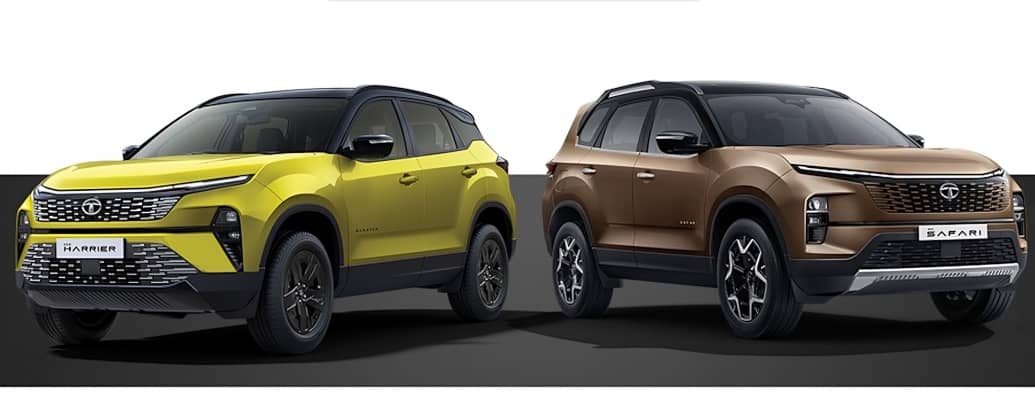
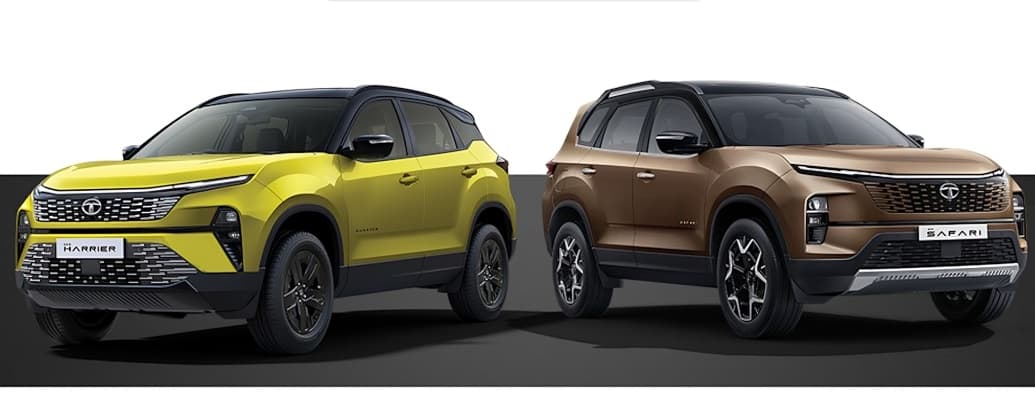
Tata Motors’ Safari and Harrier petrol-powered SUVs have undergone crash testing under the Bharat New Car Assessment Programme, marking an important step in evaluating vehicle safety standards in India. The Bharat NCAP framework assesses how vehicles perform in controlled crash scenarios, offering consumers transparent information about occupant protection and structural safety.
Both the Tata Safari and Harrier were tested for frontal and side impact protection, which form the core of Bharat NCAP assessments. These tests simulate common collision scenarios on Indian roads and evaluate the safety of adult occupants as well as child passengers. The results provide insights into how effectively the vehicles’ body structure and safety features absorb and distribute crash forces.
Tata Motors has built a reputation for prioritising safety in its vehicles, and the Safari and Harrier are based on the company’s OmegaArc platform, derived from global safety architectures. This platform is designed to deliver high structural rigidity while supporting advanced safety systems such as multiple airbags, electronic stability control, and advanced braking assistance.
According to Bharat NCAP norms, vehicles are rated based on parameters including occupant protection, vehicle structure stability, and the effectiveness of restraint systems. The evaluation also takes into account safety assist technologies that help prevent accidents or reduce their severity. These standards are aligned with global safety benchmarks while being tailored to Indian conditions.
Industry experts note that safety ratings are increasingly influencing consumer decisions in India’s SUV market. Buyers are paying closer attention to crash test results and standard safety features when choosing vehicles, especially in higher price segments. The crash testing of petrol variants of the Safari and Harrier ensures that safety benchmarks are maintained across different powertrain options.
The Bharat NCAP initiative itself represents a major step forward for road safety awareness in India. By providing independent safety ratings, the programme encourages manufacturers to enhance vehicle safety and gives consumers the information needed to make informed choices.
For Tata Motors, the latest crash test results further strengthen its positioning as a safety-focused automaker. The company has consistently highlighted safety as a key selling point, and its vehicles have performed well in both domestic and international crash assessments in recent years.
As the Indian automotive market evolves, the emphasis on safety is expected to grow further. The crash testing of the Tata Safari and Harrier petrol SUVs underscores the industry’s shift toward higher safety standards and greater transparency, benefiting consumers and contributing to improved road safety outcomes nationwide.


