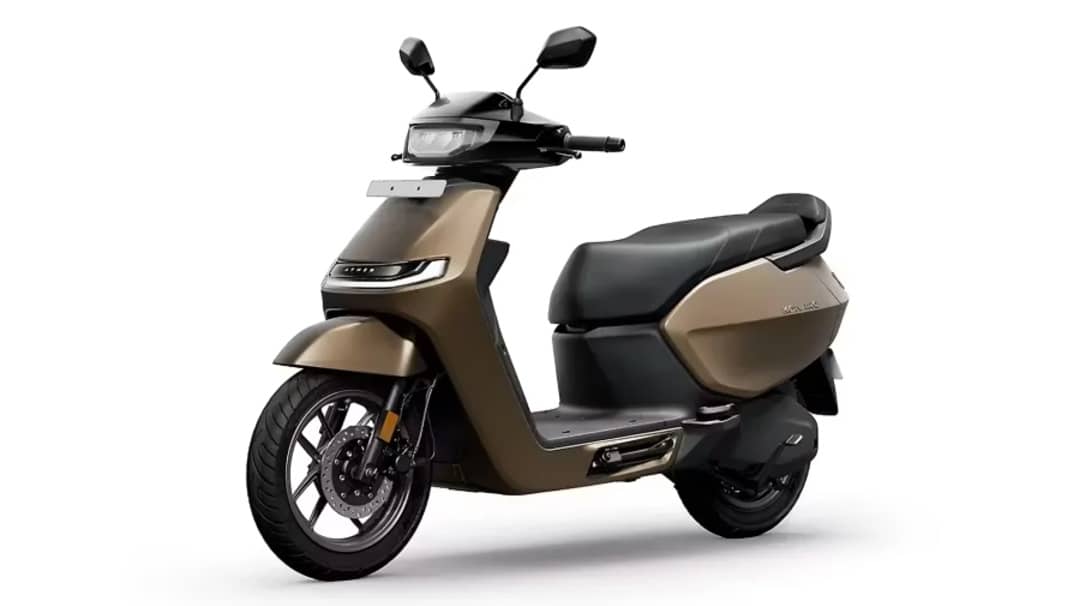
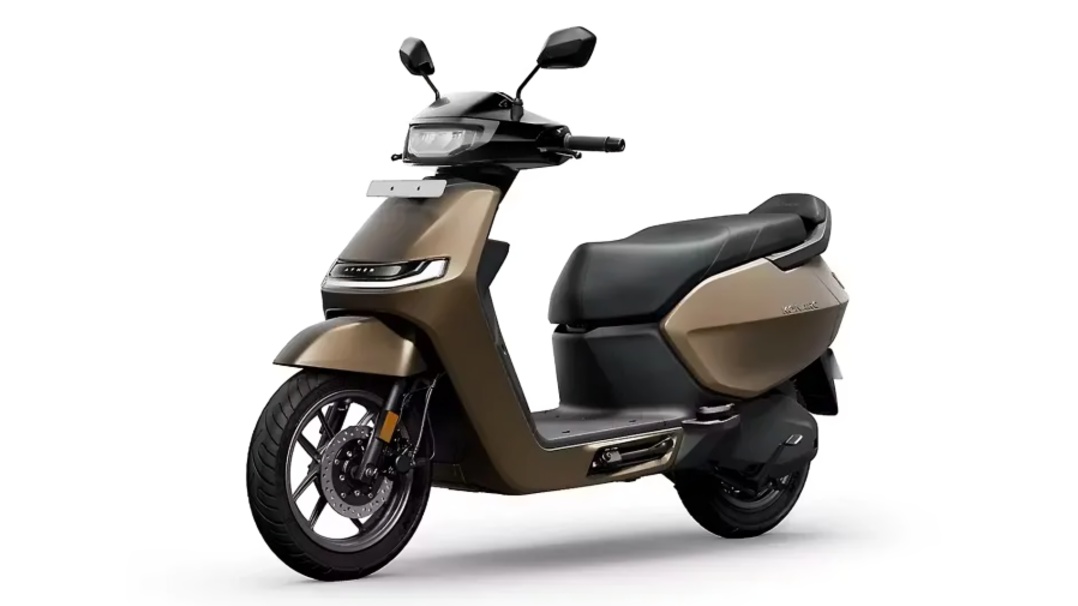
Ather Energy has expanded its electric scooter portfolio with the new Konarc, positioning the model as a more family oriented and accessible product in the Indian electric two wheeler market. With an effective ex showroom starting price of Rs 99,999, the Konarc enters a segment where the Bajaj Chetak is already an established competitor.
The comparison becomes particularly relevant between the higher range Ather Konarc S161 and the Bajaj Chetak C3501. In Bengaluru, the Konarc S161 is priced at Rs 1,44,999 ex showroom, while the Chetak C3501 is listed at Rs 1,52,140. This gives the Konarc S161 a price advantage of Rs 7,141 over the Chetak C3501 at the stated Bengaluru prices.
Price Comparison
The Ather Konarc S is currently listed with three available range configurations. The S100 is priced from Rs 99,999, while the S125 costs Rs 1,21,999 and the S161 is priced at Rs 1,44,999. Ather also lists a 200 km IDC version, but that variant is not currently available for sale and is expected later.
The Bajaj Chetak 35 Series is available in several versions. The C3503 is priced at Rs 1,24,157 in Bengaluru, the C3502 at Rs 1,36,939 and the top C3501 at Rs 1,52,140. The prices are ex showroom and can vary by location and applicable offers.
This means the Konarc has a particularly aggressive price position. Even its S161 version undercuts the Chetak C3501, while the entry level S100 is considerably less expensive than the Chetak C3503.
Range and Battery
Range is one of the biggest differences between the two scooters. The Konarc S is offered with 2.1 kWh, 2.7 kWh and 3.5 kWh battery configurations corresponding to 100 km, 125 km and 161 km IDC range figures. Ather also publishes TrueRange figures of 80 km, 100 km and 130 km for those currently listed S variants.
The Bajaj Chetak C3501 uses a 3.5 kWh battery and has a claimed range of up to 153 km. The C3502 also offers 153 km, while the C3503 is rated at 151 km.
On claimed IDC range alone, the Konarc S161 has an eight kilometre advantage over the Chetak C3501. However, these figures are test cycle figures and should not be treated as guaranteed real world riding range.
Ather's published TrueRange figure for the S161 is 130 km. Bajaj's official Chetak specifications cited here do not provide a directly equivalent TrueRange figure, so comparing the two solely on real world range would require independent testing.
Performance
The Konarc S161 produces peak power of 4.7 kW and 16 Nm of torque, with a claimed top speed of 70 km/h. It uses a PMSM motor and offers SmartEco, Eco and Power riding modes.
The Chetak C3501 has a claimed top speed of 80 km/h. It provides Eco and Sports riding modes and uses the same 3.5 kWh battery capacity as the Konarc S161.
This gives the Chetak an advantage in outright top speed. The Konarc, however, focuses more heavily on ease of use, ride comfort and everyday practicality rather than maximum speed.
Charging
The Konarc comes with a 450 watt onboard charger. Ather lists a home charging time of five hours and 40 minutes from zero to 80 percent for the S161 using the standard onboard charger. The combined charging system can add another 450 watt charging capacity and reduce the zero to 80 percent home charging time to approximately three hours and 10 minutes on the S161.
Ather describes Combined Charging as a system that allows the onboard and additional external charging capacity to be used together. This is intended to make home charging faster without requiring the scooter to rely entirely on a removable external charger.
The Chetak C3501 officially lists a zero to 80 percent charging time of three hours. The C3502 and C3503 are listed at approximately three hours and 25 minutes.
Therefore, the Chetak C3501 has the faster standard charging figure, while the Konarc S161 can improve charging time when its combined charging setup is used.
Design and Practicality
Ather has designed the Konarc around a steel unibody chassis and metal body. It comes with 14 inch alloy wheels and long travel suspension. Ather says the platform was developed with a focus on everyday usability and simplified servicing.
The Chetak C3501 follows a more traditional neo retro scooter design and also focuses on family use. One of its most notable practical advantages is its 35 litre boot space, which is larger than the 31 litre underseat storage reported for the Konarc.
The Chetak also has a 5 litre closed glovebox on the apron, giving it another advantage for carrying smaller everyday items.
Technology and Features
Technology is an important part of the Konarc package. The S125 and S161 versions can be equipped with a seven inch DeepView display and AtherStack Pro. The connected package includes features such as music controls, over the air updates, reverse mode, hill hold, Find My Scooter and other connected functions.
Ather also provides a feature called AirWalk on relevant Konarc variants, designed to make manually moving the scooter easier. The company has positioned this as a convenience feature for parking and tight spaces.
The Chetak C3501 comes with a touchscreen display, full app connectivity and integrated Google Maps navigation. It also supports document storage, reverse mode, music controls and other connected functions.
Both scooters therefore offer substantial connected technology, although their interfaces and feature packages are different.
Braking and Safety
The Konarc offers disc braking on the front on the S125 and S161 variants, while the S100 uses a more basic setup. The scooter also has IP67 rated motor and battery protection according to Ather's specifications.
The Chetak C3501 uses a 200 mm front disc and a 130 mm rear drum brake with combined braking. The C3502 follows the same basic braking arrangement, while the C3503 uses drum brakes at both ends.
For buyers comparing the top variants, both scooters provide disc based front braking, although their overall braking hardware differs.
Warranty
Ather provides a standard battery warranty of three years or 30,000 km. With AtherStack Pro, the battery warranty is extended to five years or 60,000 km at no additional cost. Buyers can also purchase further extended battery warranty options of eight years or 80,000 km and 10 years or 1,00,000 km.
This could be an important consideration for buyers planning to keep the scooter for a long period.
Which Scooter Has the Better Range
On official IDC numbers, the Ather Konarc S161 has the advantage with 161 km compared with 153 km for the Chetak C3501. The difference is relatively modest, but the Konarc is also priced lower in the Bengaluru comparison.
However, Ather's published TrueRange figure for the S161 is 130 km. This illustrates why buyers should not treat IDC range as the same as the distance they will necessarily achieve during everyday riding. Riding style, traffic, speed, weather and load can all affect actual range.
Which Scooter Offers More Practical Storage
The Bajaj Chetak has the advantage here. Its 35 litre underseat storage is larger than the Konarc's 31 litre storage, while the Chetak also gets a 5 litre closed glovebox. For families who regularly carry bags, helmets and other items, this difference may be useful.
Which Has the Better Performance
The Chetak C3501 has the higher top speed at 80 km/h, compared with 70 km/h for the Konarc S161. The Konarc counters with a higher claimed IDC range and several ride and convenience features designed around daily urban use.
For city commuters who prioritise storage and higher top speed, the Chetak may be more attractive. For buyers who prioritise price, range and Ather's connected ecosystem, the Konarc presents a strong alternative.
Overall Comparison
The Ather Konarc represents an important change in Ather's strategy because the company is moving into a more family focused and accessible electric scooter segment. Its starting price of Rs 99,999 makes it significantly more affordable than the higher Chetak 35 Series variants, while the S161 remains cheaper than the Chetak C3501 in the Bengaluru price comparison.
The Chetak, meanwhile, benefits from a mature product line, larger storage capacity, an 80 km/h top speed on the C3501 and features such as integrated Google Maps.
The Konarc's main strengths are its lower price, up to 161 km IDC range, metal body, 14 inch wheels, connected technology and extended battery warranty options. The Chetak's main strengths include its larger storage capacity, faster standard charging on the C3501, higher top speed and familiar Chetak design.
The better choice ultimately depends on what the buyer values most. The Konarc looks particularly competitive for consumers searching for a feature rich electric scooter with a lower entry price and strong claimed range. The Chetak remains appealing to buyers who prioritise storage, higher top speed and its established family scooter format.
As the Konarc expands into more markets, competition in India's family electric scooter segment is likely to become stronger. Buyers should compare the exact variant, local ex showroom price, insurance, registration, available offers, charging setup and actual test ride performance before making a purchase.