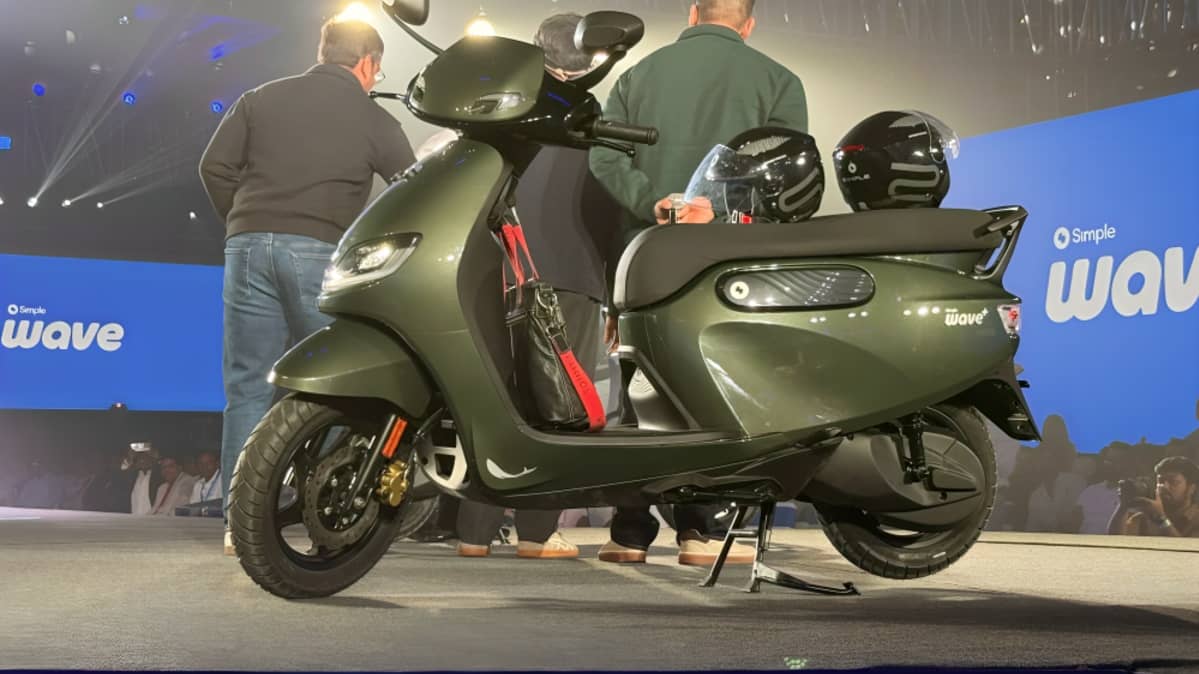
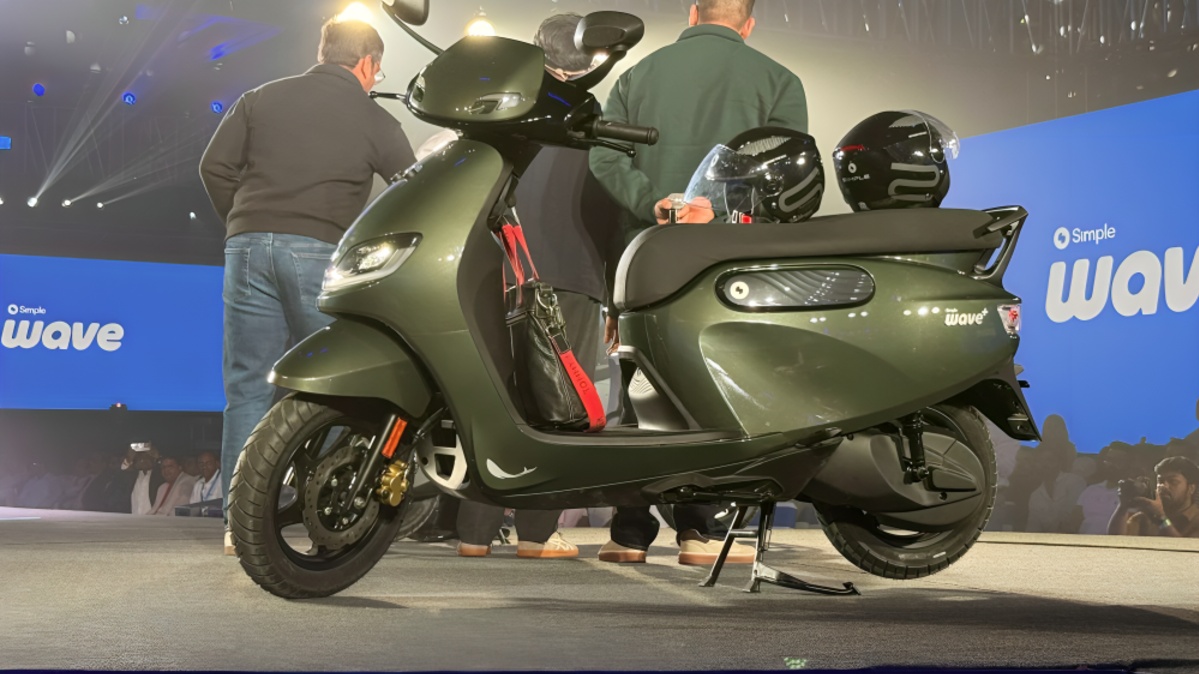
Simple Energy has expanded its electric scooter portfolio in India with the launch of the Simple Wave, a new family oriented electric scooter designed with a focus on practicality, storage and everyday usability. The scooter has been introduced at an introductory price of Rs 1,09,999, ex showroom, Bengaluru. Deliveries are scheduled to begin from September 25, 2026. The company has positioned the Wave below its performance focused models and is targeting buyers looking for a practical electric scooter for regular family and city use.
One of the biggest highlights of the Simple Wave is its claimed range. The scooter is available with four battery capacity options of 2.2 kWh, 2.7 kWh, 3.7 kWh and 5 kWh. Depending on the battery configuration, the claimed IDC range varies from 110 km to 243 km. The entry level version with a 2.2 kWh battery offers a claimed range of 110 km, while the 2.7 kWh version offers up to 132 km. The 3.7 kWh version has a claimed range of 171 km, while the range topping Wave Plus with a 5 kWh battery claims up to 243 km on the IDC cycle.
The top version also offers a claimed top speed of 90 kmph. According to Simple Energy, the Wave Plus can accelerate from zero to 40 kmph in 3.3 seconds. The scooter uses a 6.4 kW motor on most variants, while the entry level configuration uses a smaller motor. The motor has been developed by Simple Energy and is designed to deliver sufficient performance for daily urban riding.
Practicality is another major focus of the Simple Wave. The company claims up to 70 litres of total storage space, making it one of the key selling points of the new family scooter. The main under seat storage area provides around 63 litres of space, while additional compartments contribute to the overall storage capacity. The scooter also features a dedicated auxiliary storage compartment called Pill, along with additional storage areas for everyday items.
The large storage capacity could be particularly useful for family buyers who regularly carry shopping bags, helmets and other personal belongings. Simple Energy has also designed the scooter with a flat floorboard and a long seat. The seat measures 920 mm, which the company describes as one of the longest scooter seats in the Indian market. The seat height is 775 mm, while ground clearance stands at 175 mm. The scooter has a claimed payload capacity of 150 kg.
The Simple Wave is available in different equipment configurations. Depending on the variant, buyers can choose between a 7 inch TFT display and a simpler display setup. Connected features include smartphone connectivity, navigation, call and music controls and message notifications. Features such as Find My Scooter and Ping My Scooter are also available to help owners locate the vehicle in parking areas.
The scooter also comes with several riding modes. These include Eco, EcoX and Ride modes, while higher variants additionally offer Sport mode. The different modes allow riders to choose between efficiency and performance depending on their requirements. Reverse and Crawl modes are also available, providing additional convenience during low speed manoeuvres and crowded traffic conditions.
Safety and riding assistance features form another part of the Simple Wave package. Higher variants are equipped with traction control, while hill hold assistance is designed to help riders start on inclines without the scooter rolling backwards. The scooter also includes Reverse mode and other electronic functions intended to make daily riding easier. Some variants additionally receive vehicle tracking and theft related alerts.
The braking system consists of a front disc brake and a rear drum brake. The scooter rides on 12 inch alloy wheels and uses telescopic front suspension with twin shock absorbers at the rear. Simple Energy has moved to a twin shock setup compared with the monoshock arrangement used on some of its performance oriented models. The change is intended to support the Wave's family focused design and provide additional practicality.
Battery durability and charging are also important aspects of the new electric scooter. Simple Energy says the batteries are rated IP67 for resistance against dust and water. The company claims the scooter can handle water wading of up to 300 mm. Charging times vary according to the battery and charging setup. The top version can reportedly charge from zero to 80 percent in around two hours and 15 minutes using the company's fast charging arrangement.
The Simple Wave also features the company's HushDrive transmission system, which is designed to reduce transmission related noise and vibration. Simple Energy says the latest motor and transmission package has been developed with a focus on a quieter riding experience. These changes are aimed at making the scooter more suitable for family users who may prioritise comfort and refinement over outright performance.
In terms of design, the Wave takes a different approach from Simple Energy's existing One range. Instead of using an aggressive and sporty appearance, the new scooter has a smoother and more practical design. The flat seat and floorboard are intended to make it easier for two adults to use the scooter. LED lighting is offered across the range, while selected variants receive additional connected and convenience features.
Simple Energy has introduced multiple configurations of the Wave rather than limiting customers to a single battery option. This gives buyers the opportunity to choose a model based on their expected daily travel requirements. Customers who primarily use the scooter for shorter city trips can opt for the smaller battery versions, while buyers seeking greater claimed range can consider the 3.7 kWh or 5 kWh configurations.
The new scooter enters a competitive segment of the Indian electric two wheeler market. It will compete with established electric scooter models from manufacturers including Ather, Bajaj, Hero MotoCorp and TVS. The Wave's combination of a family focused design, multiple battery options and large storage capacity is intended to differentiate it from performance oriented electric scooters.
The starting price of Rs 1,09,999 is an introductory ex showroom price. Simple Energy has stated that the Wave will be offered in multiple configurations, with prices for individual variants dependent on the equipment and battery combination. Deliveries are scheduled to start on September 25, 2026. Buyers should also consider applicable registration charges, insurance, taxes and other on road costs when calculating the final purchase price.
Overall, the Simple Wave marks an important expansion for Simple Energy into the family electric scooter segment. Instead of concentrating only on performance, the company has focused on range options, storage capacity, seating comfort and everyday usability. The top version's claimed 243 km IDC range and the 70 litre storage capacity are among its most notable specifications.
However, the IDC range figure is a certified test cycle figure and actual range in everyday riding can vary depending on factors such as riding speed, traffic, rider weight, road conditions, weather, riding mode and use of electrical features. Customers should therefore consider real world usage requirements rather than relying only on the maximum claimed range.
With deliveries beginning later in September, the Simple Wave will soon be available for Indian customers looking for a family oriented electric scooter. Its combination of multiple battery choices, practical storage and connected features could make it an important addition to the growing Indian electric two wheeler market.