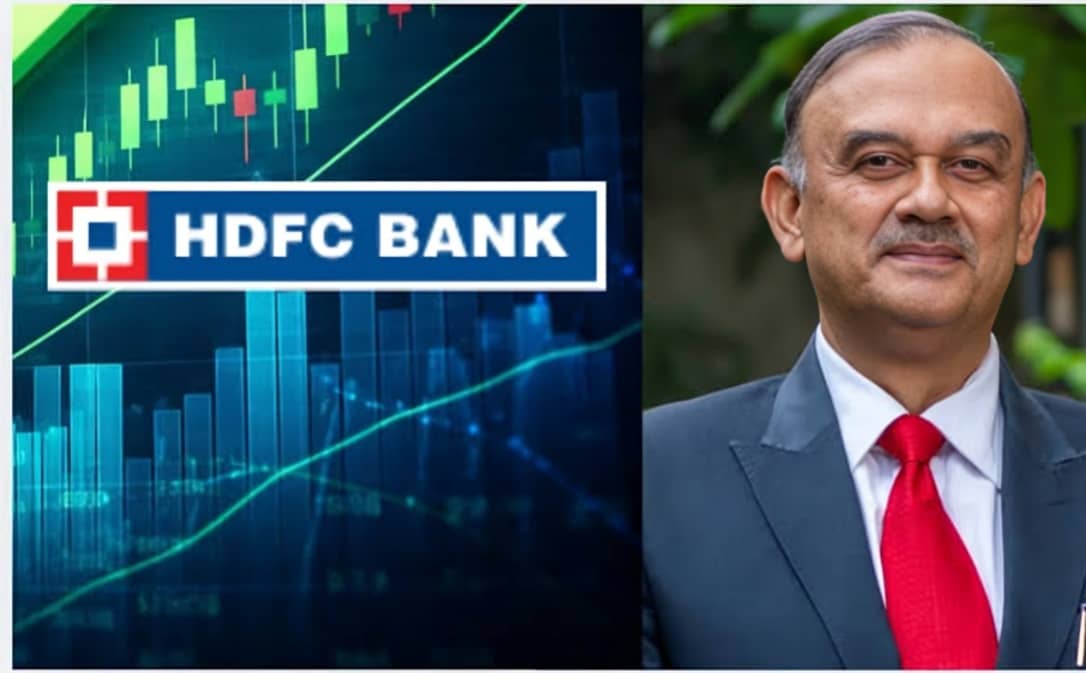
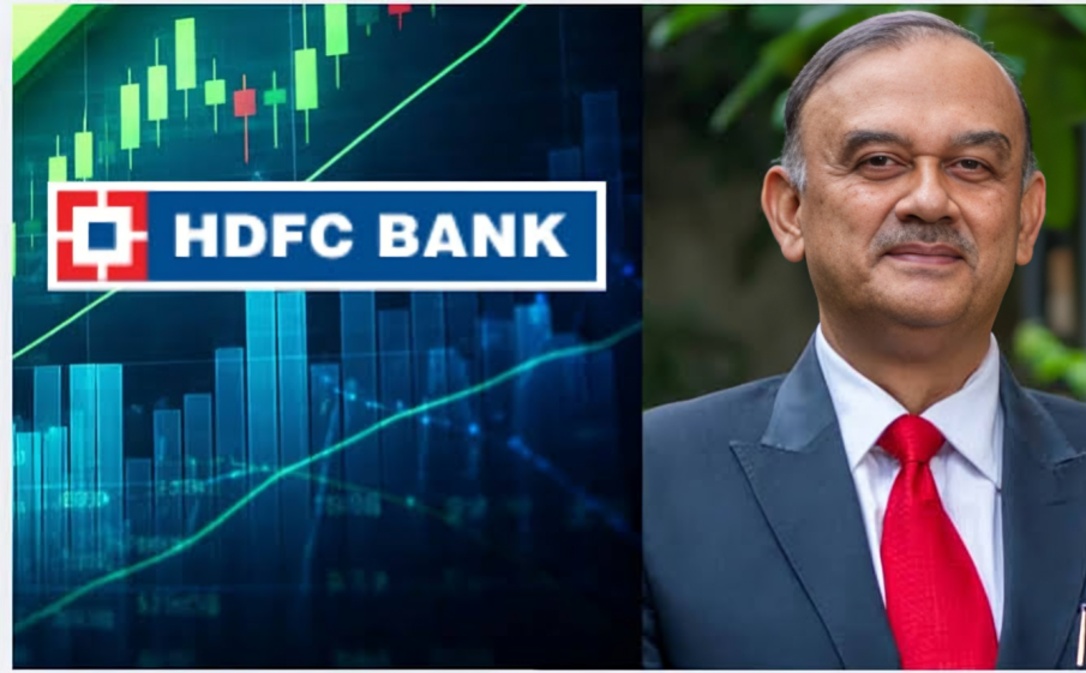
HDFC Bank shares gained nearly 3 percent in early trading on August 31 after Managing Director and Chief Executive Officer Sashidhar Jagdishan decided not to seek another term at the country's largest private sector lender.
The market reaction followed the bank's announcement that Jagdishan would step down when his current term ends on October 26, 2026. The development has triggered a fresh focus on the bank's succession planning and future strategic direction.
At the day's high, the stock reached around Rs 739.50 on the BSE, representing an increase of about 2.7 percent. The broader market was weaker, making the bank's initial share price response particularly notable. However, the stock had already fallen substantially in 2026, reflecting concerns that had built up around governance, profitability and leadership.
Brokerages have largely maintained a constructive view of HDFC Bank despite the leadership change. Their overall assessment is that the CEO transition creates uncertainty, but does not by itself justify a broad downgrade of the bank's shares.
Morgan Stanley retained its Overweight rating on the stock and maintained a target price of Rs 1,025. The brokerage identified Deputy Managing Director Kaizad Bharucha and Jimmy Tata as leading internal candidates for the chief executive position. It also noted that the leadership uncertainty had already been an overhang for the stock.
Jefferies also retained its Buy recommendation but reduced its target price to Rs 880 from Rs 1,050. The brokerage cut its earnings estimates for financial years 2027 to 2029 by about 3 percent each. It said the leadership transition could affect deposit mobilisation and fee income in the near term.
ICICI Securities similarly maintained a Buy call while lowering its target price to Rs 920 from Rs 1,020. The brokerage reduced the valuation multiple used in its assessment to reflect the uncertainty surrounding the upcoming CEO succession.
Motilal Oswal also retained its Buy recommendation but reduced its target price to Rs 925 from Rs 1,100. Nuvama likewise continued with a Buy rating while cutting its target to Rs 875 from Rs 1,025. These revisions indicate that brokerages are reducing their near term assumptions without abandoning their broader positive view on the bank.
A number of other brokerages did not change their target prices. UBS retained a target of Rs 1,130, Bernstein maintained Rs 1,150, Macquarie retained Rs 1,150 and Nomura kept its target at Rs 950. Morgan Stanley, Kotak and Citi also maintained their existing targets.
This relatively limited adjustment suggests that the leadership change was not viewed by most analysts as a fundamental deterioration in HDFC Bank's business prospects. Instead, the focus is on how effectively the board manages the transition and whether the incoming CEO can maintain the bank's growth strategy.
The bank's board has said it will accelerate the search for a successor. The succession process is expected to consider both internal and external candidates, subject to regulatory requirements and the bank's board selection process. A quick and credible appointment could help reduce uncertainty for investors.
The CEO transition comes after a period in which HDFC Bank's stock has underperformed the broader market. Reuters reported that the stock had fallen around 28.5 percent in 2026 before the latest trading session, compared with a smaller decline in the benchmark Nifty 50.
Analysts have pointed to several issues behind the weak share performance. These include slower growth, pressure on net interest margins, profitability concerns and governance related developments. The leadership transition now adds another variable to the outlook.
At the same time, HDFC Bank continues to have strong asset quality and a large deposit and loan franchise. Analysts generally believe these strengths provide a foundation from which the incoming management can pursue further growth.
One of the key questions for investors is whether the next CEO can improve the bank's return profile without compromising asset quality. Analysts are also watching deposit mobilisation, loan growth, net interest margins and fee income.
The bank's merger with HDFC Ltd remains an important part of its long term strategy. The combination created one of India's largest financial institutions and significantly expanded the bank's balance sheet and customer base. However, integrating the businesses and improving returns have also created challenges for management.
The leadership transition therefore comes at a sensitive stage. The incoming chief executive will inherit both the scale of the combined institution and the expectations of investors seeking stronger growth and profitability.
Another concern is the possibility of senior management turnover. Analysts have said that investors will monitor whether key executives remain with the bank during and after the transition. Maintaining continuity among senior managers could help reduce operational uncertainty.
Jefferies has argued that the bank's valuation is already relatively undemanding compared with historical levels. The brokerage believes this provides some protection for the stock despite near term succession concerns.
ICICI Securities has also indicated that a significant part of the weakness may already be reflected in the share price. This is one reason why the brokerage maintained its Buy rating even after lowering its target.
For investors, the next major trigger is likely to be the announcement of the new CEO. The identity of the successor could influence the market's assessment of the bank's future strategy. An internal appointment may provide greater continuity, while an external appointment could potentially result in broader strategic changes.
The board has several months to complete the process before Jagdishan's term ends on October 26. During this period, investors are likely to closely monitor regulatory developments, management commentary and any indications about the preferred candidate.
The stock's near term performance could remain volatile as the market reacts to developments surrounding the succession process. However, analysts generally remain focused on the bank's underlying earnings potential rather than treating the CEO transition as an immediate threat to its franchise.
Another factor is valuation. HDFC Bank has traded below some of its historical valuation levels after its prolonged period of underperformance. This has encouraged some analysts to argue that the stock offers attractive long term value if the bank can restore stronger earnings growth.
The current consensus therefore remains broadly positive. Moneycontrol reported that only three of the thirteen brokerages reviewed had cut their price targets following the CEO announcement, while ratings across the group largely remained unchanged. The average target price among several brokerages remains significantly above the prevailing market price. However, target prices are analyst estimates and are not guarantees of future returns. Investors also need to consider market conditions, bank earnings, interest rates, credit growth and other financial factors before making investment decisions.
The immediate market response suggests that investors have not treated Jagdishan's decision as a fundamental crisis for HDFC Bank. The initial rise in the share price indicates that some investors may view the removal of uncertainty over Jagdishan's future as positive, even though the identity of his successor is not yet known.
This is an important distinction. Before the announcement, uncertainty existed over whether Jagdishan would seek another term. His decision has removed that specific question, but it has replaced it with the broader question of who will lead the bank next.
The next chief executive will inherit responsibility for maintaining the bank's strong asset quality while improving growth, profitability and returns. Investors will also expect the new leadership to address concerns that have contributed to the stock's underperformance.
HDFC Bank remains India's largest private sector bank by assets and has a significant role in the country's financial system. A smooth management transition is therefore important not only for shareholders but also for employees, customers and the wider banking sector.
The board's succession process is expected to attract considerable attention from investors and analysts. Internal candidates may offer continuity, while external candidates could bring different strategic perspectives. Regulatory approval will also be an important part of the final appointment process.
For now, brokerages remain broadly supportive of HDFC Bank. Morgan Stanley, Jefferies, ICICI Securities and several other firms continue to maintain positive ratings, although some have reduced their targets to account for the uncertainty surrounding the leadership change.
The stock's next direction will depend on several factors, including the timing and quality of the successor appointment, the bank's financial performance and broader market conditions.
For investors tracking HDFC Bank, the key issue is therefore not simply the departure of the current CEO but how effectively the bank manages the transition. A credible successor, stable senior management and continued improvement in earnings could help restore investor confidence.
At the same time, continued weakness in growth or further management uncertainty could keep the stock under pressure.
The August 31 market response provides an initial indication that investors remain cautiously optimistic. HDFC Bank shares rose sharply in early trading, while most brokerages retained positive ratings. However, the reduced targets from several analysts show that the transition is being treated as a genuine near term risk.
The coming months will be important for India's largest private sector lender as the board works to identify its next chief executive. Until the appointment is finalised, the stock is likely to remain sensitive to developments surrounding the succession process.
For now, the overall analyst view remains constructive but cautious. HDFC Bank's core franchise continues to attract support, while the leadership transition represents the main uncertainty that investors will be watching as the bank enters its next phase.