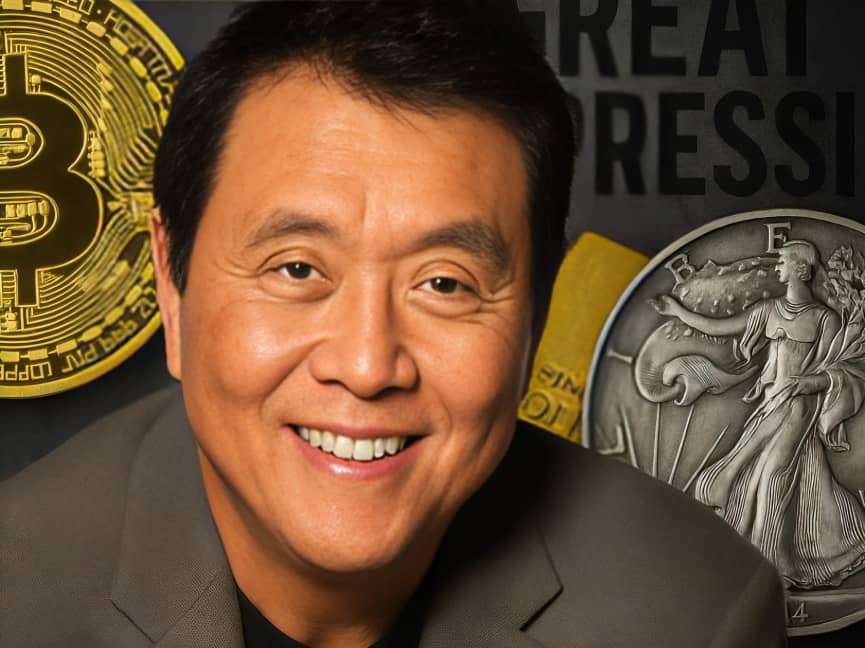

Robert Kiyosaki, author of the widely read personal finance book Rich Dad Poor Dad, has once again voiced criticism of the global financial system, alleging that banks consistently emerge as winners during economic crises. In a recent post shared on social media, Kiyosaki described the system as fundamentally unbalanced, claiming it operates in a way that benefits financial institutions regardless of market outcomes.
According to Kiyosaki, banks maintain control over global cash flow, which allows them to shift financial risks onto customers during periods of economic instability. He argued that when markets perform well, banks profit through lending, fees, and investments, and when markets decline, losses are often absorbed by borrowers, taxpayers, or governments through bailouts and policy interventions.
Kiyosaki characterised this structure as a system where ordinary individuals are exposed to downside risks while large financial institutions are shielded from major consequences. He suggested that this imbalance becomes more visible during financial crises, when banks receive regulatory or financial support to maintain stability, while consumers face job losses, declining asset values, and increased debt burdens.
The author also expressed concerns about the broader global economy, warning that structural weaknesses in financial systems could lead to further instability. While acknowledging that market downturns are cyclical, Kiyosaki maintained that repeated crises highlight systemic issues rather than isolated events.
In his commentary, Kiyosaki encouraged individuals to focus on financial literacy and long-term wealth protection strategies. He emphasised the importance of understanding tax laws, managing debt responsibly, and diversifying assets. He also reiterated his long-standing views on holding alternative assets such as precious metals and digital currencies, though he framed these as personal opinions rather than formal financial advice.
Financial experts note that while Kiyosaki’s views resonate with concerns about inequality and systemic risk, they remain opinion-based and are not universally accepted. Economists point out that banks are subject to regulatory frameworks designed to prevent systemic collapse, and that stabilising financial institutions during crises is often aimed at protecting the broader economy rather than individual firms.
Critics of Kiyosaki’s perspective argue that financial systems involve complex trade-offs and that market participation carries inherent risks for all stakeholders. They caution that sweeping generalisations may oversimplify the role of banks and policymakers during economic downturns.
Kiyosaki has frequently used public platforms to challenge conventional financial advice and promote alternative approaches to wealth management. His statements often generate debate among investors, economists, and financial educators.
In summary, Robert Kiyosaki’s latest comments highlight ongoing public concerns about fairness and accountability within the global financial system. While his views reflect skepticism toward traditional banking structures, experts advise individuals to seek balanced information, understand risks, and make financial decisions based on reliable professional guidance rather than commentary alone.