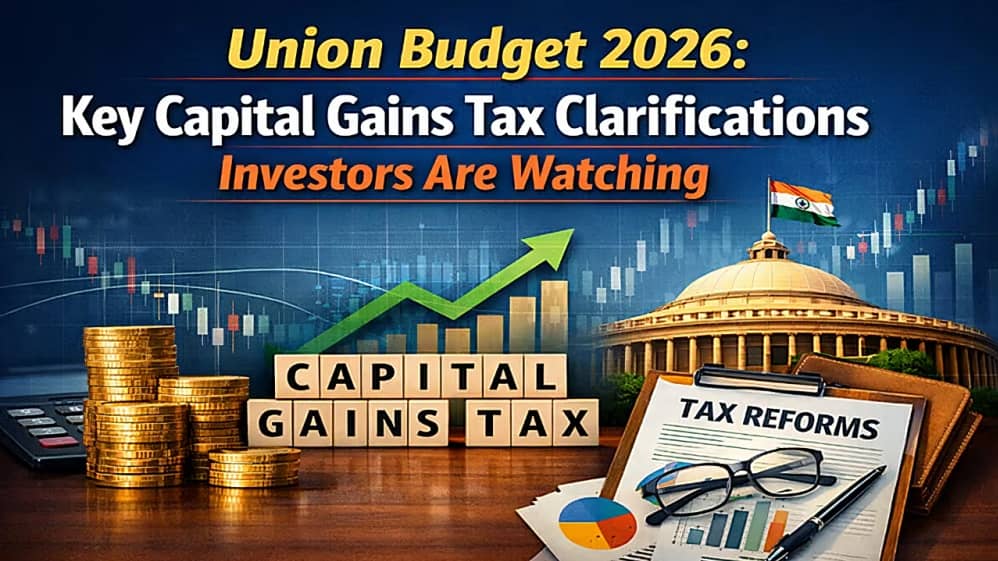
With discussions around Union Budget 2026 gaining momentum, tax experts and economic analysts have raised concerns over proposals that suggest increasing taxes on high-income individuals and wealthy households. According to experts, measures such as higher surcharges or the reintroduction of a wealth tax could have unintended consequences for India’s economy.
One of the primary concerns is the risk of capital flight. Analysts argue that high-net-worth individuals and investors often have the flexibility to move capital across borders. If tax rates rise sharply or policies are perceived as punitive, there is a possibility that funds could be redirected to countries offering more favourable and predictable tax environments. Such outflows could reduce domestic investment and weaken economic growth.
Experts also point out that higher taxes on the wealthy may impact entrepreneurship and job creation. Many start-ups, infrastructure projects, and expansion plans are funded by private capital. Increased tax burdens could reduce the appetite for risk-taking and limit the flow of funds into productive sectors of the economy. This, in turn, may slow employment generation at a time when job creation remains a key policy priority.
Another issue highlighted is the importance of tax certainty. Businesses and investors rely on stable policies to plan long-term investments. Frequent changes in tax structures or sudden hikes can disrupt financial planning and affect investor confidence. Economists suggest that consistency in tax policy is as important as tax rates themselves in attracting both domestic and foreign investment.
India has made efforts in recent years to simplify its tax regime, reduce corporate tax rates, and improve ease of doing business. Experts caution that reversing this approach could dilute the gains achieved so far. Instead of targeting specific income groups, they recommend expanding the tax base by improving compliance, reducing evasion, and leveraging technology to bring more individuals and businesses into the formal tax system.
Some analysts also note that wealth taxes, while aimed at reducing inequality, often generate limited revenue compared to the administrative challenges involved. Past experiences in several countries have shown that such taxes can be complex to implement and may lead to asset relocation or legal disputes.
At the same time, experts acknowledge the government’s need to mobilise resources for public spending on infrastructure, healthcare, education, and social welfare. They suggest that this can be achieved through a balanced approach that encourages economic growth while ensuring fair contribution from all segments of society.
As Budget 2026 approaches, policymakers face the challenge of striking the right balance between equity and efficiency. Tax experts stress that a growth-oriented strategy based on stable, predictable, and transparent taxation will be more effective in sustaining long-term economic progress than sharp increases targeted at specific groups.