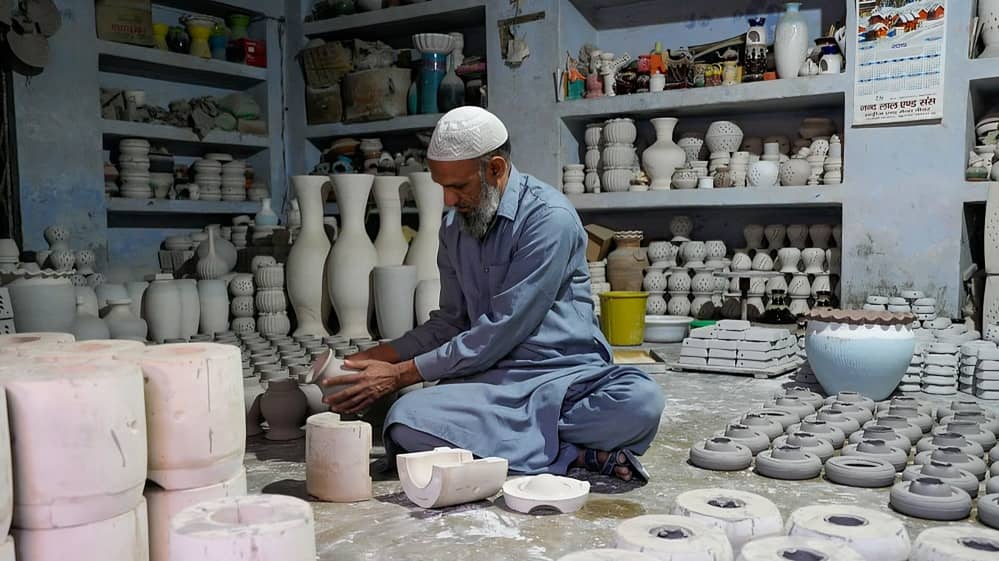
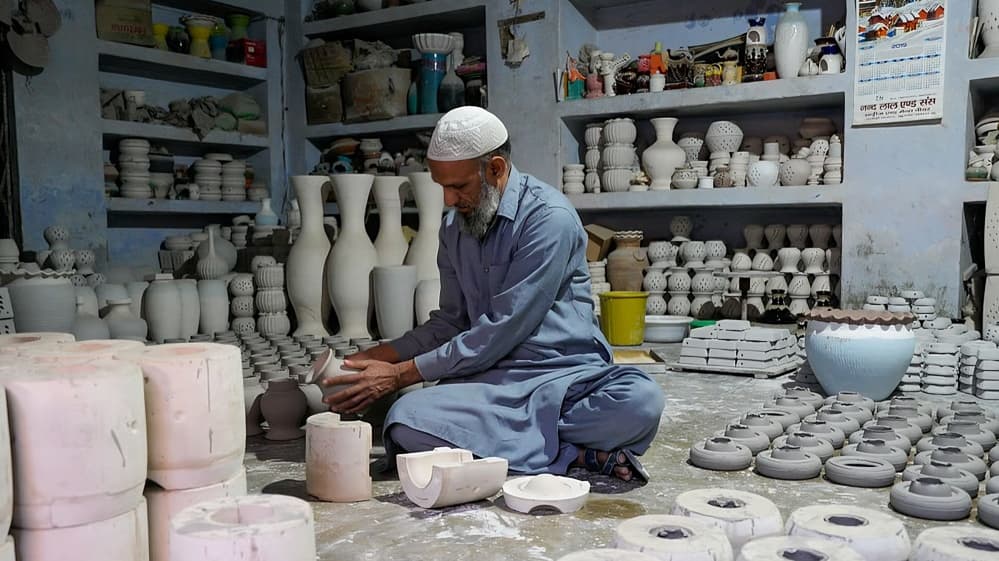
The Khurja pottery industry, known for its rich heritage and exquisite craftsmanship, is closely watching the upcoming Union Budget 2026-27, anticipating support to sustain and expand its operations. Khurja, located in Uttar Pradesh, has been the hub of India’s traditional pottery for decades, producing terracotta, glazed, and hand-painted wares that are popular both domestically and internationally. The industry employs thousands of artisans and is a significant contributor to the local economy, yet it faces mounting challenges such as rising raw material costs, labor shortages, and competition from machine-made ceramics.
Industry representatives and trade associations are hoping that the Union Budget will introduce measures such as income tax relief, subsidies for key raw materials, and financial incentives to boost production. They have also requested the government to include schemes that support marketing and export promotion, which would help Khurja pottery reach international markets more efficiently. These interventions, stakeholders argue, are necessary not only to preserve the craft but also to strengthen India’s cultural exports.
Apart from financial relief, experts suggest that modernization of infrastructure, skill development programs for artisans, and access to low-interest loans can significantly enhance productivity. The government’s support in organizing trade fairs, digital promotion platforms, and e-commerce integration would allow small-scale potters to reach a wider audience. Such initiatives could prevent artisans from abandoning the craft due to financial instability, thereby preserving a centuries-old tradition.
The industry has been adversely affected by rising energy costs, which are crucial for firing kilns, and by global competition from cheaper ceramic alternatives. Budgetary support could mitigate these challenges by providing relief on energy and transportation costs, enabling artisans to maintain profitability while continuing high-quality production. In addition, policy incentives such as simplified GST processes and tax exemptions for handicraft clusters could further reduce operational burdens.
Export potential is another key focus area. Khurja pottery has demand in countries like the United States, Europe, and the Middle East, but export volumes are limited due to logistical constraints and insufficient promotional support. Stakeholders are hoping the government allocates funds to enhance export facilitation, including trade agreements, packaging support, and marketing campaigns at international exhibitions. These measures can increase foreign revenue while showcasing India’s traditional craftsmanship globally.
In summary, the Union Budget 2026-27 presents a critical opportunity for the Khurja pottery industry to receive targeted support. Income tax relief, subsidies, infrastructure upgrades, and export promotion initiatives could strengthen the sector, provide economic stability to artisans, and preserve India’s rich pottery heritage. Industry leaders emphasize that strategic policy measures will ensure the sustainability and growth of Khurja pottery in a competitive market, benefiting both local communities and the country’s cultural economy.