Denmark is looking to strengthen its business and strategic partnership with India, and Mumbai is emerging as a key location in that effort. Danish Minister for Business and Competitiveness Martin Lidegaard visited Mumbai on November 2, 2026, to explore opportunities in trade, shipping, renewable energy, infrastructure and advanced technology.
The visit highlighted the strong commercial links between Denmark and Maharashtra, particularly in logistics and maritime infrastructure. The presence of major Danish businesses, including shipping and logistics giant Maersk, has made Mumbai an important gateway for expanding cooperation between the two countries.
63 Danish companies operating in Maharashtra
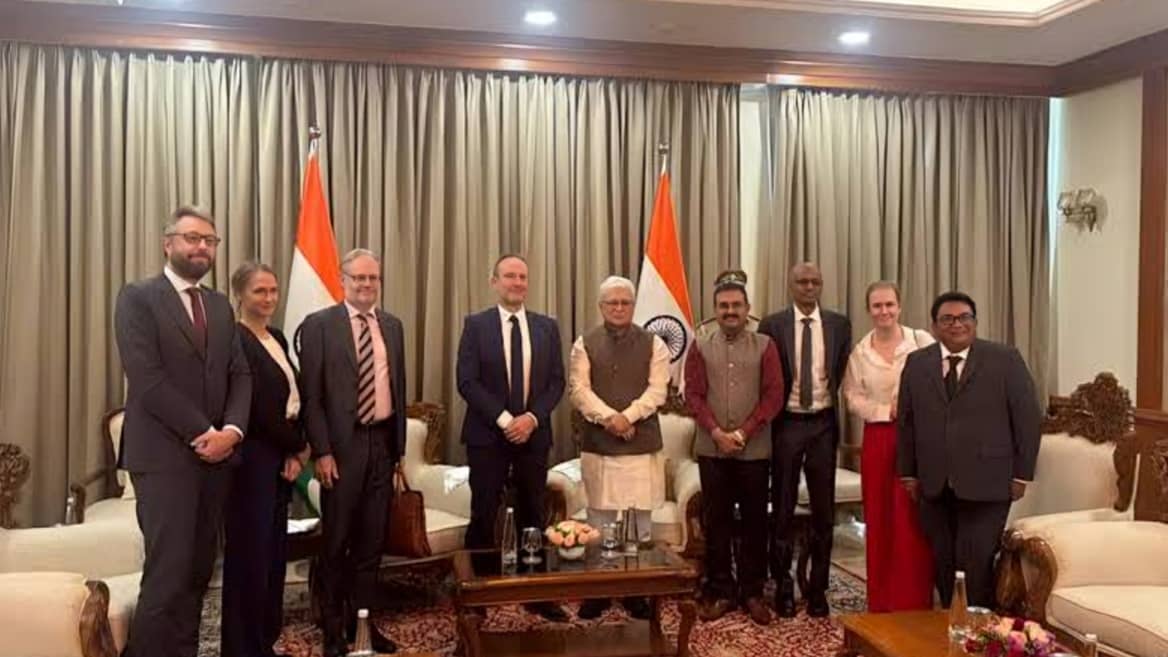
During his visit, Lidegaard met Maharashtra Governor Jishnu Dev Varma at Lok Bhavan in Mumbai. The minister informed the Governor that 63 Danish companies, including Maersk, are already operating in Maharashtra.
The discussions covered opportunities to expand business relations and the potential benefits of the proposed India-European Union Free Trade Agreement. Lidegaard expressed the hope that Maharashtra would benefit from improved trade opportunities once the agreement comes into effect.
The minister also highlighted the India-Denmark Green Strategic Partnership, which covers areas such as wind energy, solar power, green hydrogen and life sciences. Energy cooperation, education and artificial intelligence were among the other areas discussed during the meeting.
Maersk and Mumbai's maritime importance
One of the significant engagements during the visit was the minister's interaction with representatives of APM Terminals at Jawaharlal Nehru Port. The terminal, also known as Gateway Terminals India, is operated by APM Terminals, which is part of the Danish Maersk Group.
The discussions focused on port operations, infrastructure development, logistics efficiency and the adoption of sustainable technologies. Green shipping and investment opportunities in India's maritime sector were also part of the engagement.
Mumbai's importance to Denmark is closely connected to its position as a major commercial and maritime centre. Its port infrastructure and access to industrial and logistics networks make it an important location for companies looking to expand their presence in the Indian market.
The visit also brought attention to possible cooperation in developing more sustainable shipping operations. Both countries are interested in exploring cleaner maritime
L&T's historic connection with Denmark
Another important highlight was the Danish minister's engagement with Larsen & Toubro (L&T), one of India's leading engineering and infrastructure companies.
L&T has a special historical connection with Denmark. The company was founded in Mumbai in 1938 by two Danish engineers, Henning Holck-Larsen and Soren Kristian Toubro. Over the decades, it has grown into a major Indian multinational with operations across engineering, construction, infrastructure, manufacturing and technology.
During the minister's visit, L&T Chairman S. N. Subrahmanyan was appointed as Denmark's Honorary Consul in Mumbai, according to reports on the visit.
The appointment reflects the long-standing connection between the two countries and is expected to support business engagement and closer commercial relations. The minister also met representatives of Indian conglomerates, shipping companies and Danish maritime and defence businesses at L&T, where discussions covered industrial partnerships and opportunities in India's growing economy.
Denmark's wider business presence in India
Denmark's interest in India extends beyond Maharashtra. According to the Danish Ministry of Industry, Business and Financial Affairs, nearly 200 Danish subsidiaries operate in India and employ around 100,000 people.
Danish companies exported goods and services worth approximately 21.2 billion Danish kroner to India in 2025. The Danish government views India as an increasingly important economic and technological partner because of its growing market, infrastructure investments and demand for new technologies.
During his India visit, Lidegaard was scheduled to meet key stakeholders in Mumbai and New Delhi. The main areas of focus included renewable energy, green shipping and artificial intelligence.
Green energy and future cooperation
The India-Denmark partnership also has a strong focus on the transition towards cleaner energy. Denmark has experience in wind power and other green technologies, while India is expanding its renewable energy capacity to meet rising electricity demand.
Green hydrogen, solar power, wind energy and life sciences are among the areas where both countries see opportunities for cooperation. Artificial intelligence and education could also create additional avenues for technology exchange and institutional partnerships.
The Danish minister's Mumbai visit therefore represents more than a series of business meetings. It reflects Denmark's broader effort to strengthen its commercial presence in India by working with major Indian companies, port operators and government institutions.
With established Danish businesses such as Maersk operating in the region and a historic business connection through L&T, Mumbai is well positioned to remain an important centre for India-Denmark cooperation in trade, shipping, infrastructure and green technology.