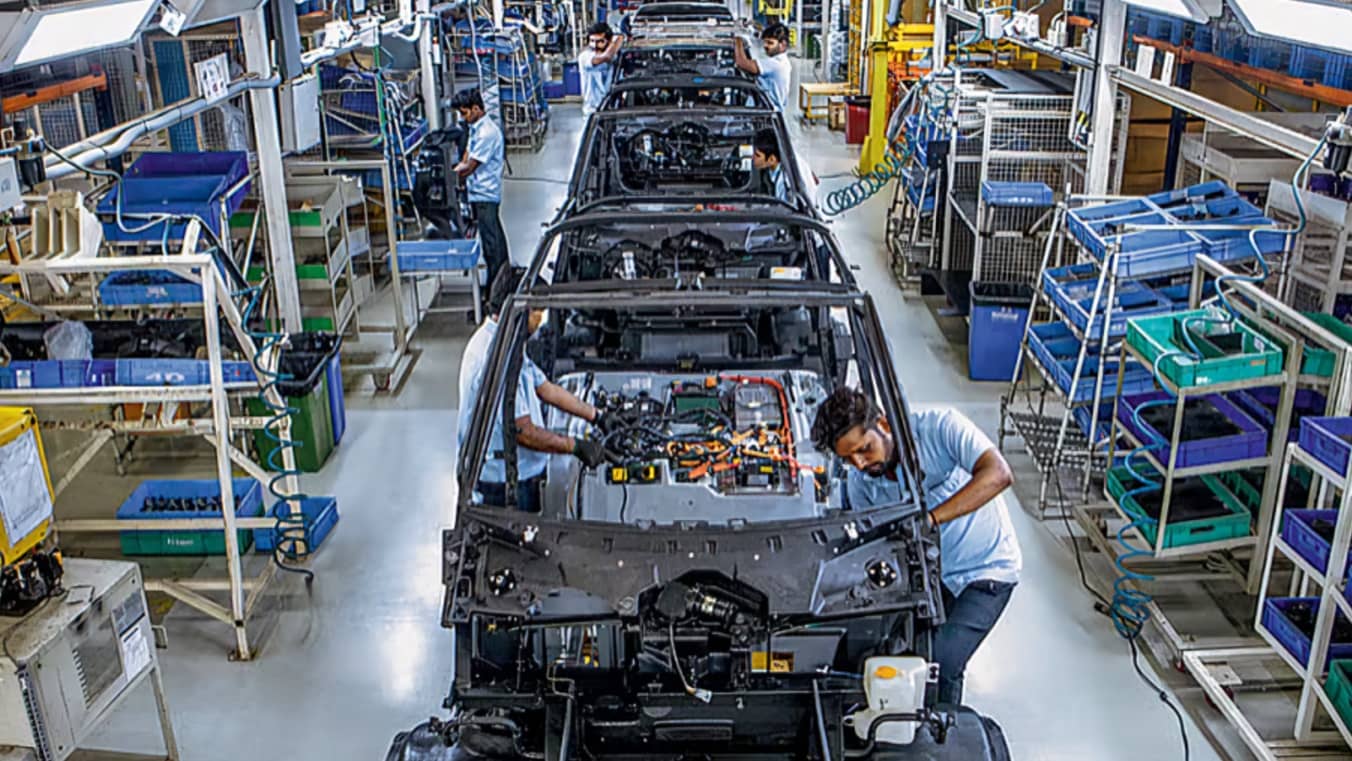
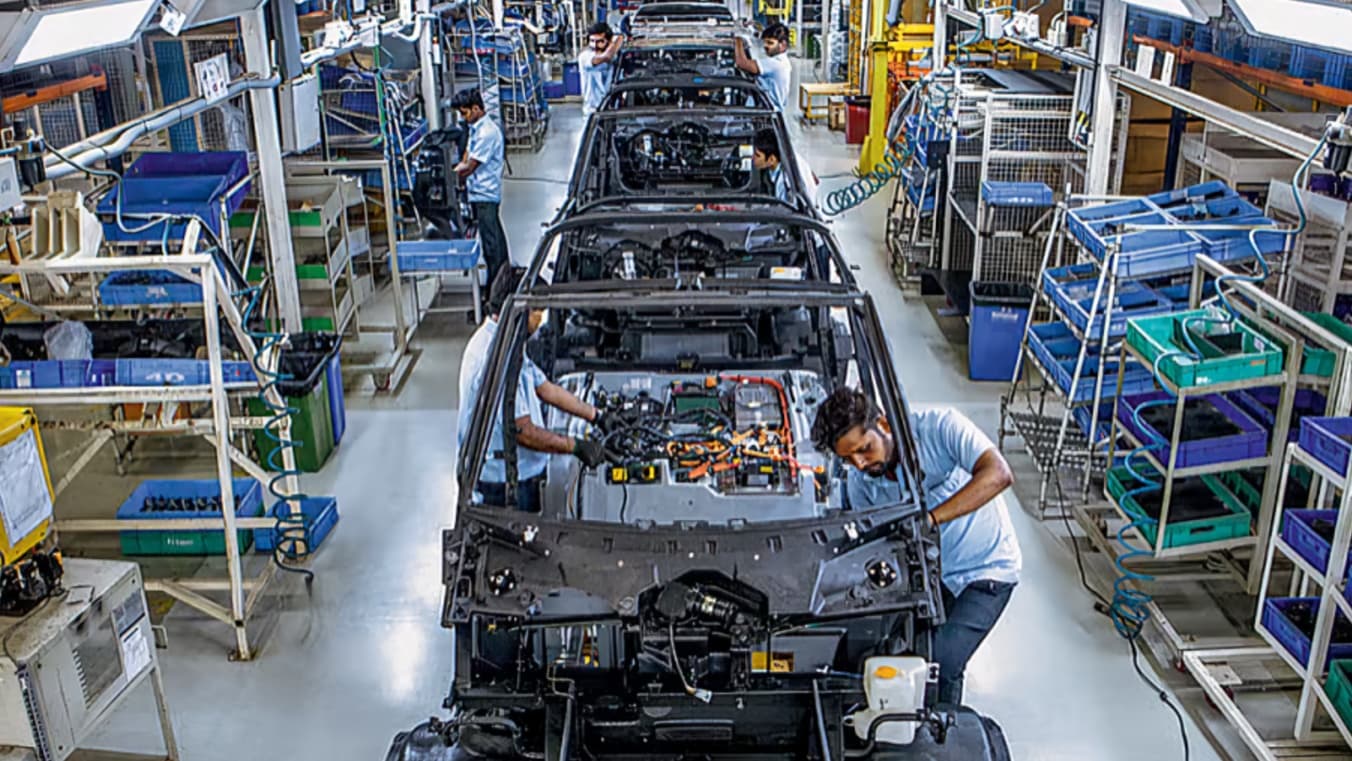
India’s manufacturing sector continued to record growth in October, although the pace of expansion moderated compared with the previous month. Factory output and new orders increased at a slower rate, indicating that manufacturing activity lost some momentum after stronger growth in September.
According to the latest HSBC India Manufacturing Purchasing Managers’ Index (PMI), the seasonally adjusted index declined to 54.7 in October from 55.1 in September. The data was released on November 2, 2026, and compiled by S&P Global based on responses from purchasing managers across the manufacturing industry.
Although the index recorded a decline, it remained comfortably above the 50-point mark. In the PMI survey, a reading above 50 indicates expansion in business activity, while a reading below 50 signals contraction. Therefore, the October reading indicates that India's manufacturing sector continued to grow, but at a more moderate pace.
Output and new orders record slower growth
The survey indicated that new business continued to increase in October, although the rate of growth eased slightly from September's seven-month high. Manufacturers attributed the increase in business to favourable demand conditions, new customer acquisitions and successful marketing activities.
Factory production also recorded another sharp increase during the month. However, output growth slowed compared with September, mainly due to weaker expansion among intermediate goods manufacturers. Despite the moderation, this category continued to contribute significantly to the overall increase in manufacturing production.
The slower growth in domestic demand was one of the factors behind the moderation in the headline manufacturing index. New domestic business increased, but at a slower pace than in the previous month.
Export orders provide support
International demand emerged as an important source of support for India's manufacturing industry in October. New export orders increased at their fastest pace in six months, helping manufacturers maintain production growth despite the moderation in overall new orders.
The survey reported stronger demand from several overseas markets, including Bangladesh, Canada, Indonesia, Nepal, Oman, Saudi Arabia, Sri Lanka, the United Kingdom, the United States and the United Arab Emirates.
The improvement in export demand helped offset some of the weakness in domestic business conditions. Manufacturers also benefited from new client acquisitions and product launches, which supported sales and production activity.
HSBC Chief India Economist Pranjul Bhandari said that the manufacturing PMI remained firmly in expansionary territory despite easing from September's level. She also highlighted the contribution of international demand to the growth of new export orders and factory output.
Input cost and selling price pressures ease
Another important development during October was the moderation in cost pressures faced by manufacturers.
Although some companies reported higher prices for raw materials and energy, the overall rate of input cost inflation declined to its lowest level since February, according to the survey.
The easing of input cost pressures was reported across the three broad manufacturing categories monitored by the PMI survey. This provided some relief to companies dealing with production expenses.
Manufacturers continued to increase selling prices to protect their profit margins. However, the rate of increase was marginal and reached its weakest level in nearly four years. This suggests that companies were raising prices only modestly despite facing higher costs for certain materials and energy inputs.
Factory employment increases at a slower pace
Employment in the manufacturing sector increased for the second consecutive month in October. Higher production requirements and rising workloads encouraged some companies to expand their workforce.
However, the pace of job creation slowed compared with September and remained modest. While certain manufacturing categories recorded an increase in employment, capital goods producers reduced their workforce during the month.
The survey also showed that outstanding business volumes increased for the seventh consecutive month. However, the rate of accumulation remained marginal, indicating that the increase in unfinished work was limited.
Manufacturers increase inventory levels
Indian manufacturers continued to build inventories during October as companies prepared to meet production requirements and guard against possible supply disruptions.
Stocks of finished goods increased at a record pace in the survey's history of more than 21 years. Manufacturers said that inventory accumulation was intended to accommodate demand and prevent potential shortages.
Input inventories also increased, with the pace of accumulation reaching an eight-month high. However, the growth in raw material purchasing slowed. Purchasing activity continued to expand for the 64th consecutive month, but the rate of growth was the weakest during that period.
Business confidence remains subdued
Despite continued expansion in output and new orders, manufacturers became less optimistic about the business outlook.
The survey indicated that business confidence declined from September and remained below its long-term average. Around 18 per cent of surveyed manufacturers expected production to increase over the next 12 months, while the remaining respondents were broadly neutral about future output.
New customer enquiries and expected demand for industrial automation and technology solutions supported positive expectations among some companies.
Overall, the October PMI data suggests that India's manufacturing sector remains on a growth path, supported particularly by stronger export demand. However, slower domestic order growth, moderate hiring and weaker business confidence indicate that manufacturers are facing a less energetic expansion compared with the previous month. The easing of input and selling price pressures offers some relief, but the pace of future growth will depend on demand conditions in both domestic and international markets.