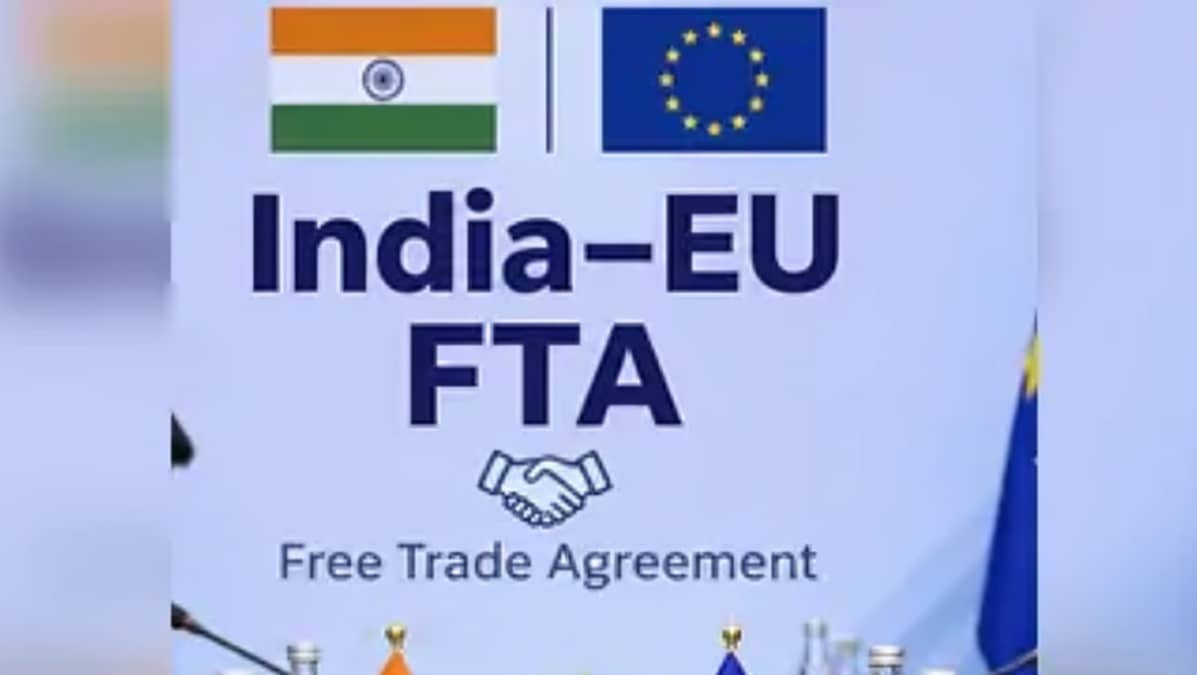
India and the European Union are holding discussions on important implementation-related issues concerning their proposed Free Trade Agreement (FTA), as both sides prepare for its anticipated signing in December 2026. The latest discussions are focused on customs cooperation, trade facilitation, market access and strengthening supply chain partnerships. The agreement is expected to create new opportunities for businesses, exporters and industries in both India and the European Union.
Commerce Secretary Holds Meetings in Brussels
As part of the preparations, Commerce Secretary Rajesh Agrawal visited Brussels last week and held meetings with senior officials of the European Commission.
During the visit, he met Ditte Juul Jorgensen from the Directorate-General for Trade and Economic Security, Koen Doens from the Directorate-General for International Partnerships and Gerassimos Thomas from the Directorate-General for Taxation and Customs Union.
According to the Ministry of Commerce and Industry, discussions covered ways to improve trade between India and the EU, simplify customs procedures and strengthen cooperation in international supply chains.
Both sides also discussed how to improve market access and create additional business opportunities for companies operating in the two regions. The officials reaffirmed their commitment to developing a fair, balanced and mutually beneficial trade agreement.
Focus on Customs Cooperation and Trade Facilitation
One of the important areas discussed during the meetings was customs cooperation. Efficient customs procedures are essential for businesses involved in importing and exporting goods between countries.
India and the European Union are exploring ways to make customs processes more transparent, efficient and digitally enabled. Simplifying these procedures could help reduce delays, lower transaction costs and improve the movement of goods across international borders.
Trade facilitation is particularly important for small and medium-sized businesses that may face difficulties dealing with complex documentation and regulatory requirements.
The discussions also covered supply chain resilience. Both sides are interested in strengthening their economic cooperation and improving the reliability of supply networks. Better coordination could help businesses access essential materials, components and international markets more efficiently.
FTA Negotiations Concluded in January 2026
India and the European Union officially concluded negotiations for the Free Trade Agreement on January 27, 2026, during the 16th India-EU Summit.
The conclusion of negotiations marked an important development in the economic relationship between India and the 27-member European Union.
The proposed agreement aims to reduce trade barriers, improve market access and establish more predictable rules for businesses operating across both markets.
However, the conclusion of negotiations does not mean that the agreement has already come into force. The legal text is undergoing legal scrutiny and procedural verification before it can be formally signed.
Both sides are working towards a proposed signing in December 2026. The final signing arrangements will depend on the completion of the necessary approval procedures.
Major Opportunities for Indian Exporters
The proposed trade agreement is expected to provide significant opportunities for Indian exporters, particularly in labour-intensive industries.
Sectors such as textiles, leather, footwear, gems and jewellery, chemicals and marine products could benefit from improved access to European markets.
The European Union is an important destination for Indian goods and services. Lower tariffs and simplified trade procedures could help Indian businesses improve their competitiveness and expand their international customer base.
The agreement is also expected to benefit European companies seeking greater access to the Indian market. Improved market access could encourage investment, strengthen business partnerships and support cooperation across several industrial sectors.
According to the European Commission, the agreement is designed to remove or reduce tariffs on a large share of traded products while maintaining safeguards for sensitive sectors.
What Happens After the Signing?
Even after the proposed signing in December, the agreement will require additional formal approvals before it can become operational.
On the European side, the agreement will need to go through the relevant approval process, including the consent of the European Parliament. India will also have to complete its domestic approval procedures.
The full implementation of the agreement is currently targeted for 2027, subject to the completion of these formalities.
Therefore, businesses and exporters should not assume that the proposed tariff benefits will become available immediately after the signing ceremony.
India-EU Economic Partnership Gains Importance
India and the European Union have increasingly focused on strengthening their economic relationship amid changes in global trade and supply chains.
The proposed FTA is expected to provide a broader framework for cooperation in goods, services, investment and trade-related regulations.
For Indian companies, improved access to European markets could create opportunities to expand exports and attract investment. European businesses could also benefit from greater access to India's growing consumer market.
The latest discussions in Brussels indicate that both sides are working to resolve the practical issues involved in implementing the agreement.
With December 2026 being considered the target for signing, the coming weeks will be important for completing the remaining legal and procedural requirements.
The agreement could become a major milestone in India-EU economic relations. However, its actual benefits will depend on the final terms, approval process and effective implementation of the agreed provisions.
Business Standard+5