India’s inflation outlook for the financial year 2026 to 2027 could come under renewed pressure if rainfall remains weak during September, according to a research report by Union Bank of India.
The bank has maintained its baseline Consumer Price Index inflation forecast for FY27 at 5 per cent. However, it has warned that the inflation rate could rise to 5.5 per cent or higher if El Nino conditions are confirmed and the southwest monsoon experiences a further shortfall.
The warning comes at a crucial stage of the monsoon season because September is important for agricultural production, soil moisture and water availability for the winter rabi crop.
According to the Union Bank report, cumulative monsoon rainfall was 13 per cent below the long period average as of August 27. Although kharif sowing has recovered considerably from the shortfall recorded earlier in the season, the bank cautioned that sowing data alone cannot determine the final agricultural outcome.
Kharif sowing was around 1.5 per cent below the previous year as of August 21. The area covered was approximately 105.7 million hectares compared with 107.3 million hectares during the corresponding period last year.
The improvement in sowing provides some relief, but continued rainfall shortages during crop growth and maturity could still affect agricultural production. Rain-fed areas could be particularly vulnerable if rainfall remains insufficient during the remaining part of the monsoon season.
The report also highlighted the importance of soil moisture for the upcoming rabi season. A weak late monsoon could reduce available moisture and water resources, potentially affecting crops that are planted during the winter season.
The rainfall deficit is not uniform across India. The northwestern region was reported to be around 10 per cent below normal, while the southern region had a deficit of about 22 per cent. The eastern and northeastern regions recorded a larger deficit of around 27 per cent.
At the state level, Andhra Pradesh and Bihar were among the states facing significant rainfall deficits, with shortfalls of around 40 per cent and 42 per cent respectively as of August 27.
Reservoir storage provides some support against the impact of below normal rainfall. Data from the Central Water Commission showed that the 176 monitored reservoirs held around 117 billion cubic metres of water, equivalent to about 64 per cent of their live storage capacity as of August 20.
However, the report noted that reservoir storage remained around 18 per cent lower than the level recorded during the same period last year. The northern and southern regions were also behind their previous year’s storage levels.
The potential development of El Nino is another major concern for the inflation outlook. El Nino refers to the warming of the central and eastern tropical Pacific Ocean and can influence global weather patterns. In India, El Nino conditions have historically been associated with weaker monsoon rainfall in some years, although the impact can vary.
Reuters recently reported that India was experiencing its weakest monsoon since 2009, with rainfall expected to remain significantly below the long term average as El Nino strengthened. The report noted that weaker rainfall could affect crops such as cotton, soybean, corn and pulses and reduce soil moisture for winter crops.
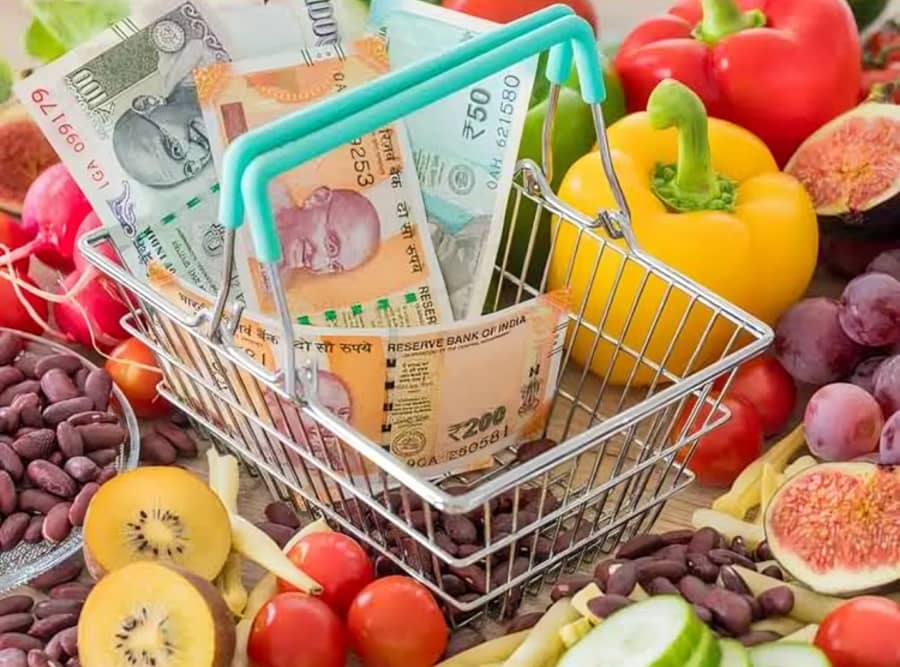
For the Indian economy, the most immediate concern from a weak monsoon would be food inflation. Lower agricultural production can reduce the supply of vegetables, pulses, cereals and other food products. If demand remains stable while supplies tighten, prices can rise.
Food inflation is particularly important because food items have a significant influence on household budgets and the overall Consumer Price Index.
Union Bank’s earlier research had also identified food inflation as an important risk for FY27. The bank noted that food prices had historically shown significant volatility in response to weather conditions, crop disruptions and supply shocks.
The latest report therefore does not state that inflation will definitely reach 5.5 per cent. Instead, it identifies 5.5 per cent or higher as a potential scenario if rainfall weakens further and El Nino conditions are confirmed.
The bank has retained its 5 per cent FY27 CPI forecast under its baseline assumption that crude oil prices stabilise around 90 US dollars per barrel. However, the combination of weaker rainfall and higher food inflation could alter that outlook.
Higher inflation could have wider economic consequences. Rising food prices can reduce the purchasing power of households, particularly those with lower incomes. Rural households could face additional pressure if agricultural yields decline while input costs remain elevated.
A sustained rise in food inflation could also affect rural consumption demand during the second half of FY27. Lower agricultural income combined with higher food prices could make it more difficult for households to maintain spending on non essential goods and services.
The inflation outlook is also important for monetary policy. If inflation rises significantly and remains elevated, expectations surrounding interest rates could change.
Union Bank said a sustained increase in inflation could raise the possibility of a rate hike towards the end of the financial year. However, any monetary policy decision would depend on actual inflation data, economic growth, food prices, global commodity prices and other macroeconomic factors.
The Reserve Bank of India will continue to monitor developments in food prices, rainfall, agricultural output and broader inflation trends. Recent data has already shown a broad based sequential increase in food prices despite some recovery in the southwest monsoon.
For consumers, the immediate impact of a weak monsoon could become visible through food prices rather than through a sudden increase in overall inflation.
Prices of pulses, vegetables, cereals and edible oils can respond to changes in agricultural supply. However, the timing and magnitude of such changes depend on crop conditions, inventories, government measures, imports and market demand.
The government can also use measures such as releasing buffer stocks, adjusting import duties or increasing supplies to reduce temporary food price pressures.
The September rainfall pattern will therefore remain an important factor for the Indian economy. If rainfall improves during the final phase of the monsoon, some of the agricultural risks could ease. On the other hand, continued rainfall shortages could increase pressure on crop yields and food prices.
The latest Union Bank assessment highlights the uncertainty surrounding India’s FY27 inflation outlook. The baseline projection remains at 5 per cent, while 5.5 per cent or higher represents a downside risk linked mainly to weaker rainfall and a possible El Nino.
The coming months will provide greater clarity as September rainfall data, crop production estimates, food prices and global commodity markets develop.
For now, the key message is that the monsoon remains an important variable for India’s inflation trajectory. A stronger finish to the rainfall season could limit some risks, while a prolonged shortfall could increase food inflation and put upward pressure on the overall CPI rate.