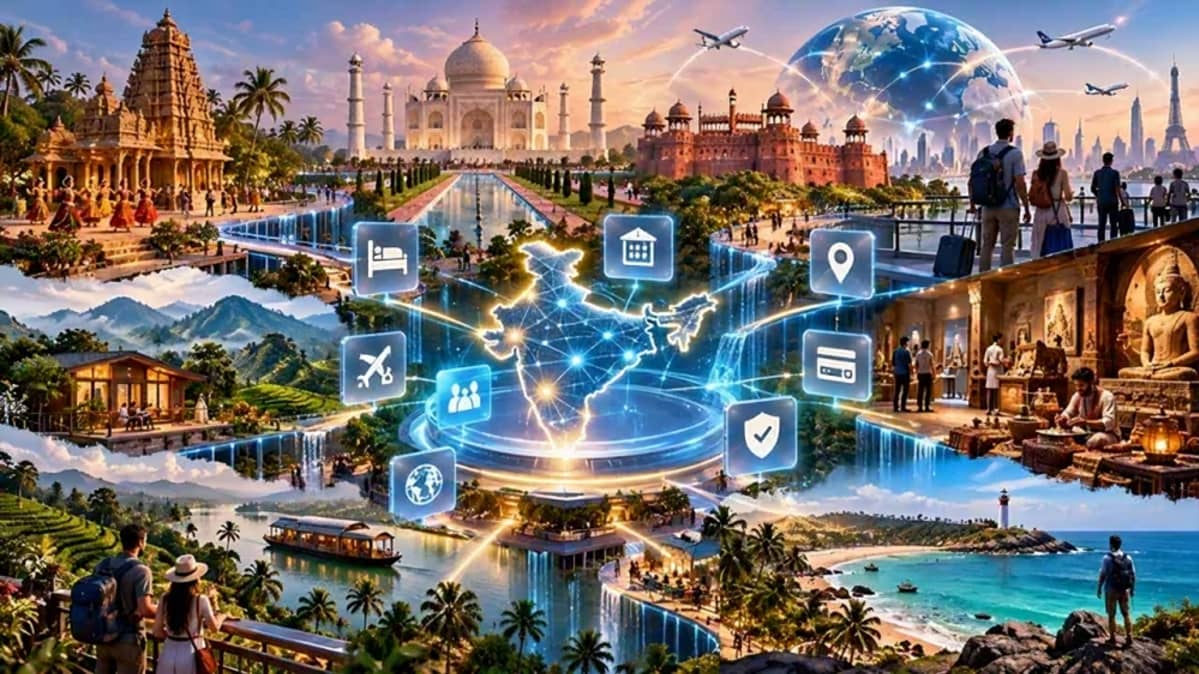
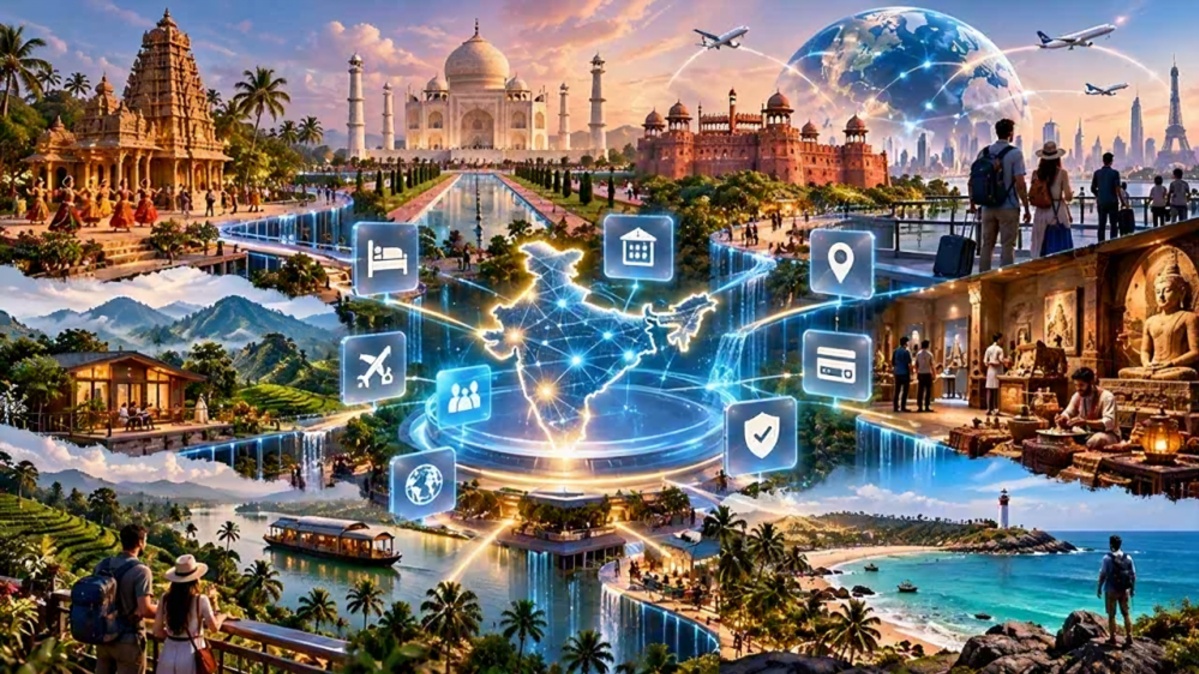
Artificial intelligence and digital technology are becoming increasingly important in the way people discover destinations, plan holidays and decide where to travel. In India, the Ministry of Tourism is now working with technology companies to use these tools to expand the reach of the country's diverse tourism offerings.
As part of this effort, the Ministry of Tourism exchanged a Memorandum of Understanding with Glance Digital Experience, a company belonging to the InMobi Group, during the World Tourism Day 2026 programme held at Bharat Mandapam in New Delhi. The partnership is intended to strengthen digital tourism promotion and encourage responsible travel across India.
Glance will use its digital platform to showcase major Indian tourism destinations as well as lesser known locations and travel circuits. The objective is to help more travellers discover different parts of the country through digital content and technology.
The partnership comes at a time when artificial intelligence is increasingly influencing how people search for information. Travel discovery is also changing as consumers increasingly use digital platforms to find destinations, attractions, accommodation, food experiences and activities before making travel decisions.
According to the Ministry of Tourism, the Glance partnership will focus on digital tourism content and responsible visitor messaging. The content is expected to highlight India's diverse tourism attractions while also communicating appropriate behaviour at cultural and heritage locations.
Responsible tourism is an important part of the initiative. Digital campaigns can be used not only to encourage people to visit destinations but also to inform visitors about the importance of protecting cultural and heritage sites. The Ministry said the Glance partnership will include messaging against littering, defacement and vandalism and will encourage visitors to follow appropriate etiquette at cultural locations.
The initiative is part of a wider tourism technology programme launched by the Ministry of Tourism during World Tourism Day. The government also launched the National Digital Tourism Stack and the National Mission for Alternative Destinations under the Dekho Apna Desh 2.0 campaign.
The National Digital Tourism Stack is being developed in collaboration with the Open Network for Digital Commerce and aims to make India's tourism offerings more discoverable, accessible and trustworthy. The initial focus includes hill and mountain destinations, coastal and waterfront locations, heritage and cultural towns and regional pilgrimage destinations.
The digital tourism initiative is also intended to bring together tourism services and experiences in a more connected ecosystem. The government plans to work with states, Union Territories and tourism industry partners to develop bookable itineraries and packages covering accommodation, transportation, meals and local experiences.
Such an approach could provide greater visibility to tourism businesses and local communities that may not have the same digital reach as established destinations. The Ministry has highlighted opportunities for artisans, self-help groups, local guides and other stakeholders to participate in the tourism ecosystem.
Artificial intelligence is expected to play an important role in this broader transformation. Tourism Secretary Bhuvnesh Kumar said AI, digital platforms and data-driven destination management can make tourism more accessible, responsive and personalised. The government's wider digital tourism strategy is aimed at bringing these capabilities together for the benefit of travellers and tourism providers.
The Ministry's World Tourism Day programme also featured a keynote address on the role of artificial intelligence in redesigning tourism. The discussion highlighted the potential for AI to influence different stages of the travel journey, including destination discovery, trip planning, booking, the travel experience and post-trip sharing.
The partnership with Glance therefore represents one part of a broader shift towards digital-first tourism promotion. Instead of relying only on conventional advertising, tourism authorities and industry partners are increasingly using digital platforms to reach potential travellers with destination-specific content.
For India, this approach could also help promote destinations beyond the country's most recognised tourist locations. The Ministry has said that the next phase of tourism growth should extend beyond popular destinations and create opportunities for local communities, entrepreneurs, women and young people.
The government has also emphasised the need for tourism growth to be balanced, inclusive and sustainable. Digital technology can support this objective by increasing awareness of lesser known destinations and encouraging travellers to explore different regions. However, responsible tourism messaging remains an important component of the strategy because increased visitor numbers can also create pressure on heritage sites, local infrastructure and environmentally sensitive areas.
The Glance partnership is one of five MoUs exchanged by the Ministry of Tourism with industry partners during the World Tourism Day programme. Other partnerships involved Airbnb India, FlixBus India, Eicher Group Foundation and MakeMyTrip. Each agreement covers different areas of tourism promotion, community participation or responsible travel.
The Ministry has clarified that the five collaborations are non-commercial, non-financial, non-binding and non-exclusive. This means the agreements are intended to support cooperation between the government and industry partners rather than establish exclusive commercial arrangements.
For InMobi and Glance, the partnership provides an opportunity to use their digital reach to present India's tourism destinations to a wider audience. For the Tourism Ministry, working with digital platforms offers another channel through which tourism information and responsible travel messages can reach potential visitors.
The broader objective is to make tourism discovery more technology-driven while retaining the cultural and community aspects that make destinations attractive. India's tourism landscape includes heritage monuments, pilgrimage centres, coastal regions, mountain destinations, cultural towns, local food traditions and community-based experiences.
As artificial intelligence continues to influence online discovery, partnerships between government tourism agencies and technology companies are likely to become an increasingly important part of destination promotion. In India's case, the current initiatives are focused not only on attracting visitors but also on improving the visibility of lesser known destinations and encouraging responsible behaviour.
The InMobi and Glance partnership is therefore part of India's wider effort to combine AI, digital platforms and tourism promotion. The initiative is expected to provide digital visibility to established and emerging destinations while communicating responsible travel practices to audiences. The Ministry's broader digital tourism programme aims to make India's tourism ecosystem more discoverable, accessible and trustworthy through technology.