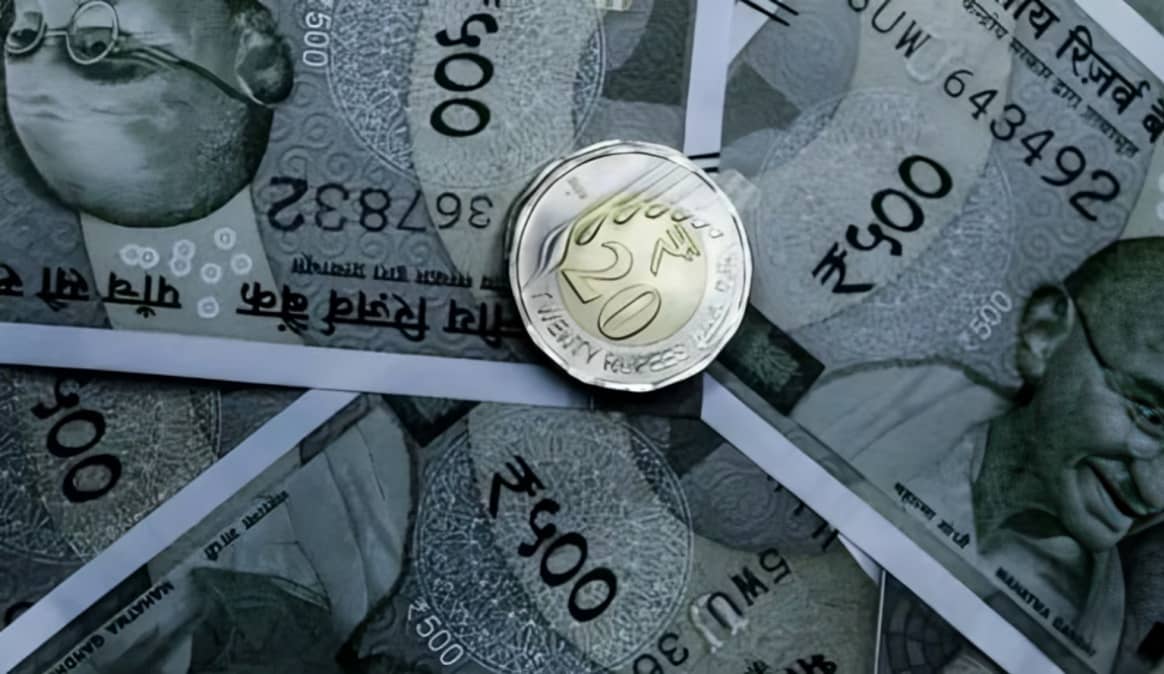

The Indian rupee came under renewed pressure on September 29, 2026, falling beyond the 96 per US dollar mark and touching a two month low. The currency declined to 96.1450 against the US dollar, according to Reuters, as rising crude oil prices and broader strength in the US dollar weighed on the Indian currency.
The latest movement in the foreign exchange market is important for Indian consumers because the value of the rupee affects the cost of goods and commodities purchased from overseas. The impact becomes particularly significant when crude oil prices rise at the same time as the rupee weakens.
Brent crude prices rose above 107 dollars per barrel on Tuesday, driven by concerns about disruptions to global energy supplies and continuing uncertainty surrounding the Middle East. Higher oil prices increase the amount India needs to spend on crude imports. A weaker rupee can further increase the rupee value of those dollar denominated purchases.
Why the rupee has weakened
Several factors are currently putting pressure on the Indian currency.
The first major factor is crude oil. India is heavily dependent on imported crude oil to meet its energy requirements. Reuters reported that India imports nearly 90 percent of its crude requirements, making the rupee particularly sensitive to movements in international oil prices. When crude becomes more expensive in global markets, Indian importers need more dollars to purchase the same quantity of oil.
The second factor is the strength of the US dollar. Higher US Treasury yields and expectations surrounding US monetary policy have supported the dollar and created additional pressure on emerging market currencies, including the rupee.
Foreign portfolio flows are another factor being watched by the market. Reuters reported that foreign investors had withdrawn around 3.7 billion dollars from Indian equities during September by September 29. Such outflows can create additional demand for dollars and add pressure to the rupee.
The Reserve Bank of India has also been monitoring the currency movement. Market reports indicated that RBI intervention through state run banks helped limit the rupee's decline in recent sessions. However, central bank intervention can manage volatility and the pace of movement, rather than permanently determining the exchange rate.
What happens when the rupee weakens
A weaker rupee does not mean that every product in India will immediately become more expensive. The effect depends on several factors, including international commodity prices, the duration of the currency movement, company costs, domestic demand and how much of the additional cost businesses pass on to consumers.
However, imported products and goods containing imported components can become more expensive when the rupee loses value against the dollar.
Crude oil is one of the most important examples. Since crude is purchased internationally in US dollars, Indian oil companies face higher rupee costs when both crude prices and the dollar rise.
Fuel prices and transport costs
A sustained increase in crude oil prices combined with rupee depreciation can increase pressure on India's fuel and energy costs.
Petrol and diesel prices are influenced by international crude prices, exchange rates, taxes, refining costs and other factors. Therefore, a weaker rupee does not automatically mean that retail fuel prices will rise by the same proportion.
However, if elevated crude prices continue for an extended period, the higher import cost can create pressure throughout the energy supply chain.
Transport costs can also be affected because diesel and other fuels are important inputs for road freight, logistics and public transportation. If operating costs increase, businesses may eventually pass part of those costs on through higher prices for goods and services.
Impact on household expenses
The impact on household budgets can extend beyond petrol and diesel.
Many products sold in India contain imported raw materials or components. Electronics, industrial equipment, chemicals, machinery and certain consumer products can be affected by exchange rate movements.
For example, companies importing components priced in US dollars may have to spend more rupees to purchase the same quantity of goods. Depending on the company's pricing strategy, margins and competition, some of this additional cost may eventually reach consumers.
Imported food products and commodities can also be affected, although the impact differs from product to product.
Inflation concerns
One of the key economic concerns surrounding a weaker rupee and higher oil prices is inflation.
When imported inputs become more expensive, businesses may face higher production and transportation costs. If those costs are passed on to consumers, inflationary pressure can increase.
The effect is not necessarily immediate. Companies may initially absorb part of the additional cost through lower profit margins or use existing inventories purchased at earlier prices. The eventual effect on consumer prices depends on how long the currency weakness and elevated commodity prices continue.
The Reserve Bank of India therefore has to monitor the interaction between exchange rates, crude oil prices, inflation expectations and economic growth.
RBI's role
The Reserve Bank of India can use its foreign exchange reserves and market operations to address excessive volatility in the currency market.
Recent Reuters reports indicated that the RBI had intervened around the 96 per dollar level through state run banks, helping to limit the rupee's decline. The central bank's objective in such circumstances is generally to manage disorderly market conditions rather than guarantee a fixed exchange rate.
The RBI's policy decisions can also influence financial conditions in the economy. If inflationary pressures increase significantly, monetary policy becomes an important factor in determining the balance between price stability and economic growth.
However, the central bank's response will depend on the persistence and scale of inflationary pressures and other economic conditions.
Effect on foreign travel
A weaker rupee can have a more direct impact on people travelling abroad.
When Indians purchase US dollars or other foreign currencies, a weaker rupee means they need more rupees to obtain the same amount of foreign currency.
This can increase the cost of international travel, including overseas accommodation, foreign exchange expenses, education payments and other expenses denominated in foreign currencies.
Students studying abroad can also face higher costs because tuition fees and living expenses may be denominated in currencies such as the US dollar, pound or euro.
Impact on imported technology
Technology products and components are another area where exchange rates can matter.
India imports several electronic components, semiconductor related products, machinery and other technology inputs. A weaker rupee can increase the rupee cost of these imports.
However, the final retail price does not necessarily rise immediately. Companies may have existing inventory, currency hedges or long term supply contracts that temporarily reduce the impact of exchange rate changes.
Impact on exporters
A weaker rupee can have benefits for some exporters because their foreign currency earnings may translate into more rupees.
Export oriented businesses receiving US dollars or other foreign currencies can potentially benefit from a weaker domestic currency, although the overall effect depends on how much of their production depends on imported inputs.
For example, an exporter that earns dollars but also imports raw materials in dollars may see part of the benefit offset by higher import costs.
Therefore, the impact of rupee depreciation differs significantly across industries.
Why crude oil matters so much for India
The combination of a weaker rupee and expensive crude oil is particularly important for India because of the country's dependence on imported energy.
When oil prices rise, India's import bill can increase. If the rupee simultaneously loses value against the dollar, the domestic cost of those imports can rise further.
Reuters reported that Brent crude climbed to around 107 dollars per barrel on September 29 as concerns about Middle East energy supply disruptions continued.
The situation has therefore become an important factor for India's external sector, inflation outlook and currency market.
Will everything become expensive immediately
Not necessarily.
A weaker rupee does not automatically translate into an immediate increase in the prices of all goods and services.
The final consumer impact depends on the duration of the rupee movement, international commodity prices, domestic taxation, government policy, company margins, competition and the extent to which businesses pass higher costs to customers.
If the rupee stabilises or crude oil prices fall, some of the pressure could ease.
If both remain elevated for an extended period, however, the pressure on import costs and inflation could become more significant.
What consumers should watch
Consumers should particularly monitor fuel prices, international travel costs, imported consumer products and any expenses linked to foreign currencies.
Households should also distinguish between a temporary currency movement and a sustained change in the exchange rate. A single day's movement does not necessarily translate into a major change in household expenses.
Businesses, meanwhile, will be watching crude prices, currency movements, global interest rates and foreign investor flows to assess their costs and financial outlook.
The current rupee movement is therefore important not simply because the currency has crossed the 96 per dollar level, but because it is happening alongside elevated crude oil prices.
The broader economic impact will depend on how long these pressures continue and how effectively financial markets and policymakers respond.
For now, the rupee's fall to 96.1450 per dollar represents a two month low and highlights the sensitivity of India's currency to global oil prices, dollar strength and international capital flows.