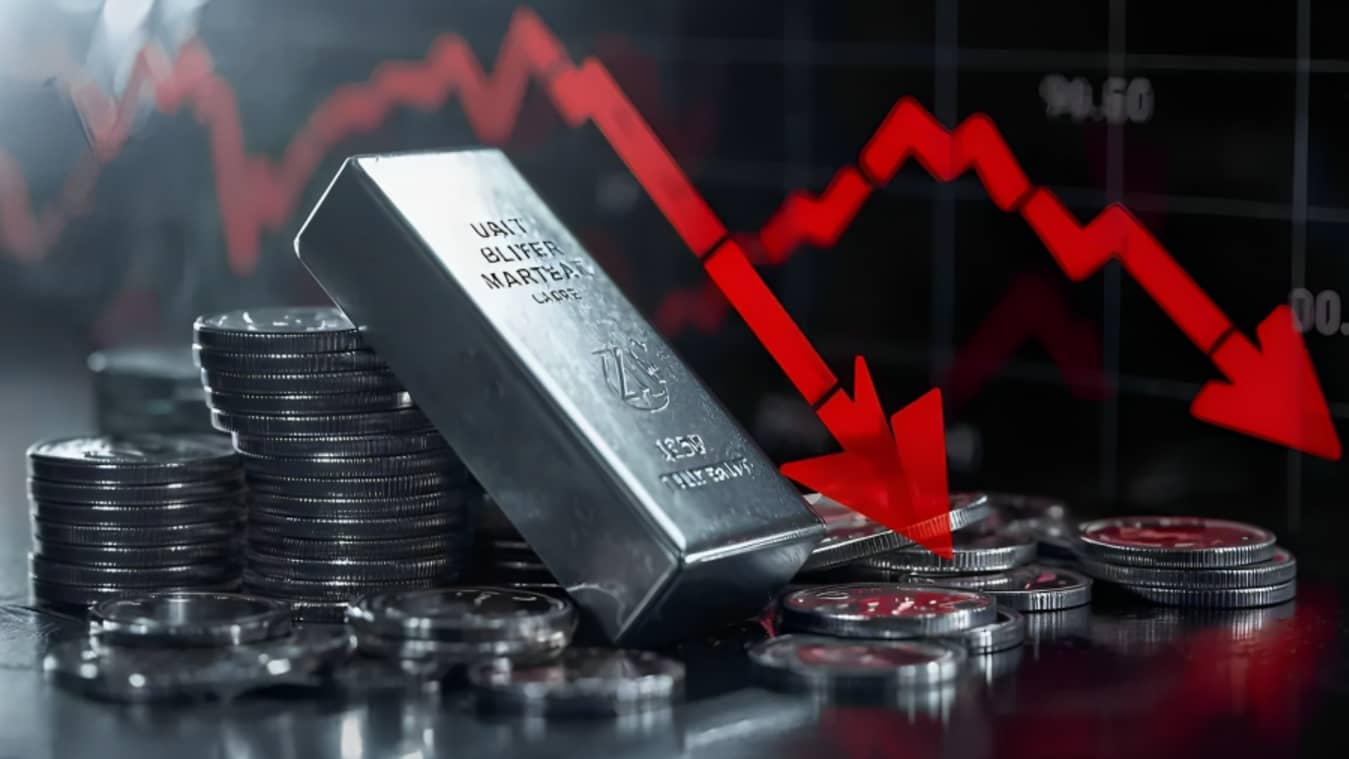
Silver Prices Crash by Nearly Half From Peak in 2026: Factors Behind Metal’s Dramatic Fall
Tamil Headline: 2026-ல் உச்ச விலையிலிருந்து பாதியாகச் சரிந்த வெள்ளி விலை: திடீர் வீழ்ச்சிக்கான முக்கிய காரணங்கள்
News Category: Business / Commodities / Personal Finance
70-Word Short Summary
Silver prices have plunged sharply in 2026 after reaching record highs in January, with Indian prices falling from around ₹3.85 lakh per kilogram to below ₹2 lakh in late October. A stronger US dollar, elevated bond yields, inflation concerns and expectations of tighter Federal Reserve policy have weighed on the metal. Silver’s industrial applications and higher market volatility have amplified the sell-off, while changes in domestic supply and import availability have added pressure in India.
90-Word Short Summary
Silver has suffered a dramatic correction in 2026, losing around half its value from January’s record highs in India and internationally. Domestic prices on the Multi Commodity Exchange (MCX) dropped below ₹2 lakh per kilogram in October after reaching approximately ₹3.85 lakh per kilogram earlier in the year. The decline has been driven by a stronger US dollar, rising inflation concerns, higher bond yields and expectations that US interest rates may remain elevated. Silver’s dual role as an investment asset and industrial metal has made it particularly vulnerable to changing market sentiment.
Full News Article
Silver Prices Fall Sharply After January’s Record Rally
Silver prices have experienced a dramatic reversal in 2026, surrendering a substantial portion of the gains made during an extraordinary rally earlier in the year.
In India, silver prices on the Multi Commodity Exchange (MCX) climbed to approximately ₹3.85 lakh per kilogram in January before falling below ₹2 lakh per kilogram in late October. Internationally, spot silver reached a record high of around US$121 per troy ounce before declining to approximately US$53–54 per ounce.
The sharp correction has raised questions among investors, traders and jewellery buyers about what triggered the decline and whether the market could stabilise in the coming months.
Market reports point to several overlapping factors, including a stronger US dollar, inflation concerns, expectations of higher interest rates, weaker industrial-demand sentiment and the unwinding of speculative positions.
1. Stronger US Dollar Puts Pressure on Silver
One of the key factors behind the decline is the strength of the US dollar.
Silver is traded internationally in dollars. When the dollar strengthens, the metal becomes more expensive for buyers using other currencies, potentially reducing demand and putting downward pressure on prices.
A stronger dollar can also influence investment decisions by making dollar-denominated assets more attractive relative to precious metals.
For Indian buyers, international price movements are only part of the picture. The rupee-dollar exchange rate, import costs, taxes and domestic market premiums also influence local silver prices.
2. Higher Interest-Rate Expectations Weigh on Bullion
Expectations that the US Federal Reserve could maintain a restrictive monetary stance have also weighed on silver.
Precious metals do not pay interest. When government bond yields rise or investors expect interest rates to remain high, holding silver becomes less attractive relative to interest-bearing investments.
Higher yields can therefore reduce investment demand for bullion. In addition, interest-rate expectations can strengthen the dollar, creating another source of pressure on silver prices.
Inflation concerns have complicated the outlook. Rising energy prices can increase inflation expectations, potentially encouraging central banks to keep monetary policy tighter for longer. This can weigh on precious metals even when geopolitical uncertainty might otherwise support demand for safe-haven assets.
Unlike gold, which is primarily associated with investment and jewellery demand, silver has a substantial industrial role.
The metal is used in solar panels, electronics, electrical equipment and other manufacturing applications. Its price therefore responds not only to investment flows but also to expectations about industrial production and global economic growth.
When investors become concerned about slowing economic activity, expectations for industrial consumption can weaken. That can place additional pressure on silver.
This dual exposure helps explain why silver can experience sharper price movements than gold during periods of market stress. It is affected by both precious-metal investment sentiment and changes in industrial-demand expectations.
4. Profit-Booking and Speculative Positions Intensify the Fall
Silver’s rapid rise earlier in the year attracted significant investor attention. However, sharp rallies can leave markets vulnerable to sudden reversals when sentiment changes.
As prices began falling, some investors moved to lock in gains. Others reduced exposure as losses mounted or market volatility increased.
Changes in futures-market margin requirements can also affect leveraged traders. When the cost of maintaining a futures position rises, some participants may reduce their holdings, potentially adding to selling pressure.
These factors can accelerate a correction, although their precise contribution varies across trading sessions and cannot be established from price movements alone.
5. Oil Prices and Geopolitical Tensions Create a Complicated Outlook
Geopolitical tensions can have conflicting effects on precious metals.
Uncertainty may encourage investors to seek defensive assets. However, when geopolitical developments also push oil prices higher, they can raise inflation concerns and strengthen expectations of restrictive monetary policy.
This creates a complicated environment for silver. The inflation and interest-rate effects may outweigh the support usually associated with safe-haven demand.
Market commentary in late October has highlighted the interaction between energy prices, US monetary-policy expectations and dollar strength as important drivers of the metal’s recent weakness.
6. Changes in India’s Silver Supply and Import Availability
Domestic supply conditions have also become relevant to the Indian market.
India relies heavily on imported silver to meet domestic demand. Import restrictions and authorisation requirements introduced earlier in 2026 affected the availability of silver and contributed to concerns about local supply.
The government subsequently issued permits for additional silver imports. Market reports said the new approvals could help meet seasonal demand while easing elevated domestic premiums.
Additional supply can reduce the premium paid in India over international benchmark prices, depending on import costs and market conditions. However, it does not insulate domestic prices from a major decline in international silver prices.
For Indian consumers, the final retail price also depends on local taxes, dealer margins and product-specific making charges.
7. Why Silver Has Fallen More Sharply Than Gold
Silver and gold share some of the same monetary influences, including interest-rate expectations, currency movements and investor demand for precious metals.
However, silver’s industrial exposure adds another layer of uncertainty. Concerns about manufacturing activity can weigh on silver even when investors continue to hold gold as a defensive asset.
Silver markets can also be more volatile because shifts in investment positioning can have a pronounced impact on prices.
The latest correction illustrates how a metal that benefits from strong investment demand during a rally can experience a rapid reversal when financial conditions and industrial-growth expectations change.
Will Silver Prices Recover?
The near-term direction of silver prices will depend on several variables, including the US dollar, bond yields, Federal Reserve policy signals, oil prices, industrial demand and investor positioning.
A weaker dollar or a more accommodative interest-rate outlook could ease some of the pressure on precious metals. Conversely, persistent inflation concerns, high borrowing costs or weaker industrial demand could keep prices volatile.
Longer-term demand from solar energy, electronics and electric vehicles remains relevant to silver’s market outlook. However, these uses do not guarantee a near-term price recovery, particularly when financial-market pressures are strong.
Investors should also distinguish between a fall from a record high and a confirmed market bottom. A large correction alone does not establish that prices are undervalued or that a rebound is imminent.
What Should Indian Investors and Jewellery Buyers Consider?
The decline may attract jewellery buyers and investors who had been deterred by high prices earlier in the year. However, decisions should reflect individual needs, time horizons and tolerance for price fluctuations.
Investors considering silver should account for its volatility, transaction costs and the differences between physical silver, exchange-traded funds and futures contracts. Futures trading can involve substantial risks, particularly when leverage is used.
Jewellery buyers should compare the final price, purity, taxes and making charges rather than relying solely on the quoted commodity rate.
The latest price correction demonstrates that silver can deliver substantial gains during a rally but can also lose value rapidly. Neither a steep fall nor a previous record high, by itself, is a reliable signal of what prices will do next.
Three-Line Summary
- Silver prices have fallen by roughly half from January 2026 peaks, with Indian prices dropping from around ₹3.85 lakh to below ₹2 lakh per kilogram in late October.
- A stronger US dollar, elevated bond yields, inflation concerns, speculative selling and silver’s industrial exposure have contributed to the decline.
- Future prices will depend on monetary policy, currency movements, industrial demand and domestic supply; a sharp correction does not guarantee an immediate recovery.