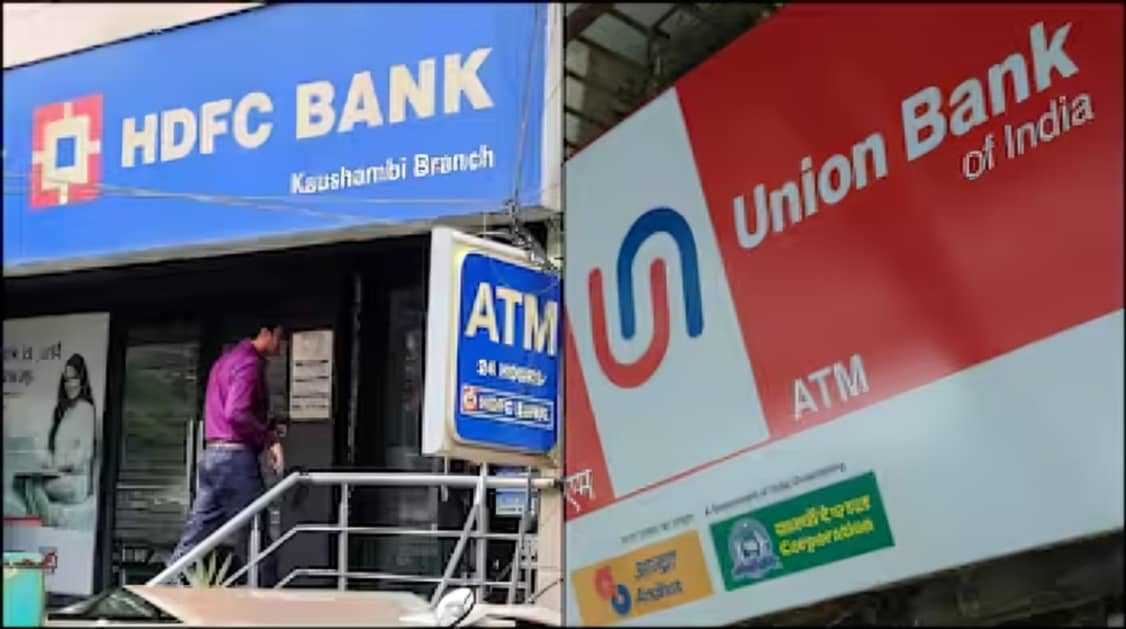
HDFC Bank shares faced renewed selling pressure on Thursday, August 27, after news of a securities class action lawsuit filed against the lender in the United States. The stock declined as much as 2.37% during the session, touching around Rs 710, its lowest level in about 29 months. The latest decline has taken the bank's year to date fall to approximately 28%, making 2026 one of its most difficult years in recent times.
The legal development has added to concerns that have already weighed on investor sentiment toward the country's largest private sector bank. The US complaint was filed by investor Jwalant Natvarlal Soneji on August 13 in the US District Court for the Southern District of New York.
According to reports, the proposed class action covers investors who purchased or acquired HDFC Bank securities between July 17, 2023, and May 26, 2026. The complaint alleges that the bank made materially false or misleading statements and failed to disclose information that could have been relevant to investors.
The allegations are linked to transactions involving the Maharashtra State Road Development Corporation. Reports on the case have focused on claims concerning payments made in connection with deposits from the state infrastructure agency and the way those payments were allegedly accounted for.
The complaint reportedly alleges that payments were treated as marketing expenses while the bank provided the agency with an interest rate higher than the rate available to regular depositors. These are allegations contained in the lawsuit and have not been established as findings of wrongdoing.
HDFC Bank has strongly rejected the claims.
The lender has said that shareholder lawsuits of this type are common in the United States, particularly after a company's share price experiences a significant decline. The bank has described the lawsuit as without merit and said it intends to defend itself vigorously.
The legal dispute has nevertheless become another factor for investors to consider while assessing the bank's stock performance.
HDFC Bank shares have already experienced considerable pressure during 2026. According to Reuters, the stock has fallen by around 28% this year, making it the bank's weakest annual performance in many years. The latest decline has also affected the broader Nifty 50 because HDFC Bank has one of the largest weightings in the benchmark index.
The stock's fall to around Rs 710 represents a significant decline from its previous levels and has increased attention on the factors affecting investor confidence.
The US lawsuit is not the only issue being watched by investors. Market participants are also monitoring questions relating to the bank's leadership, regulatory matters and other allegations that have surfaced in recent months.
However, the latest lawsuit is particularly important because HDFC Bank's American Depositary Receipts are traded in the United States. This means the lender and its disclosures to US investors can come under the scope of American securities laws.
Earlier in July, three US based law firms had announced separate investigations into whether HDFC Bank and certain executives may have violated US federal securities laws. Those investigations were related to questions surrounding disclosures to investors.
The latest class action represents a further development in that broader legal scrutiny.
It is important to distinguish between allegations, investigations and established findings. The filing of a lawsuit does not by itself establish that the bank or its executives violated securities laws. The claims will have to go through the appropriate legal process, while HDFC Bank has the opportunity to defend its position.
For investors, however, such developments can influence market sentiment even before a case reaches a final conclusion.
Share prices often respond to uncertainty because investors attempt to assess potential financial, regulatory and reputational consequences. In HDFC Bank's case, the latest legal development has arrived after the stock had already experienced a substantial decline.
Thursday's movement also reflected broader market conditions. Indian benchmark indices opened relatively subdued, with HDFC Bank among the stocks facing selling pressure. Reuters reported that the Nifty 50 was lower in early trading, while HDFC Bank declined around 1% at the opening before extending its losses during the session.
The bank remains one of the most closely watched companies in the Indian financial sector. Its size and importance to the Nifty 50 mean that substantial movements in its share price can influence the broader market.
Investors will therefore be watching the company's response to the lawsuit as well as any further developments in the US legal process.
The allegations relating to the Maharashtra State Road Development Corporation have also drawn attention because they concern the treatment and disclosure of payments associated with institutional deposits.
According to reports, the complaint alleges that the bank made payments that were not properly disclosed and that certain information was not adequately communicated to investors. HDFC Bank disputes the claims.
The outcome of the legal proceedings could take time. Securities litigation in the United States can involve several stages, including responses from the defendants, court proceedings and potentially further legal arguments over whether a case can proceed as a class action.
Until those processes are completed, investors should treat the allegations as claims rather than established facts.
The bank's statement that it considers the case without merit is therefore an important part of the current situation.
The sharp decline in the stock this year has also raised questions about whether the recent legal developments alone are responsible for the weakness. Market analysts have pointed to several factors affecting sentiment toward HDFC Bank, including leadership uncertainty and other regulatory or governance related concerns.
This means the latest lawsuit should be viewed as one part of a broader story surrounding the bank's share performance.
For shareholders, the key issues going forward will include the progress of the US litigation, any regulatory developments, the bank's financial performance and management's ability to address investor concerns.
The bank's fundamentals and earnings performance will also remain important in determining how investors value the stock.
HDFC Bank continues to be a major player in India's private banking sector, with a large customer base and extensive operations across the country. Its financial performance therefore remains closely linked to the broader outlook for India's banking industry.
At the same time, the bank's US listed securities create additional exposure to international investor scrutiny.
The latest lawsuit highlights the importance of transparent corporate disclosures for companies that access global capital markets. Investors rely on company disclosures to assess risks, financial performance and future prospects.
Any allegation that material information was not adequately disclosed can therefore attract significant attention.
HDFC Bank's rejection of the allegations means the matter is now expected to be contested through the legal system.
The bank has indicated that it will defend itself strongly. The eventual outcome will depend on the evidence presented and decisions taken by the US court.
Meanwhile, the stock market is likely to remain sensitive to further developments.
The 28% decline in HDFC Bank shares during 2026 has already made the stock a major focus for investors. The latest fall has added to that pressure and pushed the shares to their lowest level in roughly two and a half years.
Whether the stock can recover will depend on several factors, including the resolution of legal and governance concerns, leadership stability, financial performance and overall market conditions.
For now, investors are closely monitoring the bank's response to the US lawsuit.
The most important point is that the case currently involves allegations made by an investor and has not resulted in a final finding of liability against HDFC Bank.
The bank maintains that the lawsuit has no merit and intends to contest it.
As the legal process progresses, additional information could emerge about the allegations and the bank's disclosures. Such developments may influence investor sentiment and the share price.
The latest episode demonstrates how legal and governance concerns can have an immediate impact on large listed companies, particularly when they operate across multiple financial markets.
For HDFC Bank, the immediate challenge is to reassure investors while addressing the legal proceedings in the United States.
The bank's future share performance will ultimately depend on how successfully it manages these concerns alongside its core banking operations and financial growth.
For investors, the latest decline serves as another reminder that market movements can be influenced by legal uncertainty as well as business fundamentals.
The US lawsuit is still at an early stage, and its ultimate outcome remains uncertain. Until there is a final legal determination, the allegations should not be treated as proven wrongdoing.
For now, HDFC Bank shares remain under pressure, with the stock down around 28% in 2026 and investors closely watching the bank's next response to the US legal action.