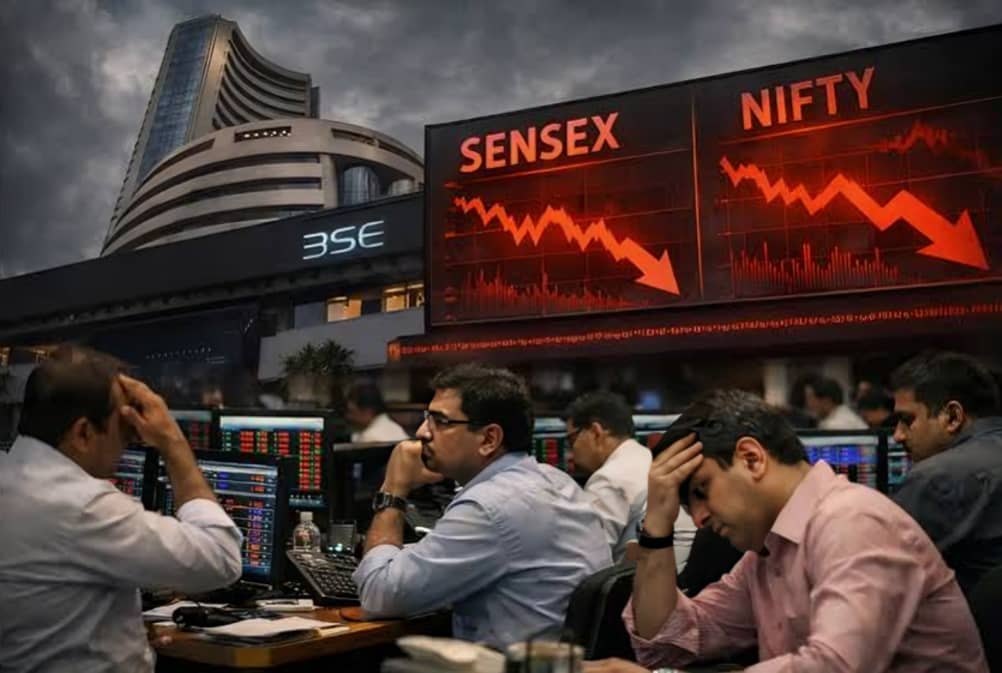
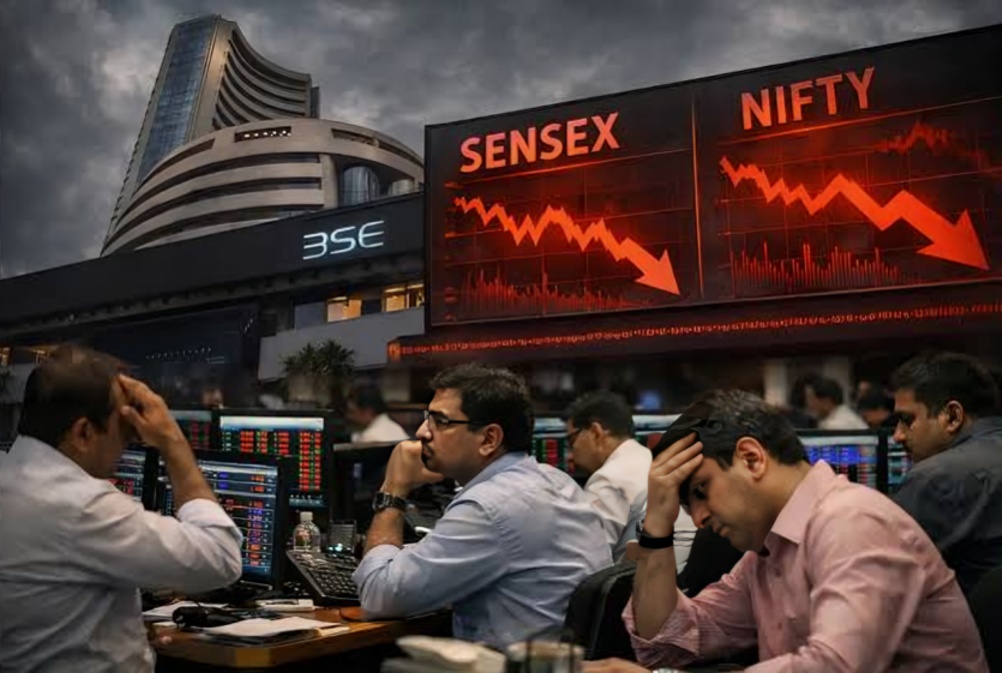
Indian stock markets witnessed a sharp correction during the week, recording losses for five consecutive trading sessions and leading to an estimated decline of more than Rs 9 lakh crore in investor wealth. The sustained selling pressure reflected cautious investor sentiment amid a combination of global economic concerns, domestic market factors, and profit booking in several sectors.
Benchmark equity indices remained under pressure throughout the week as investors reduced exposure to riskier assets. Market participants closely monitored developments in global financial markets, corporate earnings, economic indicators, and policy expectations, all of which contributed to increased volatility.
One of the major reasons behind the market decline was cautious global sentiment. Investors worldwide remained attentive to developments related to interest rates, inflation trends, and economic growth prospects in major economies. Expectations regarding future monetary policy decisions by central banks often influence capital flows into emerging markets, including India.
Foreign portfolio investor activity also remained an important factor affecting market performance. When foreign institutional investors reduce their holdings in domestic equities, broader market indices often come under pressure due to increased selling volumes. Such movements are closely watched because they can significantly influence short term market direction.
Profit booking following earlier market gains also contributed to the correction. After periods of sustained upward movement, investors frequently choose to lock in profits, particularly in sectors that have experienced strong rallies. This normal market activity can temporarily increase selling pressure even when the long term outlook remains unchanged.
Corporate earnings announcements also influenced investor sentiment. Market participants evaluated quarterly financial results across multiple sectors, with companies reporting earnings that either met, exceeded, or fell short of market expectations. Earnings performance remains a critical driver of stock valuations, and any disappointment can affect share prices.
Global geopolitical developments continued to add uncertainty to financial markets. Investors typically become more cautious during periods of heightened geopolitical tension because such events can influence commodity prices, international trade, energy markets, and overall economic stability. Increased uncertainty often results in higher market volatility.
Domestic economic indicators also remained under close observation. Inflation trends, industrial production, government policy measures, and consumption data continue to shape investor expectations regarding future economic growth. Positive macroeconomic fundamentals generally support long term market confidence, although short term fluctuations remain common.
Despite the week's decline, market analysts note that corrections are a regular feature of equity investing. Financial markets typically move through cycles of gains and declines as investors respond to changing economic conditions, corporate performance, and global developments. Short term volatility does not necessarily indicate a change in long term market fundamentals.
Experts advise investors to maintain a disciplined investment approach during periods of market uncertainty. Diversification, long term planning, and careful assessment of financial goals remain important principles for managing investment portfolios. Sudden market movements often create both challenges and opportunities, depending on an investor's time horizon and risk tolerance.
Several sectors experienced varied levels of selling during the week, with banking, information technology, financial services, and automobile stocks among those closely watched by market participants. Broader market indices also reflected weakness across mid cap and small cap segments as investors adopted a more cautious stance.
Looking ahead, investors will continue to monitor corporate earnings, domestic economic data, foreign investment trends, central bank policy developments, and international market conditions. These factors are expected to influence market direction in the coming weeks.
Although more than Rs 9 lakh crore in investor wealth was estimated to have been erased during the week's correction, market participants emphasize that equity markets have historically experienced periodic fluctuations. Long term investment decisions are generally influenced by broader economic fundamentals, corporate profitability, and sustained business growth rather than short term market volatility alone.