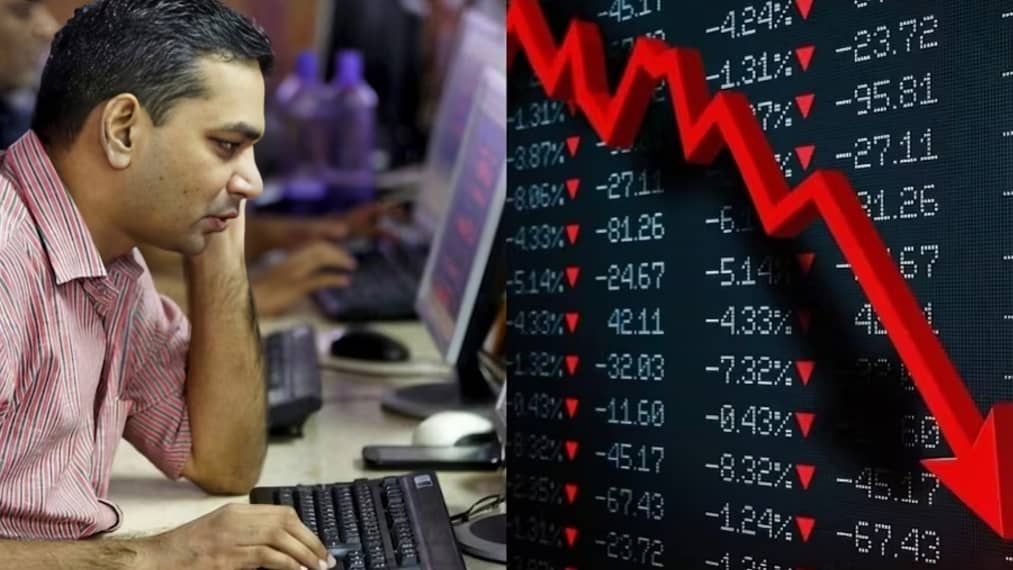
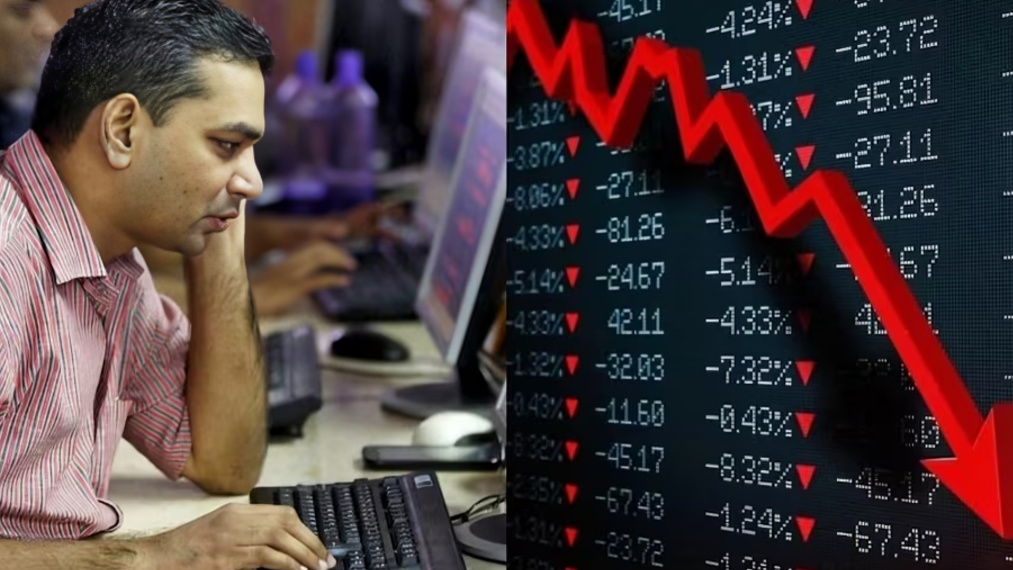
Indian equity markets witnessed a sharp decline as investors reacted to escalating geopolitical tensions and rising global crude oil prices. The benchmark indices came under heavy selling pressure throughout the trading session, reflecting concerns about the potential impact of international developments on economic growth and inflation.
The BSE Sensex recorded losses of more than 800 points during the session, while the NSE Nifty also traded significantly lower. Market participants remained cautious as uncertainty surrounding developments in the Middle East continued to influence global financial markets.
Trading indicators had signaled weakness even before the market opened. Gift Nifty was trading lower ahead of the session, indicating a negative start for domestic equities. As trading progressed, selling pressure intensified across several sectors, contributing to broader market losses.
Analysts noted that rising crude oil prices have emerged as a major concern for investors. India imports a large share of its crude oil requirements, making the economy sensitive to fluctuations in international energy prices. Higher oil prices can increase transportation and manufacturing costs, potentially contributing to inflationary pressures across various sectors.
The decline was visible across multiple industries, including banking, financial services, information technology, automobiles, and consumer-related sectors. Investors appeared focused on reducing risk exposure amid uncertainty in global markets.
Market experts stated that geopolitical tensions often trigger volatility in financial markets because they can affect energy supplies, trade routes, and investor confidence. Concerns regarding possible disruptions to global oil production and transportation have contributed to fluctuations in commodity prices in recent weeks.
The increase in crude oil prices has also raised concerns about fuel costs and the broader economic outlook. Higher energy prices can impact businesses and consumers alike by increasing operational expenses and household spending. Investors are closely monitoring developments that could influence inflation and monetary policy decisions.
Foreign institutional investors and domestic investors alike have adopted a cautious stance as they evaluate the potential implications of global events. Market participants continue to monitor international developments, central bank actions, and economic indicators that could shape future market direction.
Despite the decline, financial analysts emphasize that short-term volatility is a common feature of equity markets. Global events often create temporary fluctuations in stock prices as investors react to changing economic conditions. Long-term market performance generally depends on corporate earnings, economic growth, policy stability, and investor confidence.
Experts advise investors to focus on long-term investment strategies rather than reacting to short-term market movements. Diversification and disciplined investing remain important during periods of heightened uncertainty.
Looking ahead, market participants are expected to closely track crude oil prices, geopolitical developments, inflation trends, and corporate earnings reports. These factors are likely to influence investor sentiment and market direction in the coming weeks.
While the latest session reflected significant caution among investors, analysts believe that future market performance will depend on how global economic conditions evolve and whether geopolitical tensions ease. Until greater clarity emerges, volatility is expected to remain a key feature of financial markets.