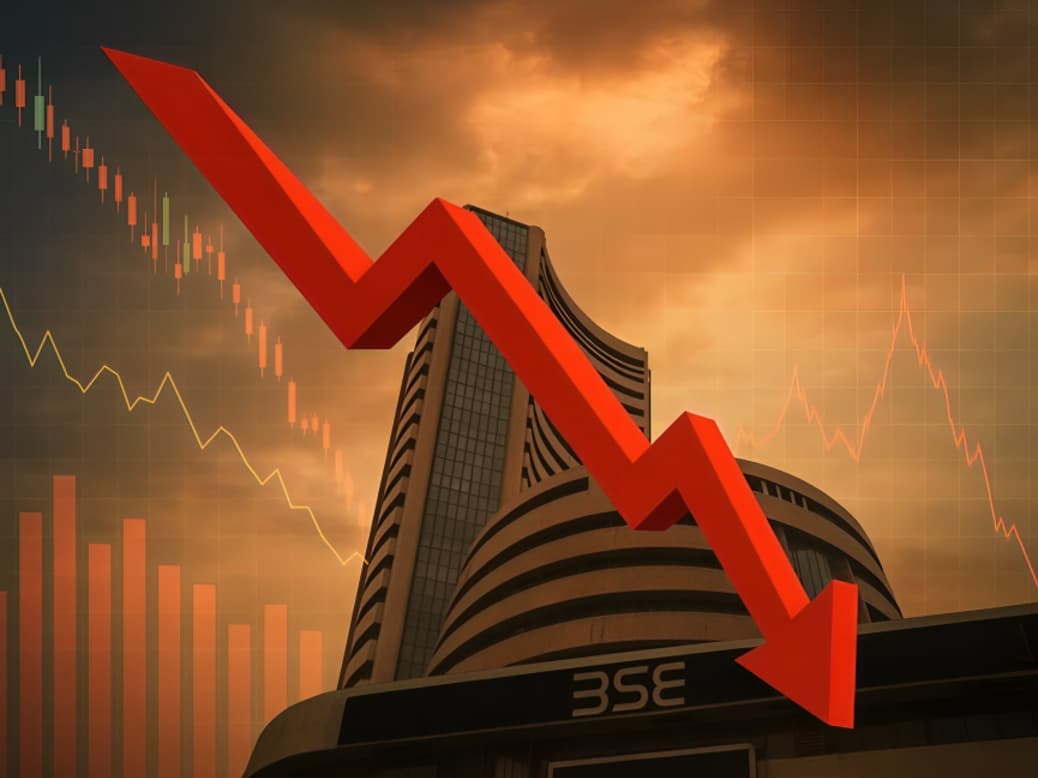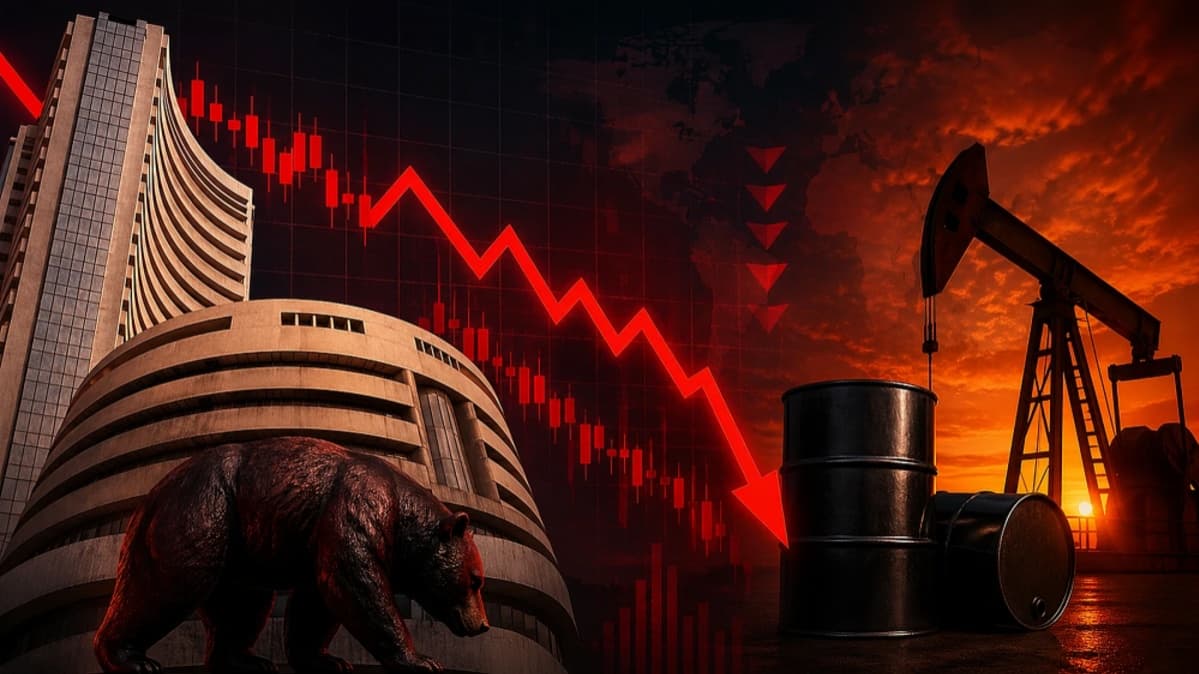

Indian stock markets ended sharply lower with heavy selling pressure across major sectors as investor sentiment weakened amid ongoing global uncertainty. The benchmark BSE Sensex declined by more than 1000 points during the trading session, while the NSE Nifty also recorded significant losses by the close of the market.
Market analysts stated that continued geopolitical tensions and uncertainty in global financial markets contributed to the sharp fall in Indian equities. Investors remained cautious throughout the day as concerns regarding international developments, rising market volatility and foreign institutional selling impacted overall sentiment.
The decline was visible across multiple sectors including banking, information technology, automobile, metal and financial stocks. Several heavyweight companies witnessed strong selling pressure, dragging the benchmark indices lower during the session.
According to market experts, global economic concerns and uncertainty surrounding international political developments have increased risk aversion among investors in recent weeks. Weakness in international markets also influenced trading patterns in India, leading to broad based declines across equities.
The stock market experienced volatile movement throughout the day, with benchmark indices remaining under pressure from the opening session. Traders pointed out that foreign institutional investors continued to adopt a cautious approach due to uncertainty in global markets and concerns regarding economic stability.
Financial analysts noted that geopolitical developments often influence investor confidence because they can affect global trade, crude oil prices, currency markets and overall economic growth. Rising uncertainty generally pushes investors toward safer investment options, resulting in temporary weakness in equity markets.
Despite the sharp fall, experts believe long term market fundamentals continue to remain stable, supported by India’s economic growth prospects, domestic consumption and infrastructure spending. However, short term volatility is expected to continue as global developments remain unpredictable.
Retail investors were advised by market observers to avoid panic selling and focus on long term investment strategies. Financial planners stated that stock market corrections are common during periods of uncertainty and investors should carefully assess risks before making trading decisions.
The decline in the markets also affected investor wealth significantly during the session as overall market capitalization of listed companies fell sharply. Mid cap and small cap stocks also witnessed selling pressure along with large cap shares.
Economic experts continue to monitor international developments closely because global financial markets remain sensitive to geopolitical tensions, inflation concerns and central bank policy decisions. Movements in crude oil prices and foreign investment flows are also expected to influence Indian markets in the coming days.
The Reserve Bank of India and financial regulators are closely observing market conditions while investors await further economic data and international policy signals. Analysts believe market direction in the near term will largely depend on global developments and investor confidence.
Despite the sharp correction, many experts maintain that Indian equity markets continue to have strong long term potential due to steady economic growth, increasing domestic participation and expanding business activity. Investors are expected to remain cautious until greater clarity emerges regarding international market conditions.