Sensex to Hit 95,000 by December 2027? Morgan Stanley Sees 16% Upside
Global financial services firm Morgan Stanley has projected that India's benchmark stock market index, the BSE Sensex, could reach 95,000 points by December 2027. The forecast indicates a potential upside of 16 per cent under the firm's base-case scenario.
According to the report, there is a 50 per cent probability of the Sensex reaching this target. Morgan Stanley has also outlined alternative market scenarios, suggesting that the index could climb to 105,000 points in a bullish situation or decline to 68,000 points in a bearish scenario.
The projections offer investors an outlook on possible movements in the Indian equity market over the coming period. However, these estimates are based on assumptions about market conditions and should not be considered guaranteed outcomes.
Morgan Stanley's Sensex Target for 2027
Morgan Stanley's base-case projection places the Sensex at 95,000 points by December 2027. The target represents a potential gain of approximately 16 per cent from the reference level used in the firm's analysis.
The report assigns a 50 per cent probability to this outcome, making it the central scenario in its assessment. This suggests that the firm sees a possibility of further growth in the Indian stock market, although the forecast also recognises the uncertainty associated with equity investments.
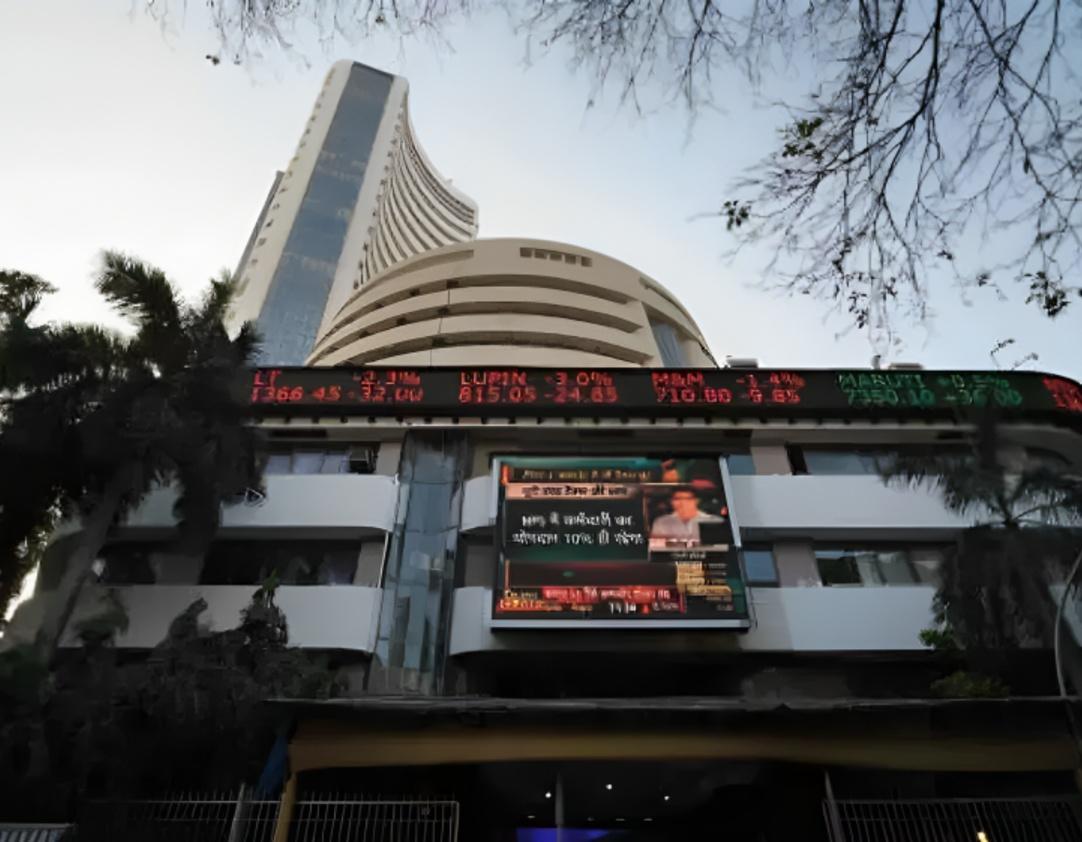
The Sensex is one of India's major stock market indices. It tracks the performance of 30 large and established companies listed on the BSE. Movements in the index are closely followed by investors, financial institutions and market analysts to assess the broader direction of the Indian equity market.
Bull Case: Sensex Could Reach 105,000
In its more optimistic scenario, Morgan Stanley estimates that the Sensex could rise to 105,000 points.
This bullish projection represents a stronger market outcome compared with the base-case target of 95,000. Such a scenario would indicate a more favourable environment for equities and stronger investor confidence.
A bullish market outlook generally depends on supportive economic conditions, corporate earnings growth, investment activity and positive market sentiment. However, the specific assumptions behind Morgan Stanley's 105,000-point projection should be reviewed in the complete report.
For investors, the higher target highlights the possibility of additional gains if market conditions develop favourably. At the same time, a projected index level does not guarantee that individual stocks or investment portfolios will deliver similar returns.
Bear Case: Sensex May Decline to 68,000
Morgan Stanley has also considered a bearish scenario in which the Sensex could fall to 68,000 points.
This projection highlights the risks that could affect the Indian stock market. Equity markets can face downward pressure due to weaker economic growth, disappointing corporate earnings, global financial uncertainty, changes in interest rates and reduced investor confidence.
International developments can also influence domestic markets. Changes in crude oil prices, currency movements, geopolitical tensions and foreign investment flows may affect market sentiment.
The bearish estimate underlines why investors should consider the possibility of losses while making investment decisions. Stock market investments are subject to market risks, and index-level forecasts cannot predict the performance of every listed company.
What the Three Scenarios Indicate
Morgan Stanley's projections present three possible outcomes for the Sensex by December 2027.
The base-case scenario places the index at 95,000 points, with a 50 per cent probability. The bullish scenario estimates a rise to 105,000 points, while the bearish scenario places the index at 68,000 points.
These different estimates demonstrate the range of possible market outcomes. Rather than providing a single guaranteed prediction, the scenarios reflect the uncertainty surrounding future market performance.
Investors should also remember that market indices can experience short-term volatility even when long-term forecasts remain positive. Economic developments, company results and global market movements can influence the direction of equities.
What Investors Should Keep in Mind
The forecast may attract attention from investors tracking the long-term prospects of Indian equities. However, investment decisions should not be based solely on a brokerage firm's index target.
Investors should consider their financial goals, investment horizon, risk tolerance and portfolio diversification before making decisions. They should also evaluate individual companies based on their financial performance, business outlook and valuation.
The Sensex reaching a particular level would not necessarily mean that all stocks would rise by the same percentage. Different sectors and companies can perform differently depending on their business conditions and market valuations.
Conclusion
Morgan Stanley has projected a Sensex target of 95,000 points by December 2027, indicating a potential 16 per cent upside under its base-case scenario. The report assigns a 50 per cent probability to this outcome.
It has also outlined a bullish target of 105,000 points and a bearish estimate of 68,000 points. The three scenarios highlight both the growth potential and risks facing the Indian equity market. Investors should treat these figures as forecasts rather than assured market outcomes.