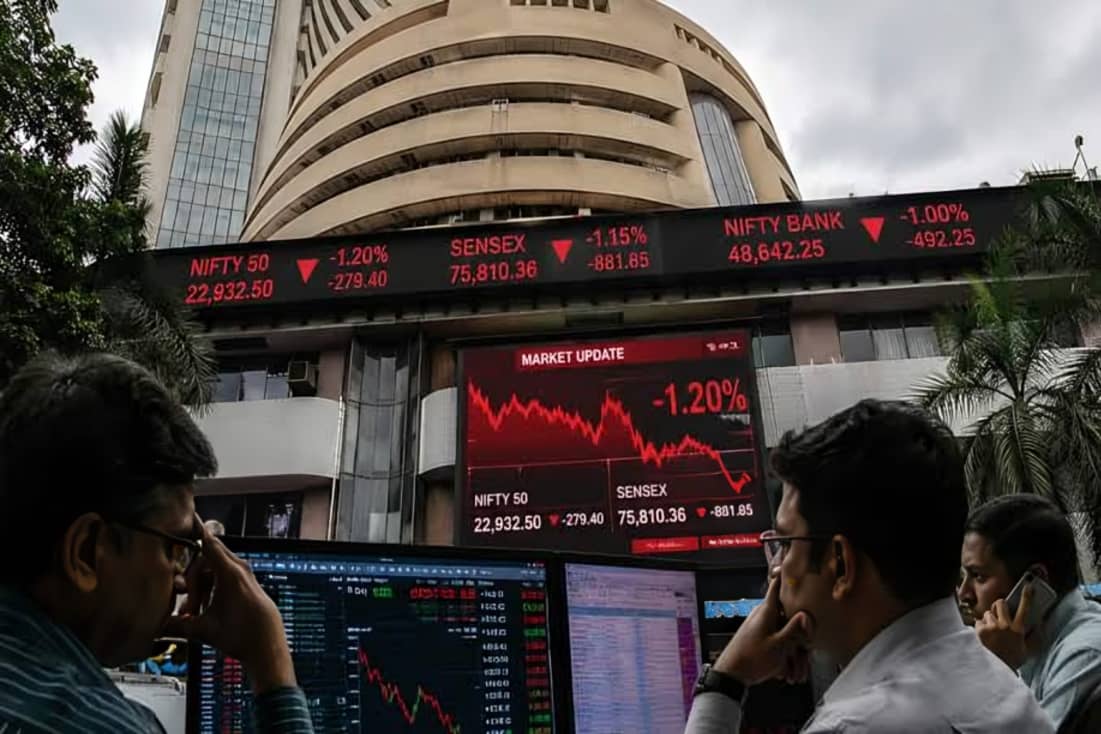
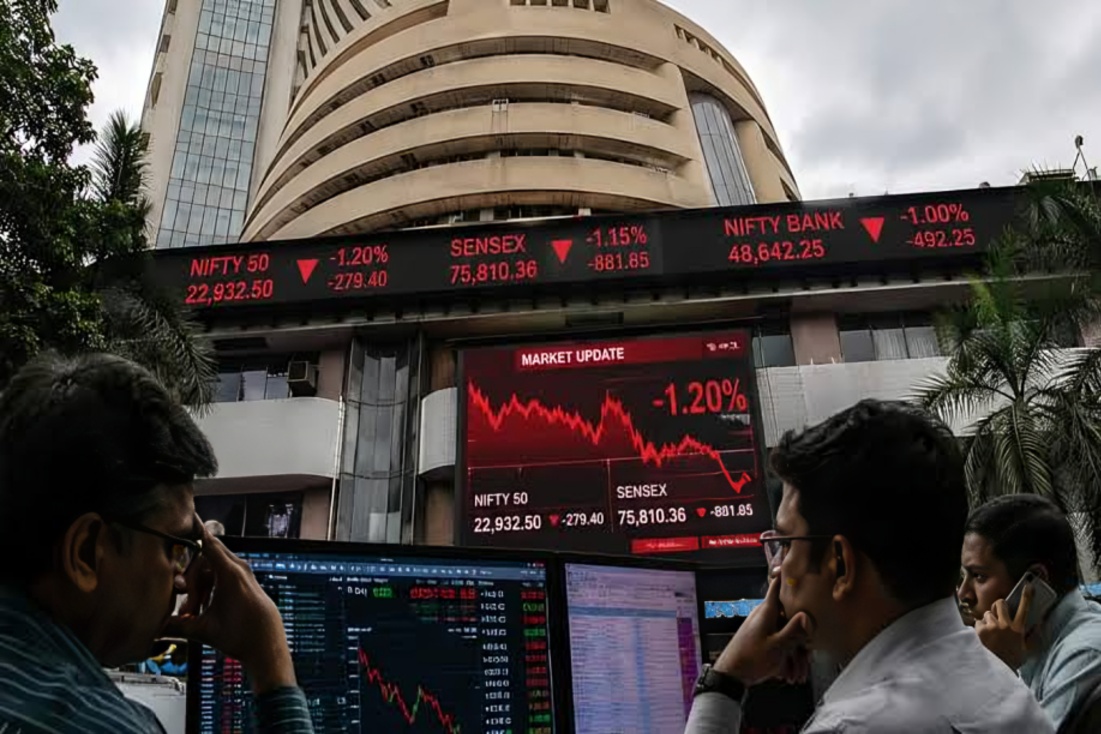
Indian equity markets ended Friday's trading session with only marginal movements as investors remained cautious amid elevated crude oil prices, foreign institutional investor selling and continuing geopolitical uncertainty surrounding the US and Iran.
The Nifty 50 gained around 0.02 percent to close at 24,239.40, while the BSE Sensex rose approximately 0.03 percent to finish at 77,560.02. Both benchmark indices remained largely flat despite fluctuations during the trading session.
The subdued market performance reflected a cautious approach among investors as several global and domestic factors continued to influence trading sentiment.
Rising crude oil prices remain a concern
One of the biggest concerns for Indian investors continues to be the increase in crude oil prices.
Brent crude has remained elevated amid uncertainty surrounding the situation involving the United States and Iran. On Friday, Brent crude was trading close to the 93 dollar per barrel level, while concerns about supply disruptions continued to influence the oil market.
Higher crude prices are particularly important for India because the country imports a significant portion of its crude oil requirements.
A prolonged increase in international oil prices can put pressure on India's import bill and the rupee. It can also affect inflation and increase costs for companies that depend heavily on fuel and transportation.
US Iran tensions affect investor confidence
Geopolitical uncertainty remained another important factor affecting market sentiment.
Tensions between the United States and Iran have created uncertainty in global markets, particularly because the Middle East is an important region for global energy supplies.
Investors are closely monitoring developments in the region because any major disruption to oil supplies could result in another sharp increase in crude prices.
The uncertainty has encouraged investors to adopt a more cautious approach toward equities.
Foreign investors remain a key factor
Foreign institutional investor activity has also remained an important factor for the Indian stock market.
Continued foreign selling can put pressure on benchmark indices and individual stocks, particularly when global investors become more cautious toward emerging markets.
Higher global bond yields have also contributed to concerns about capital flows.
According to market data reported by Reuters, Indian equities have recently faced pressure from elevated crude prices and higher global bond yields, which can make developed-market assets relatively more attractive to international investors.
Sensex performance
The Sensex remained close to the previous session's level and finally ended at 77,560.02.
The benchmark index experienced movements during the day as investors responded to developments in global markets, crude oil prices and geopolitical news.
The limited movement indicated that buyers and sellers largely remained balanced by the end of the session.
Although some stocks attracted buying interest, broader concerns prevented the index from making a significant move higher.
Nifty 50 performance
The Nifty 50 also finished with only a marginal gain.
The index closed at 24,239.40, up approximately 0.02 percent.
The performance showed that investors were unwilling to take aggressive positions while uncertainty remained high.
The Nifty has recently experienced pressure from rising crude prices and global financial conditions. Earlier in the week, the index recorded a prolonged losing streak before recovering some ground.
Sector performance remains mixed
The overall market performance was not uniform across sectors.
According to Reuters, eight of the 16 major sectors declined during Friday's session. The IT sector fell around 0.5 percent, while small cap stocks gained approximately 0.7 percent and mid cap stocks slipped around 0.2 percent.
This indicates that investors continued to selectively buy stocks despite the broader cautious environment.
Stocks that attracted attention
Several individual stocks recorded notable movements during the session.
Welspun Corp gained sharply after securing a large order, while Urban Company also moved higher following a positive analyst view.
At the same time, Niva Bupa declined following regulatory action.
Gold financing companies including IIFL Finance, Muthoot Finance and Manappuram Finance also recorded gains during the session.
These movements show that company-specific developments continued to influence individual stocks even while the broader market remained subdued.
Oil prices and the Indian rupee
Crude oil prices have also affected the Indian rupee.
The rupee ended Friday at around 95.69 against the US dollar and recorded a weekly decline of approximately 0.3 percent.
Brent crude rose more than 5 percent during the week and was last reported near 92.90 dollars per barrel.
A weaker rupee can increase the domestic cost of imported crude oil and potentially add pressure to India's inflation and trade balance.
The Reserve Bank of India has continued to monitor currency movements and market conditions.
Global markets remain cautious
Indian markets were also influenced by mixed global signals.
Asian markets showed varied performance, while US futures were marginally higher during Friday's trading.
Global bond yields remained an important concern for investors.
The US 10 year Treasury yield was reported at around 4.69 percent, while the 30 year yield was around 5.24 percent. Higher yields can influence investor allocations between equities and fixed income assets.
What investors will watch next
Investors are likely to closely monitor crude oil prices and developments surrounding the US Iran situation in the coming sessions.
Any signs of easing geopolitical tensions could support market sentiment if they lead to lower oil prices.
On the other hand, further escalation could increase concerns about energy supplies and inflation.
Investors will also track foreign institutional flows, global bond yields, currency movements and upcoming domestic economic data.
Market outlook
The Friday session demonstrated the sensitivity of Indian equities to global developments.
Despite the recent volatility, the benchmark indices managed to remain largely stable at the end of the week.
However, the elevated crude oil price remains a major risk for the Indian economy and equity markets.
Higher energy costs can affect corporate margins, inflation expectations and consumer spending.
At the same time, continued foreign selling could create additional pressure on benchmark indices.
For investors, the immediate focus is therefore likely to remain on global geopolitical developments and crude oil movements.
Conclusion
The Indian stock market ended Friday, August 21, 2026, on a largely flat note.
The Sensex closed at 77,560.02, while the Nifty 50 ended at 24,239.40. Rising crude oil prices, foreign institutional investor activity and continuing US Iran tensions kept investors cautious.
With crude oil prices remaining elevated and geopolitical uncertainty continuing, market volatility could remain high in the near term.
Investors are likely to watch global developments closely while taking selective positions based on company fundamentals and sector-specific factors.