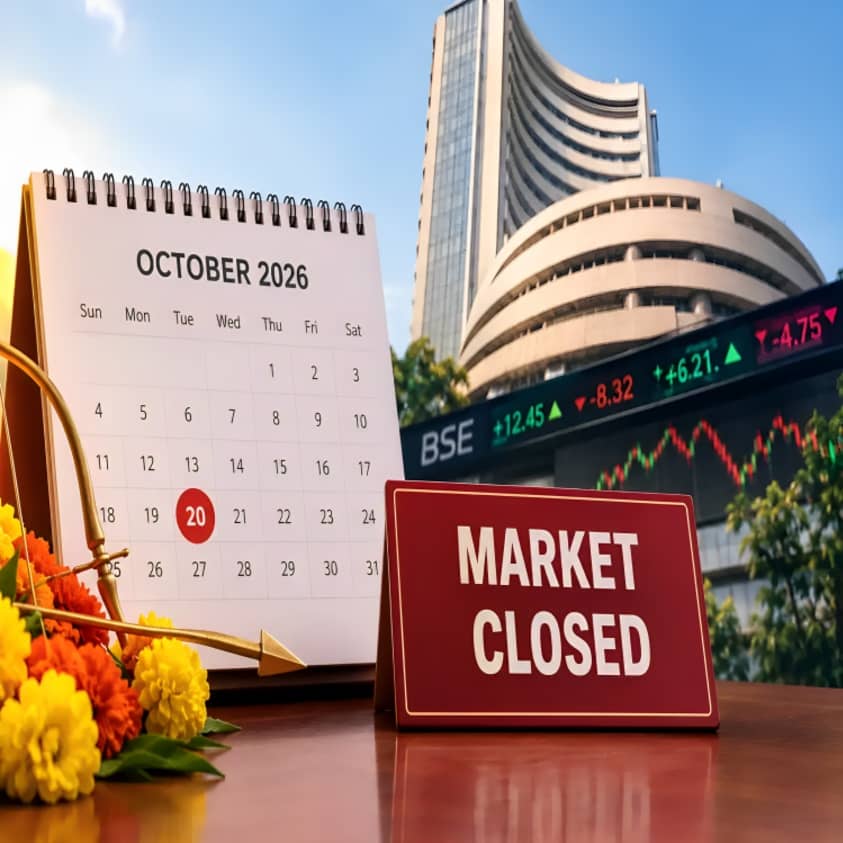

Stock Market Holiday Today: NSE and BSE Closed for Dussehra, MCX to Reopen in Evening
Indian stock markets are observing a trading holiday on Tuesday, October 20, 2026, on account of Dussehra. The National Stock Exchange of India (NSE) and the BSE have suspended regular trading for the day in accordance with their published holiday calendars. The Multi Commodity Exchange of India (MCX), however, is following a different schedule, with its morning session closed and evening trading scheduled to resume at 5 pm.
The holiday is relevant for investors, traders and businesses that depend on the daily trading schedule to plan transactions. While equity trading is suspended for the day, commodity-market participants should check the MCX schedule because the exchange permits evening trading on certain festival holidays.
Are NSE and BSE Open Today?
No. The NSE and BSE are closed for regular trading on Tuesday, October 20, because of Dussehra. The exchanges have listed the festival as a trading holiday in their 2026 calendars.
Regular equity trading and equity derivatives trading are suspended for the day. Investors will not be able to execute normal exchange-based buy or sell orders in these segments during the holiday. Trading is scheduled to resume on Wednesday, October 21, under the exchanges’ usual operating schedule.
Investors should distinguish between an exchange holiday and access to a brokerage account. Trading applications may remain accessible, and users may be able to view account information or prepare orders, but orders in a closed market cannot be executed until the relevant segment reopens. The availability and processing of other services may depend on the broker and the type of transaction.
Investors should consult the official NSE and BSE notices for segment-specific details, particularly if they have pending orders or transactions that depend on settlement schedules.
MCX Trading Schedule on Dussehra
The MCX follows a separate holiday schedule for commodity derivatives. Its official 2026 trading holiday calendar lists Dussehra on October 20, with the morning session marked closed and the evening session marked open.
The normal MCX morning session runs from 9 am to 5 pm. On Dussehra, trading is scheduled to resume at 5 pm in the evening. The regular evening session generally runs until 11:30 pm, extending to 11:55 pm during the applicable period for certain internationally linked contracts.
Not all commodity contracts necessarily share the same closing time. Some agricultural commodities have earlier trading cut-offs. Traders should therefore verify the relevant contract timings and any additional exchange notices before placing orders.
The difference between the equity and commodity schedules is important. Although investors cannot trade regular equities on the NSE and BSE during the holiday, eligible commodity contracts may still be available on the MCX during the evening session.
What Should Traders and Investors Know?
A trading holiday can affect the timing of planned transactions, hedging activity and portfolio adjustments. Investors who intended to buy or sell shares on Tuesday should account for the closure and review their plans before the next trading session.
Derivative traders should be particularly careful about contract expiry dates, margin requirements and positions that may be affected by market movements while domestic equity trading is closed. They should review the rules applicable to their specific contracts rather than assume that every segment follows the same schedule.
Commodity traders should also be aware that international markets may continue to operate while Indian exchanges observe a holiday. Changes in global prices, currency movements or economic news during the day may influence domestic prices when the relevant market reopens. Such movements are not guaranteed, and the eventual impact depends on market conditions.
Investors should use official exchange websites and notices as the primary reference for trading hours and holiday information. Brokerage notifications may also provide operational guidance, but the applicable exchange schedule should be checked for the relevant segment.
Upcoming Stock Market Holidays in 2026
After the Dussehra holiday, the published NSE calendar lists additional market holidays for Diwali-Balipratipada on November 10, Guru Nanak Jayanti on November 24 and Christmas on December 25. The exchange has also listed a special Muhurat trading holiday for Diwali Lakshmi Pujan on Sunday, November 8, 2026, with timings to be notified separately.
Investors should check the latest notices before these dates because special trading sessions may operate under a separate schedule. Holiday calendars can also be updated through subsequent exchange circulars.
When Will Normal Trading Resume?
Regular equity trading on the NSE and BSE is scheduled to resume on Wednesday, October 21, 2026. The usual equity market session begins at 9:15 am and ends at 3:30 pm, subject to exchange announcements or special sessions.
For commodity traders, the MCX evening session is scheduled to operate on October 20, with trading availability depending on the commodity and its applicable closing time.
The key point for investors is that Dussehra does not mean all Indian financial markets follow an identical schedule. The NSE and BSE are closed for the regular equity market, while the MCX permits evening trading for eligible commodity contracts. Checking the official holiday calendar and contract-specific timings can help market participants avoid confusion and plan transactions accordingly.