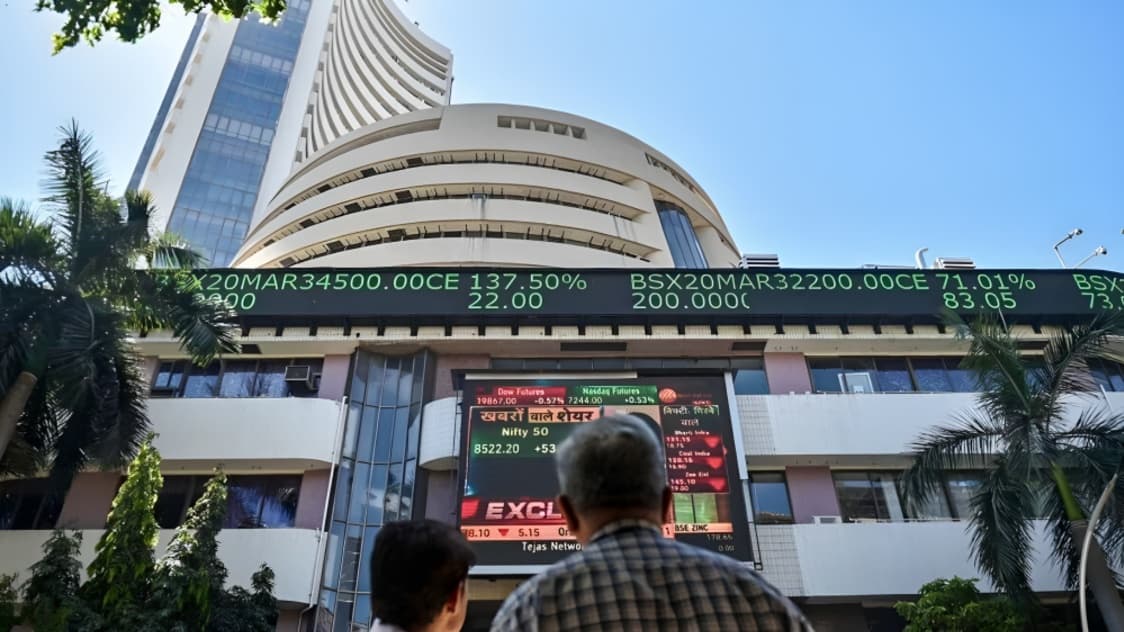

Stock Market Today: Sensex Falls Over 117 Points, Nifty Near 22,967 as Profit Booking Weighs on Markets
Indian benchmark stock indices came under pressure in early trading on Friday, October 16, 2026, as investors booked profits following the previous session’s strong rally. The BSE Sensex declined by more than 117 points, while the NSE Nifty 50 slipped towards 22,967, reflecting cautious sentiment among market participants.
The decline came a day after both benchmarks recorded significant gains. On October 15, the Sensex surged 1,533.72 points, or 2.11%, to close at 74,315.61. The Nifty 50 advanced 374.65 points, or 1.66%, to settle at 22,997.35.
After such a sharp upward move, some investors chose to lock in profits. Selling in several heavyweight stocks added pressure to the benchmarks, although buying interest in information technology shares helped limit the losses.
The figures in this report refer to early trading and should not be treated as the final closing levels for the day.
Sensex and Nifty Under Selling Pressure
The Sensex and Nifty opened with limited momentum before slipping into negative territory during the morning session. According to early market reports, the Sensex fell around 113 points to 74,187, while the Nifty declined approximately 27 points to 22,967.15.
The weakness followed Thursday’s strong performance, when domestic equities benefited from buying in information technology and banking stocks. Market sentiment had also received support from a decline in crude oil prices, a steadier rupee and optimism about a possible India-US trade agreement.
However, the gains did not immediately translate into sustained buying on Friday. Investors appeared cautious about extending positions after the previous session’s rally, while continued foreign investor selling remained a concern.
The movement in the benchmark indices showed that the market was attempting to balance profit booking against selective buying in stocks with stronger earnings or business updates.
Why Are Investors Booking Profits?
Profit booking occurs when investors sell shares after prices have risen, allowing them to realise gains. It is a common feature of stock markets, particularly after a sharp upward movement over a short period.
The Sensex and Nifty had advanced strongly on October 15, bringing the Nifty close to the psychologically important 23,000 mark. Following this rally, some investors chose to reduce their exposure rather than assume that the upward trend would continue without interruption.
Such selling does not necessarily indicate a longer-term change in market direction. It can represent a temporary pause as investors reassess valuations, corporate earnings and economic developments.
Nevertheless, the sustainability of the rally remains important. If buying interest weakens and more stocks begin to decline, profit booking can place additional pressure on the indices. Conversely, renewed buying in major companies may help benchmarks recover.
Market participants are therefore monitoring both index levels and the broader distribution of advances and declines to assess the strength of the market.
India VIX Rises as Volatility Concerns Increase
India VIX, commonly known as the market’s volatility gauge, also attracted attention during the early session. It rose nearly 3% to around 14.42, according to a Moneycontrol market report.
India VIX reflects market expectations of volatility over the near term based on Nifty options prices. A rise in the index generally indicates that traders expect greater price fluctuations, while a decline often signals reduced expectations of volatility.
The increase came after India VIX had fallen during Thursday’s rally. The subsequent rise suggested that some uncertainty remained despite the strong performance of the benchmark indices.
However, India VIX does not predict whether the market will rise or fall. It measures expected volatility rather than the direction of future price movements. Investors should therefore consider it alongside other indicators, market news and company-specific developments.
Nifty Faces Resistance Near 23,050
Technical levels were another factor influencing trading sentiment. Market analysts highlighted 23,050 as an important resistance level for the Nifty 50.
Resistance is a price area where selling pressure may emerge and make it harder for an index to move higher. A decisive move above a resistance level may encourage additional buying, while repeated failures to cross it can lead traders to become more cautious.
The Nifty’s movement near the 23,000 mark was particularly significant because the index had finished the previous session at 22,997.35. The market was therefore attempting to establish whether the earlier rally could continue or whether sellers would limit further gains.
Technical levels are not guaranteed turning points. Their significance can change as trading volumes, investor sentiment and fresh information influence market activity.
Investors should avoid making decisions based solely on one support or resistance level.
Stocks in Focus: IT Shares Offer Some Support
Several heavyweight stocks came under pressure during early trading. Reports identified Reliance Industries, Bajaj Finserv, Hindustan Unilever, Larsen & Toubro, Asian Paints and State Bank of India among the notable laggards.
Weakness in major index constituents can influence benchmark performance because these companies carry significant weight in the indices.
Information technology stocks, however, provided some support. Tech Mahindra gained after reporting a 32.74% increase in consolidated net profit to Rs 1,585.6 crore for the July-September quarter of FY27. The company’s results were supported by business growth and cost-related improvements, according to market reports.
Other IT companies, including Infosys and Tata Consultancy Services, were also among the stocks attracting buying interest during the session.
The contrast between selling in some large companies and strength in selected IT stocks highlighted the importance of individual company performance. Even when benchmark indices decline, certain sectors or shares can move higher because of earnings announcements and business developments.
Foreign Investor Activity Remains Important
Foreign portfolio investor activity continues to be an important factor for Indian equities. According to exchange data cited in early market coverage, foreign institutional investors sold shares worth approximately Rs 5,285.37 crore on October 15.
Sustained foreign selling can weigh on the market by increasing the supply of shares available for sale. Its impact, however, depends on the scale of selling, domestic institutional investor activity, market valuations and broader global conditions.
Investors are also tracking international developments, including crude oil prices, US inflation data and trends in global technology stocks. Changes in these factors can influence expectations for corporate earnings, inflation and capital flows into emerging markets.
Domestic earnings announcements are another important driver. Companies reporting stronger-than-expected results may attract buying interest even when the wider market is under pressure.
What Should Investors Watch Next?
Market participants are likely to monitor whether the Nifty can regain momentum around 23,000 and move above the 23,050 resistance level identified by analysts. They will also watch whether the Sensex stabilises after the previous session’s sharp gains.
India VIX, foreign investor flows, crude oil prices and quarterly earnings announcements may influence sentiment in the coming sessions. The performance of large-cap stocks will also remain important because of their influence on benchmark indices.
A single session of profit booking does not establish a sustained downward trend. Equally, a strong rally in one session does not guarantee further gains. Investors should consider their investment objectives, risk tolerance and time horizon rather than reacting solely to daily index movements.
Conclusion
The Sensex and Nifty declined during early trading on October 16, 2026, as investors booked profits after Thursday’s strong rally. A rise in India VIX and resistance near 23,050 added to cautious sentiment, while selected IT stocks helped limit the pressure on the benchmarks.
The market’s direction will depend on how investors respond to corporate earnings, foreign fund flows, global economic developments and domestic trading conditions. The early-session figures should not be mistaken for the final closing levels, as both indices can change significantly throughout the trading day.
This report is for informational purposes only and does not constitute investment advice.