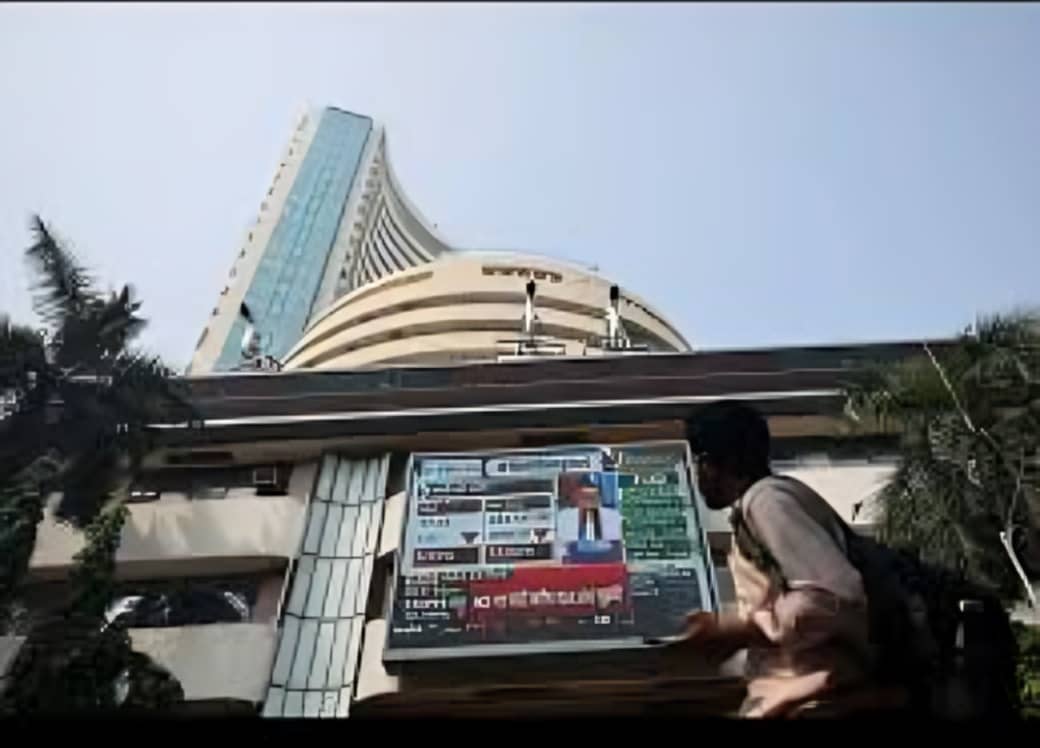
The Indian stock market opened on a weaker note on Wednesday, August 12, 2026, with both benchmark indices trading in negative territory. The BSE Sensex and NSE Nifty came under pressure as investors remained cautious amid rising crude oil prices, geopolitical uncertainty and key economic data expected from India and the United States.
The Sensex stood at 78,020.65, down 133.60 points, or 0.17 percent, while the Nifty 50 was trading at 24,415.60, lower by 56.10 points, or 0.23 percent.
The subdued opening reflected a cautious approach among investors after the domestic market had already faced pressure in the previous session.
Crude Oil Prices Weigh on Sentiment
One of the major concerns for investors is the sharp rise in international crude oil prices. Oil prices were trading close to the 90 dollar per barrel level amid continuing geopolitical tensions in the Middle East.
Higher crude prices are particularly important for India because the country depends significantly on imported crude oil. A sustained increase in oil prices can raise the country's import bill and potentially create additional inflationary pressure.
Higher input costs can also affect corporate profitability, particularly for companies with significant exposure to fuel, transportation and raw material expenses.
According to Reuters, rising crude prices and concerns surrounding Middle East tensions were among the factors weighing on Indian equities on Wednesday.
Nifty Remains Below 24,500
The Nifty 50 continued to trade below the psychologically important 24,500 level.
The index had already closed below that mark in the previous session, and the latest decline indicated that buying momentum remained limited during the early part of Wednesday's trading session.
The movement around 24,400 to 24,500 is likely to remain important for market participants as traders assess whether the index can regain higher levels or faces additional selling pressure.
However, short term movements can change rapidly during the trading session depending on domestic and international developments.
Sensex Under Pressure
The Sensex also remained under pressure during the opening hours.
The index fell more than 130 points from its previous level, reflecting cautious investor sentiment across major sectors.
The Sensex represents 30 major companies listed on the BSE, making its movement an important indicator of sentiment toward India's large and established businesses.
A decline in the benchmark does not necessarily mean that every listed company is falling. Individual stocks can perform differently depending on company specific developments, earnings expectations and sector trends.
Tata Group Stocks in Focus
Another factor influencing market sentiment was weakness in several Tata Group stocks following the resignation of Tata Sons Chairman N Chandrasekaran.
Reuters reported that the resignation contributed to declines in major Tata Group companies, including Tata Consultancy Services, Tata Motors, Tata Steel, Titan and Tata Consumer.
Tata Consultancy Services was among the notable decliners, while several other Tata companies also came under selling pressure.
Because major Tata Group companies have significant weight in Indian market indices, movements in these stocks can influence overall benchmark performance.
Investors were therefore closely watching developments involving the group as trading continued.
Inflation Data in Focus
Domestic inflation data is another important factor being monitored by investors.
Market participants are assessing the potential impact of price trends on monetary policy, interest rates and economic growth.
Inflation data can influence expectations regarding future policy decisions by the Reserve Bank of India.
If inflation remains under control, investors may have greater confidence regarding economic conditions. However, renewed inflationary pressure, particularly from higher energy prices, could create concerns about future interest rates.
US inflation data is also being closely watched because changes in American inflation can influence global interest rate expectations and international capital flows.
Global Markets Influence Indian Equities
Indian equities are also influenced by developments in overseas markets.
Global investors monitor US markets, European equities, Asian markets, bond yields, currency movements and commodity prices before making investment decisions.
Any significant movement in global markets can quickly influence Indian equities, particularly when foreign institutional investors are active in domestic markets.
The current environment remains particularly sensitive because crude oil prices are elevated and geopolitical uncertainty remains high.
Mid Cap Stocks Show Resilience
Despite weakness in the major benchmark indices, not every segment of the Indian market was under pressure.
Reuters reported that mid cap stocks gained around 0.3 percent during Wednesday's trading session, indicating that some investors continued to find opportunities outside the major large cap names.
This divergence shows that market performance can vary significantly between different segments.
Large cap stocks can face selling pressure while selected mid cap and small cap companies continue to attract buying interest.
Investors should therefore look beyond the headline movement of the Sensex and Nifty when assessing the broader market.
Sectoral Performance
The performance of individual sectors is expected to remain closely linked to crude prices, domestic economic indicators and company specific developments.
Energy sensitive sectors may face pressure if oil prices remain elevated, while companies that benefit from higher commodity prices could see stronger investor interest.
Information technology stocks may also remain sensitive to currency movements and developments in global technology demand.
Banking and financial stocks will continue to be influenced by interest rate expectations, credit growth and broader economic conditions.
Why Investors Are Cautious
Several factors are currently contributing to market caution.
The first is the rise in crude oil prices.
The second is geopolitical uncertainty in the Middle East.
The third is the upcoming inflation data.
The fourth is weakness in some major corporate stocks.
Together, these factors have created an environment in which investors are closely monitoring new developments before taking major positions.
What Investors Should Watch
Market participants will be watching the Nifty's ability to hold important support levels and whether the index can recover toward the 24,500 mark.
They will also monitor the movement of the Sensex, crude oil prices, the Indian rupee and foreign institutional investment flows.
Global market trends could also influence the direction of Indian equities during the rest of the session.
Any improvement in geopolitical conditions or decline in crude prices could provide relief to the market.
On the other hand, a further increase in oil prices or escalation of geopolitical tensions could increase selling pressure.
Market Outlook
The near term outlook for the Indian stock market remains dependent on a combination of domestic economic data and international developments.
The market's reaction to inflation figures will be particularly important because inflation influences expectations about monetary policy.
At the same time, crude oil prices remain a major external risk.
India's dependence on imported crude means that sustained increases in global oil prices can affect inflation, the trade deficit, corporate costs and consumer spending.
Investors are therefore expected to remain cautious until there is greater clarity on these factors.
Conclusion
The Indian stock market started Wednesday's session on a weak note, with the Sensex falling 133.60 points to 78,020.65 and the Nifty declining 56.10 points to 24,415.60.
Rising crude oil prices, geopolitical tensions, upcoming inflation data and weakness in selected major corporate stocks were among the factors influencing investor sentiment.
The market's next direction will depend on how investors respond to domestic economic data, global market movements and developments in the oil market