
Stock Market Today: Sensex and Nifty Decline on October 12 as Oil Prices and Global Uncertainty Remain in Focus
Indian equity markets came under pressure on Monday, October 12, 2026, as the benchmark Sensex and Nifty 50 gave up their early gains and moved into negative territory. Although GIFT Nifty futures had indicated a mildly positive start to the trading week, investor sentiment weakened as market participants assessed crude oil prices, geopolitical developments, foreign investor activity and the outlook for inflation and interest rates.
The reversal highlighted the uncertainty facing the Indian stock market after a recent recovery. Investors remained cautious about whether the rebound could continue, particularly while global financial conditions and energy prices remained challenging.
Sensex and Nifty Reverse Early Gains
The BSE Sensex and the NSE Nifty 50 initially opened higher on Monday. However, both benchmark indices subsequently declined as selling pressure increased during the session.
At around 11:30 a.m. IST, the Sensex was reported at approximately 71,941, while the Nifty 50 was trading near 22,388. Market levels continued to change throughout the session, so these figures represent an intraday snapshot rather than the closing values.
The decline followed a strong recovery on the previous trading day. On Friday, October 9, the Sensex had gained approximately 879 points, while the Nifty 50 advanced around 289 points. That rebound offered some relief after an extended period of weakness, but Monday's reversal showed that investors remained sensitive to economic and geopolitical developments.
Market movements can change quickly during the trading day. Opening indications from futures markets provide clues about sentiment before the regular session, but they do not guarantee the direction in which benchmark indices will ultimately trade.
Crude Oil Prices Remain a Key Concern
Crude oil prices continued to be an important factor influencing the Indian market. India imports a substantial share of its crude oil requirements, making the domestic economy sensitive to changes in international energy prices.
Higher oil prices can increase fuel and transportation costs and put pressure on companies that depend heavily on energy. They can also raise import expenses and complicate the outlook for inflation and the country's external balances.
Brent crude prices eased during Monday's early trading, falling by around 1.2 percent to approximately 103.50 US dollars per barrel in the morning. The decline offered some support to market sentiment. However, oil remained above 100 dollars per barrel, leaving investors concerned about the potential economic effects of sustained high prices.
Developments involving Russia, Ukraine and tensions in the Middle East also remained on investors' radar because geopolitical events can affect expectations for global energy supply. Any sustained reduction in supply concerns could help ease oil prices, while renewed disruption could put upward pressure on them.
Foreign Investor Selling and Global Bond Yields
Foreign portfolio investor activity was another factor affecting market sentiment. Continued selling by overseas investors can increase pressure on share prices, particularly when global investors become more cautious about emerging markets.
Higher bond yields in major economies can also influence investment decisions. When government bonds offer higher yields, some investors may reassess the relative attractiveness of equities and shift part of their portfolios towards fixed-income assets.
The effect on the Indian market depends on several factors, including global interest-rate expectations, currency movements, company earnings and domestic investor demand. Foreign selling does not automatically mean that the market will continue to fall, but it can contribute to short-term volatility when buying interest is weak.
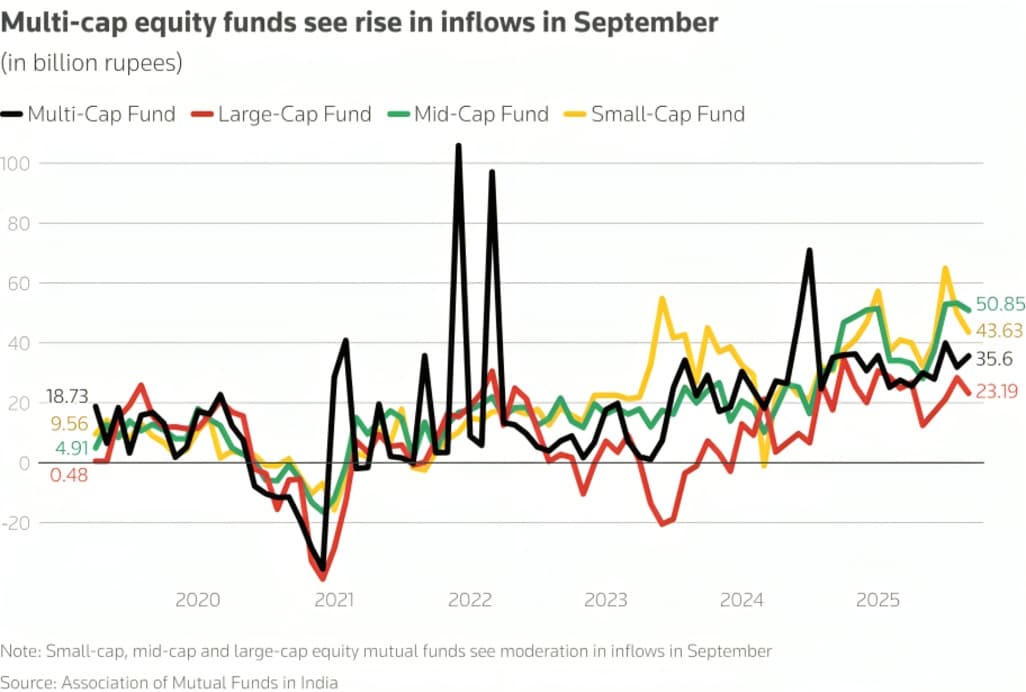
Investors were also watching the performance of individual sectors and companies, as market declines were not uniform across all shares. Some smaller-company stocks showed resilience even as pressure remained on the benchmark indices.
RBI Measures and Inflation Outlook
The Reserve Bank of India had recently introduced measures aimed at supporting the rupee amid pressure on the currency. The measures included steps affecting oil companies' purchases of dollars and changes to foreign-exchange hedging rules.
The rupee strengthened during Monday's early trading following the measures. Currency movements matter to the stock market because a weaker rupee can increase the cost of imported goods, including crude oil, and affect companies with substantial foreign-currency obligations.
Investors were also looking ahead to inflation data for clues about the future direction of monetary policy. The RBI had raised its policy repo rate to 5.50 percent in its October policy decision and shifted its stance towards calibrated tightening. Further evidence of persistent inflation could influence expectations about borrowing costs and the outlook for businesses and consumers.
Higher interest rates can increase borrowing expenses for companies and households. They may also affect spending, investment decisions and the valuations investors are willing to pay for stocks.
What Investors May Watch Next
Market participants are likely to monitor crude oil prices, foreign investor flows, currency movements, global bond yields and upcoming corporate earnings for signs of the market's next direction.
The sustainability of the recent recovery will depend on whether buying interest strengthens and whether some of the major external pressures ease. A moderation in oil prices could support sentiment, while continued geopolitical uncertainty or further foreign selling could maintain volatility.
Investors should distinguish between intraday market movements and a longer-term trend. A single session's decline does not by itself establish the direction of the market over the coming weeks. Market levels and analyst expectations can also change as new information becomes available.
Overall, Indian shares reversed their early gains on October 12, 2026, as investors weighed oil prices, geopolitical risks, foreign selling and the inflation outlook. Although GIFT Nifty had pointed towards a mildly positive start, the session demonstrated that market sentiment remained fragile. Traders and long-term investors alike continued to watch economic developments and corporate results for clearer signals about the direction of Indian equities.