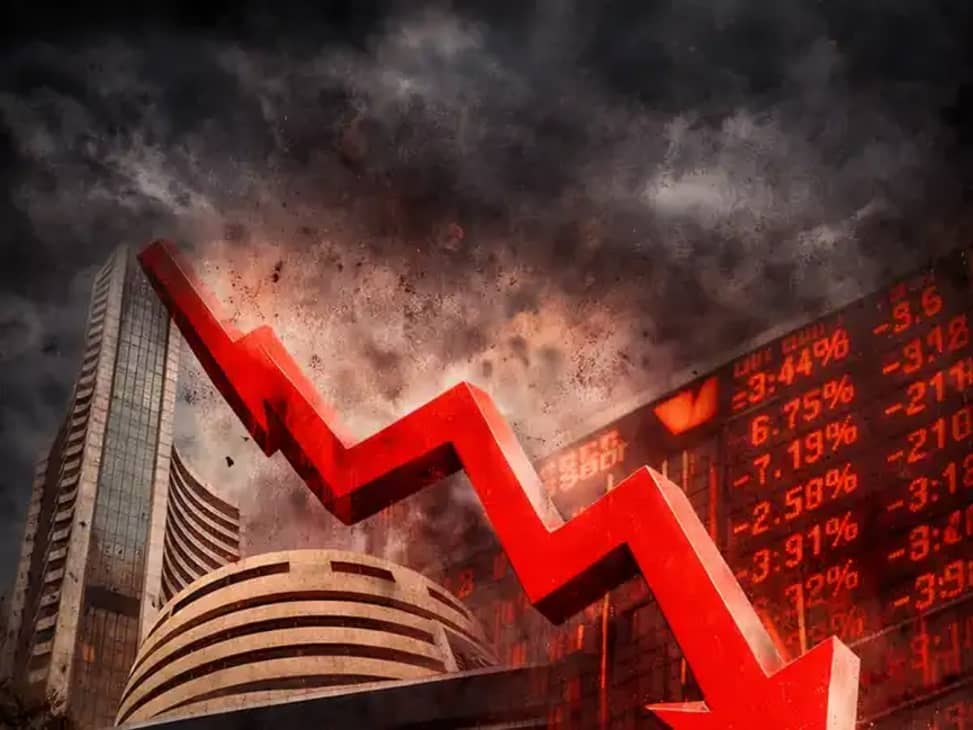
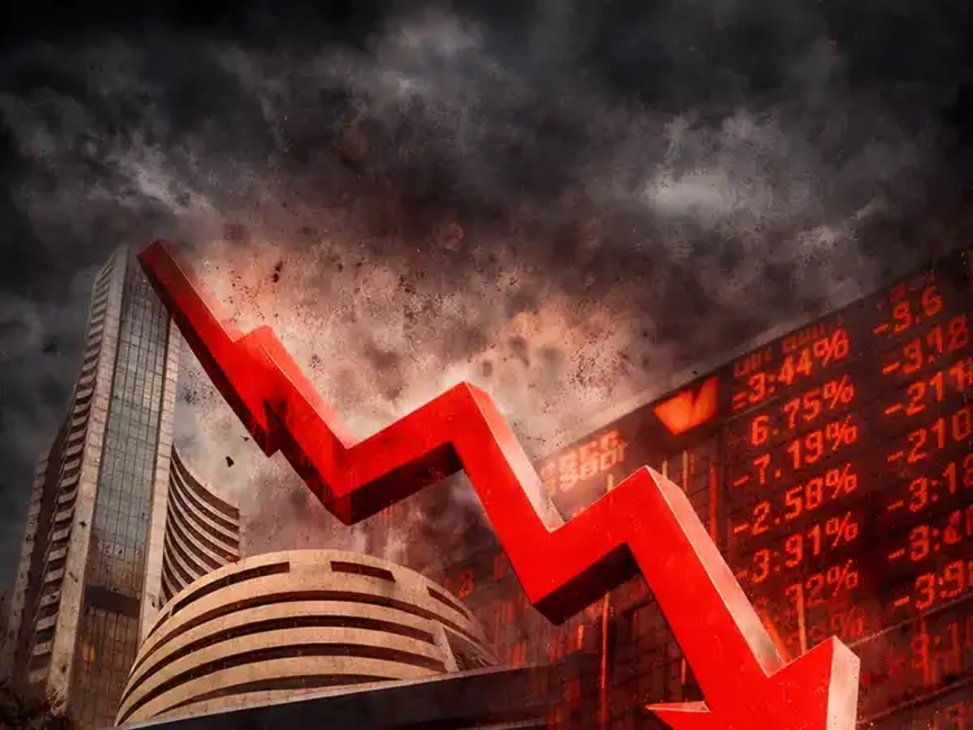
Indian equity markets remained under pressure on Wednesday as investors continued to assess the impact of rising crude oil prices, geopolitical uncertainty and weak global cues. The benchmark indices extended their recent decline, with the Nifty 50 recording its seventh consecutive losing session.
During morning trade, the Nifty 50 declined 0.35 percent to 24,070.65, while the BSE Sensex fell 0.32 percent to 76,991.33. The broader market also remained weak, with small cap and mid cap indices declining around 0.5 percent each.
One of the major factors influencing the market was the increase in crude oil prices. Brent crude moved to around 92 dollars per barrel as uncertainty surrounding efforts to resolve the conflict in the Middle East continued. Higher crude prices are a concern for India because the country depends significantly on imported crude oil to meet its energy requirements.
A sustained increase in crude prices can raise India's import bill and put pressure on inflation and the current account balance. It can also affect corporate profitability because companies in several sectors face higher transportation, energy and input costs.
Geopolitical developments involving Iran and the United States have therefore become an important factor for Indian investors. Uncertainty surrounding the situation in the Middle East has increased concerns about potential disruptions to global energy supplies.
The weakness in Indian equities is also linked to global bond markets. Higher yields on government bonds in developed economies can make those assets relatively more attractive to international investors. As a result, emerging markets such as India can experience pressure when global investors reduce exposure to riskier assets.
Foreign portfolio investor activity has been another concern. Indian equities have faced significant foreign selling during 2026, with high global yields contributing to the movement of capital away from emerging market assets.
The latest market decline follows a period of consecutive losses. The Nifty had already fallen for six straight sessions before Wednesday's trading, losing about 1.7 percent during that period. The Sensex had also recorded several sessions of declines.
Sectoral performance remained mixed but tilted toward the negative side. According to Reuters, 13 of the 16 major sectoral indices were trading lower during morning trade. Financial stocks, which have a significant weight in the benchmark indices, declined around 0.5 percent. The information technology sector, however, recovered around 0.8 percent after recent losses.
Despite the broader weakness, some individual stocks recorded gains. Prism Johnson rose sharply after announcing long term coal supply agreements. City gas companies such as Indraprastha Gas and Mahanagar Gas also gained following government measures aimed at encouraging domestic piped gas connections.
The market also witnessed strong activity in newly listed stocks. Shiprocket recorded a sharp rise in its debut trading session after receiving strong investor interest during its initial public offering.
For investors, the immediate direction of the market is likely to remain closely linked to crude oil prices and developments in the Middle East. Any improvement in geopolitical conditions could reduce concerns about energy supply and inflation. On the other hand, a further rise in oil prices could increase pressure on Indian equities.
Global interest rates and bond yields will also remain important. Investors are watching US monetary policy expectations because higher interest rates can strengthen bond yields and influence the movement of foreign capital.
The domestic earnings environment provides some support to the market. Recent corporate results have remained relatively resilient, but investors are balancing those results against rising external risks. Analysts have pointed out that the market currently lacks a strong immediate domestic trigger capable of completely offsetting geopolitical concerns.
The Indian rupee and inflation outlook will also remain important indicators. A sustained rise in crude oil prices can put pressure on the rupee and increase domestic inflationary concerns. These factors could influence corporate earnings expectations and monetary policy discussions.
Investors should therefore watch crude oil prices, foreign institutional investor activity, global bond yields, currency movements and developments in the Middle East in the coming sessions.
The current decline does not necessarily indicate a permanent change in the long term market trend. Equity markets regularly respond to changes in global risk conditions, and sentiment can improve quickly if geopolitical uncertainty decreases.
For now, however, Indian markets remain cautious. The combination of elevated crude oil prices, geopolitical tensions, higher global yields and foreign fund outflows has created a challenging environment for equities.
With the Nifty trading around the 24,070 level and the Sensex below 77,000 during Wednesday morning trade, investors are likely to closely monitor whether the indices can stabilise or whether selling pressure continues in the coming sessions.