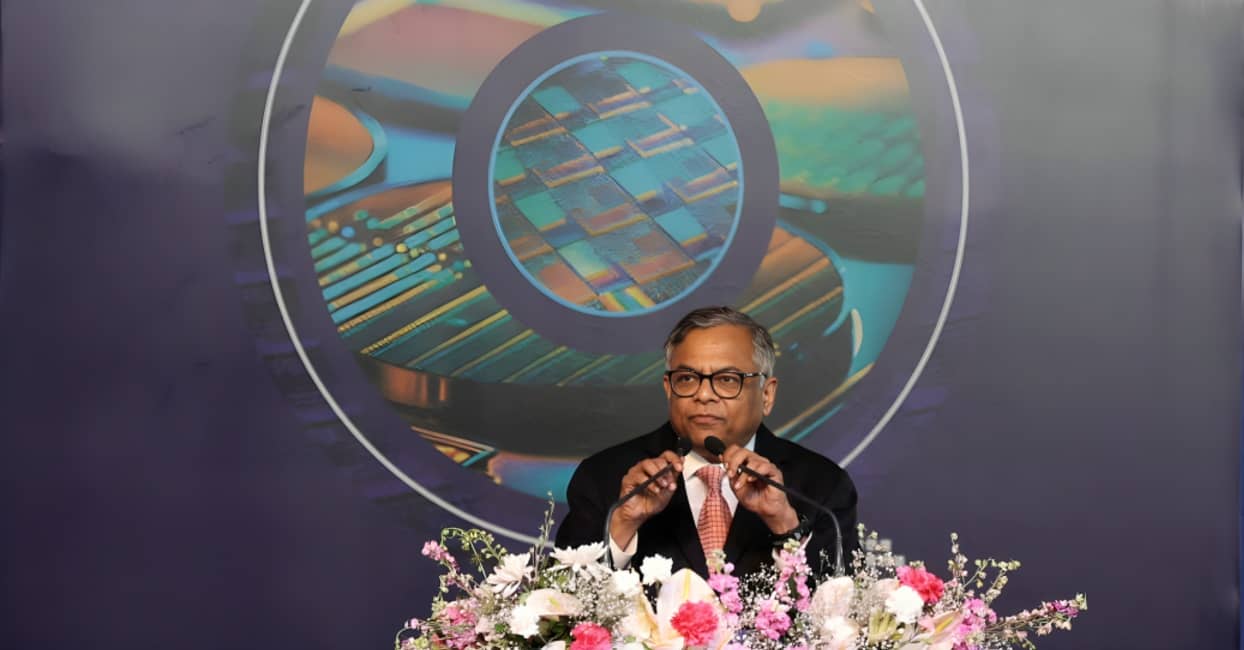
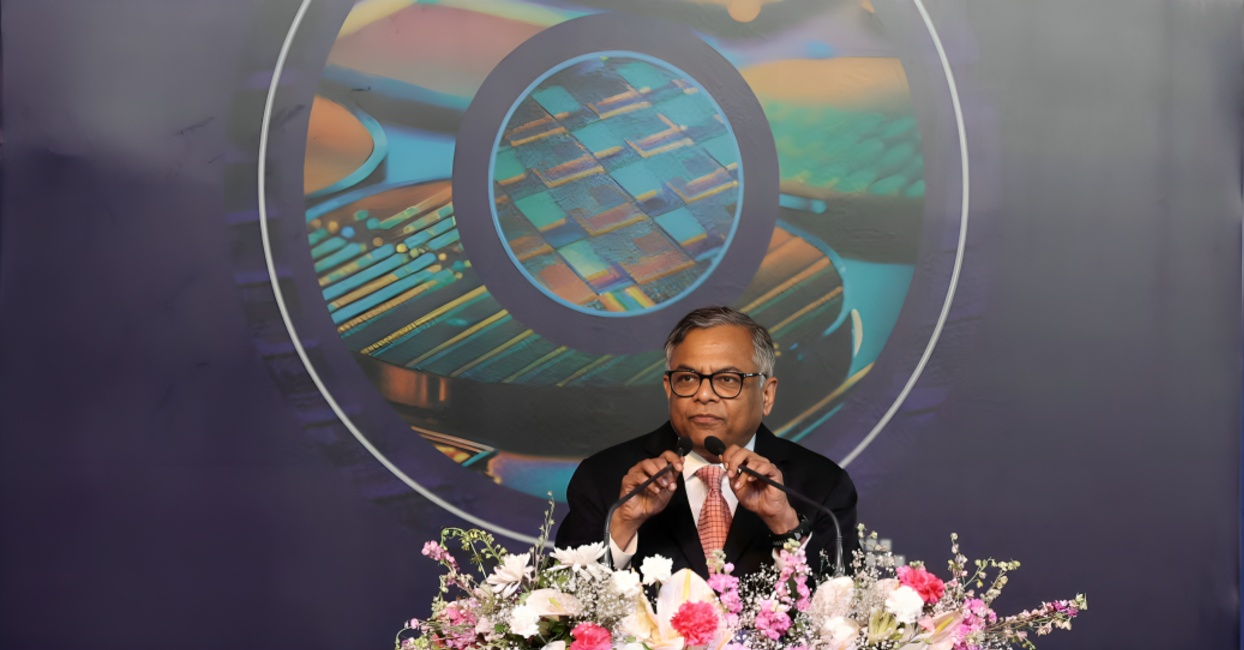
Tata Group companies witnessed significant selling pressure in the stock market on August 12, 2026, after Tata Sons Chairman N Chandrasekaran announced that he would not seek another term as chairman when his current tenure ends in February 2027.
The announcement triggered a sharp reaction among investors, with several listed Tata Group companies declining during Wednesday's trading session. Tata Consultancy Services, Tata Motors, Tejas Networks and other major Tata companies came under pressure as investors assessed the implications of the leadership transition.
TCS was among the biggest losers. The company's shares declined more than 4 percent during the session. Tata Motors also recorded a significant fall, while Tejas Networks shares declined as well. Reports indicated that the combined market value lost by listed Tata Group companies was close to Rs 44,000 crore during the selloff.
Reuters reported that Tata Group stocks fell more than 5 percent at one point, with TCS declining sharply and Tata Motors, Titan and Tata Steel also recording losses.
Chandrasekaran Announces Decision
N Chandrasekaran has been chairman of Tata Sons since 2017 and has played a central role in shaping the group's strategy over the past decade.
His current term is scheduled to end on February 20, 2027. Chandrasekaran has now informed the Tata Sons board that he will not offer himself for reappointment after his existing term concludes.
According to reports, the decision followed an earlier lack of unanimous board support for extending his tenure. Chandrasekaran subsequently asked the board to begin the succession process so that the group can have clarity about its future leadership.
The announcement has created uncertainty among investors because Tata Sons serves as the holding company and principal promoter of several major listed Tata businesses.
Why Investors Reacted
Leadership changes at large business groups can influence investor sentiment because markets generally value continuity and clarity in corporate governance.
The sudden announcement regarding the future leadership of Tata Sons raised questions about who could succeed Chandrasekaran and whether the group's long term strategy would remain unchanged.
Investors are also watching how the transition could affect major strategic initiatives across the Tata Group.
The market reaction appears to reflect uncertainty rather than an immediate change in the underlying businesses of individual Tata companies.
Analysts cited by Reuters described the initial reaction as a knee jerk response and said the conglomerate could stabilise after a new chairman is appointed.
TCS Shares Under Pressure
Tata Consultancy Services was one of the major Tata companies affected by the selloff.
TCS is the largest listed company within the Tata Group by market value and has a significant influence on the overall performance of Tata related stocks.
Reports indicated that TCS shares fell by more than 4 percent, wiping out approximately Rs 35,000 crore from the company's market capitalisation during the day's decline.
The stock was already facing challenges this year, including concerns over the outlook for the global information technology services sector.
The additional uncertainty surrounding the Tata Group's leadership contributed to further selling pressure.
Tata Motors Also Declines
Tata Motors shares also fell sharply during the session.
The company is undergoing a major period of transformation involving electric vehicles, passenger vehicles and its global automotive operations.
Investors have been monitoring Tata Motors closely because of developments involving Jaguar Land Rover and the broader automobile market.
The decline in Tata Motors shares added to the overall fall in Tata Group market value.
Reuters reported that Tata Motors shares declined more than 3 percent during the trading session.
Tejas Networks Among the Decliners
Tejas Networks also came under selling pressure, with its shares declining more than 2 percent according to the market update provided.
Tejas Networks operates in the telecommunications equipment sector and is part of the wider Tata Group ecosystem.
The decline in its shares reflected the broader weakness across Tata related stocks following the leadership announcement.
Impact Across Tata Companies
The selling was not limited to TCS, Tata Motors and Tejas Networks.
Other major Tata Group listed companies, including Tata Steel and Titan, also experienced declines.
Because several Tata companies have large market capitalisations, simultaneous selling across the group can have a noticeable impact on overall market sentiment.
The reaction therefore attracted considerable attention from investors and market participants.
Leadership Succession Now in Focus
The next major question for the Tata Group is the appointment of a successor to Chandrasekaran.
The chairman has reportedly asked the Tata Sons board to begin the succession process at an early stage.
A clear succession plan could help reduce uncertainty among employees, investors, business partners and other stakeholders.
The choice of the next chairman will be closely watched because Tata Sons has an important role in setting the strategic direction of the group.
The new leadership will inherit several major businesses operating across technology, automobiles, steel, aviation, consumer products, telecommunications and financial services.
Tata Sons and Tata Trusts
The leadership issue also comes amid reported differences involving Tata Sons and Tata Trusts.
Tata Trusts hold a significant stake in Tata Sons and have an important role in the group's governance structure.
Reports have pointed to disagreements over several strategic issues, including the future direction of Tata Sons and questions surrounding succession.
These developments have contributed to investor concerns about the group's governance and leadership transition.
However, the exact implications for individual Tata companies remain uncertain.
Chandrasekaran's Role in the Tata Group
Chandrasekaran has been an influential figure within the Tata Group.
Before becoming chairman of Tata Sons, he served as chief executive officer of TCS. He was appointed chairman of Tata Sons in 2017.
During his leadership, the group expanded its presence in areas such as aviation, electronics manufacturing, semiconductors and other technology related businesses.
TCS's official corporate documents describe Chandrasekaran as the chairman of Tata Sons and note his role in several Tata Group companies.
His departure therefore represents a significant leadership transition for one of India's largest business groups.
What Investors Are Watching
Investors are likely to focus on several developments following the announcement.
The first is the identity of the next Tata Sons chairman.
The second is whether the leadership transition will affect the group's existing business strategy.
The third is whether Tata companies can maintain their operational performance despite the change at the holding company level.
Investors will also continue to monitor individual company fundamentals rather than relying solely on the broader Tata Group reaction.
Market Reaction May Change
The initial stock market response does not necessarily indicate the long term performance of Tata companies.
Share prices often react sharply to unexpected corporate developments before investors have complete information about their implications.
Once details of the succession plan become clearer, market sentiment could stabilise.
Analysts quoted by Reuters indicated that the initial decline could represent a knee jerk reaction and that the group could regain stability after a new chairman is appointed.
Broader Market Impact
The decline in Tata Group shares also affected the broader Indian stock market because several Tata companies have substantial weight in major indices.
TCS, Tata Motors, Titan and Tata Steel are widely tracked by institutional and retail investors.
Weakness in these stocks can therefore contribute to pressure on benchmark indices.
The Tata related selloff occurred alongside broader market concerns involving crude oil prices, geopolitical developments and global economic uncertainty.
What Happens Next
The Tata Sons board is now expected to work on the succession process.
The objective will be to identify a new chairman well before Chandrasekaran's current term ends.
A timely appointment could help provide clarity to investors and employees and reduce uncertainty surrounding the group's future leadership.
The new chairman will face the challenge of maintaining continuity while also addressing the changing business environment across Tata's different sectors.
Conclusion
Tata Group stocks fell sharply on August 12 after N Chandrasekaran announced that he would not seek reappointment as Tata Sons chairman after his current term ends in February 2027.
TCS, Tata Motors and Tejas Networks were among the stocks affected, while other major Tata companies also declined. The combined market value lost across listed Tata companies was reported to be close to Rs 44,000 crore during the selloff.
The immediate market reaction reflects investor uncertainty over leadership succession and the future direction of the conglomerate.
However, the decline does not necessarily indicate a fundamental deterioration in every Tata Group business. Investors will now closely watch the succession process, the identity of the next Tata Sons chairman and any changes to the group's strategic direction.