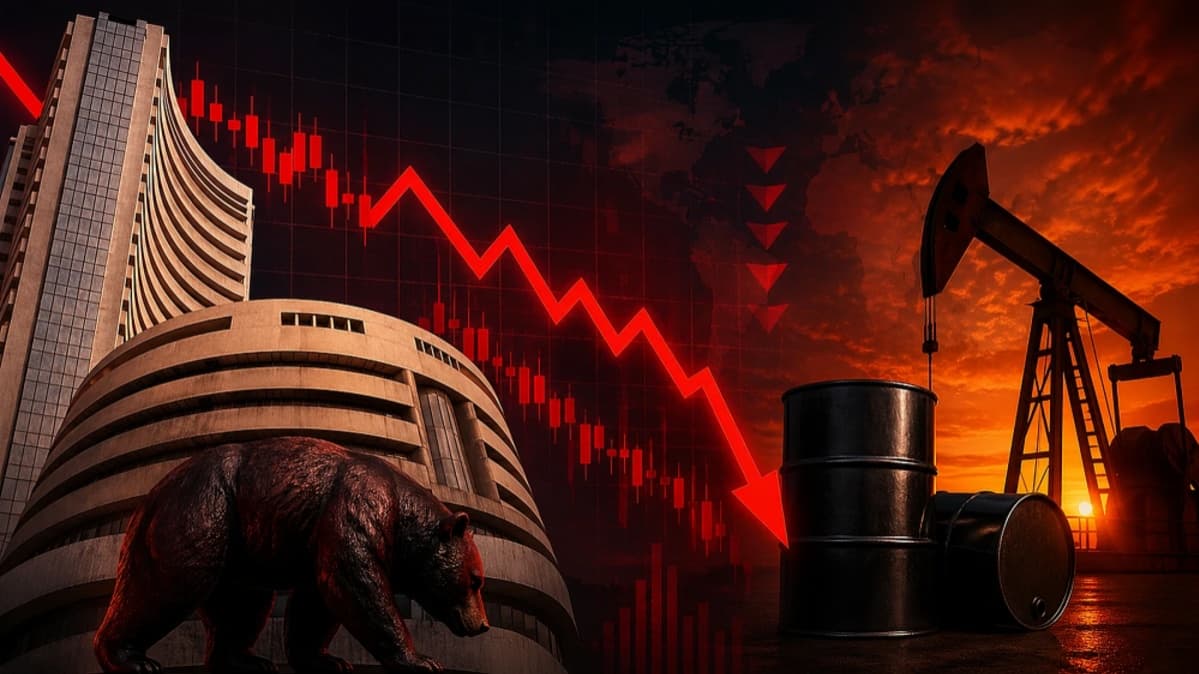

Global financial markets witnessed increased volatility after renewed tensions between the United States and Iran raised concerns among investors across international markets. Following the latest developments, Gift Nifty futures reportedly declined by nearly 2 percent, reflecting nervous sentiment among traders and global market participants.
The decline in Gift Nifty came as investors reacted to reports of escalating geopolitical tensions involving the United States and Iran. Such developments often create uncertainty in global financial markets because they can affect crude oil prices, international trade, currency movements, and investor confidence.
Indian stock exchanges remained closed today on account of the Eid-ul-Adha holiday. However, the sharp movement in Gift Nifty futures is being closely monitored by investors because it often indicates the likely direction of Indian equity markets when regular trading resumes.
Market analysts explained that geopolitical conflicts in the Middle East frequently impact global stock markets due to the region’s importance in global oil production and energy supply. Any disruption or fear of instability in the region can lead to fluctuations in crude oil prices, which directly affect energy-importing countries like India.
Experts noted that rising crude oil prices can create inflationary pressure on economies by increasing transportation and production costs. India, which imports a significant portion of its crude oil requirements, remains sensitive to major global energy market disruptions.
Apart from equities, other financial assets such as gold and the US dollar also witnessed increased attention from investors. Traditionally, gold is considered a safe-haven investment during periods of geopolitical uncertainty. Currency markets also react strongly during global tensions as investors shift investments toward safer assets.
Financial experts stated that short-term market volatility is common during geopolitical crises, especially when there is uncertainty regarding future developments. Investors are expected to closely track official statements, diplomatic responses, and any possible economic impact arising from the situation.
Global markets have experienced several periods of uncertainty in recent years due to geopolitical tensions, inflation concerns, interest rate changes, and supply chain disruptions. Analysts believe that investors may continue to remain cautious until there is greater clarity regarding the situation between the United States and Iran.
Indian investors are also expected to monitor sectors that may be directly affected by rising oil prices, including aviation, transportation, logistics, and oil marketing companies. On the other hand, some energy-related sectors may witness positive movement depending on global commodity trends.
Economists believe that if tensions continue for an extended period, central banks and governments around the world may need to closely monitor inflation risks and energy supply stability. Financial institutions are also expected to evaluate the impact on global trade and investment flows.
Despite short-term market reactions, analysts advise long-term investors to remain focused on broader economic fundamentals rather than temporary fluctuations caused by geopolitical events. Market participants are expected to closely observe how international diplomatic efforts develop over the coming days.
The reaction in Gift Nifty futures highlights how interconnected global financial markets have become, with geopolitical developments in one region quickly influencing investor sentiment across multiple countries and asset classes.