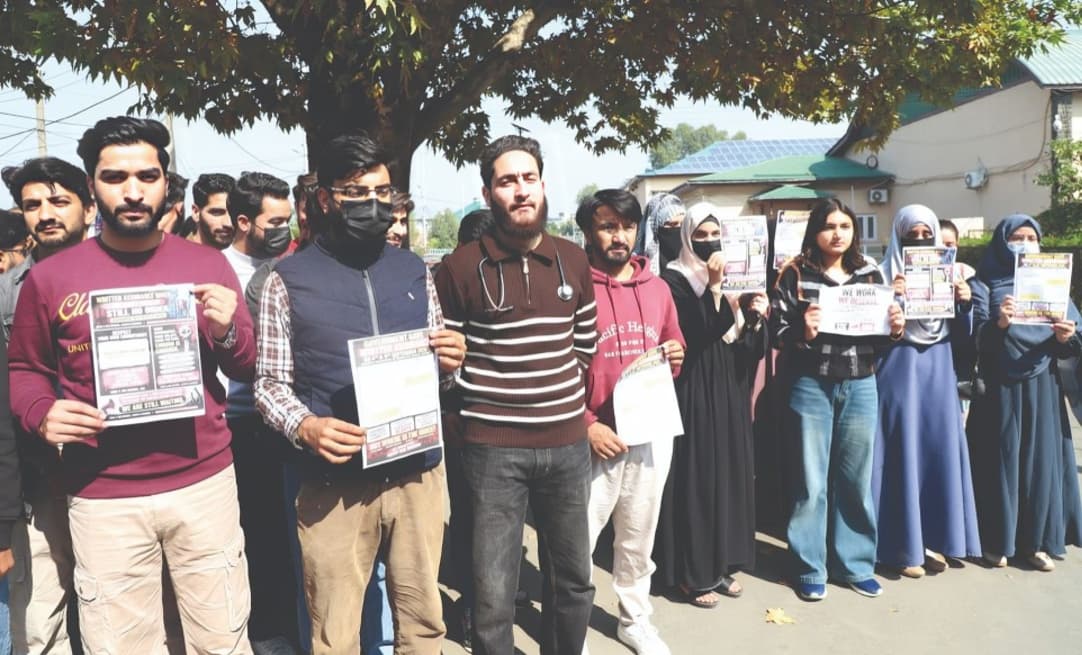
A coalition of prominent academicians has formally appealed to the President of India to intervene following the Supreme Court’s ban on the Class 8 Social Science NCERT textbook. The scholars have described the court’s decision as an instance of judicial overreach, raising concerns about the implications for academic freedom, the role of educators, and the broader educational system.
The banned textbook has been part of the standard curriculum for Class 8 students, providing insights into social science concepts, historical perspectives, and civic understanding. According to the academicians, the ban and the subsequent restrictions imposed on the authors threaten the autonomy of educational institutions and inhibit intellectual discourse. The letter emphasizes that penalizing authors without proper consultation or debate undermines the principles of democratic engagement in education.
In their communication, the scholars urged that the ban be reconsidered or withdrawn, highlighting that open and critical discussion is central to learning, especially in social sciences. They argued that students benefit from exposure to diverse viewpoints, which enables them to develop critical thinking and analytical skills. The academicians also stressed that curbing content without public consultation sets a dangerous precedent for educational governance in India.
The controversy began after certain sections of the Class 8 NCERT Social Science textbook were challenged in court. The Supreme Court intervened, resulting in the prohibition of the textbook’s distribution and use. While the court’s decision aims to address perceived content issues, critics argue that the move bypassed dialogue with educators, scholars, and stakeholders who are directly involved in curriculum development.
The academicians’ appeal highlights multiple key points:
The importance of academic freedom and intellectual autonomy in schools and universities.
The need for transparent processes in reviewing educational content, including input from educators, historians, and subject experts.
The risks of preemptive censorship, which may discourage authors from producing innovative or challenging educational materials.
The letter also underscores the potential long-term impact on students, suggesting that restricting content may hinder their ability to engage critically with historical, social, and political subjects. Scholars argue that education should foster curiosity and debate rather than impose unilateral restrictions.
This incident has ignited a wider conversation among educationists, policymakers, and civil society on how textbooks should be reviewed, approved, and challenged in India. Many advocates have called for the establishment of a structured and transparent process that balances sensitivity with academic freedom.
The academicians’ appeal to the President is expected to generate further discussions at both governmental and academic levels, emphasizing the need for careful consideration before limiting educational content.