Delhi University’s North Campus has long been known for its vibrant student political culture, and the so-called “walls of democracy” have historically served as a visible platform for student voices and debate. These walls, covered with posters and slogans from various student organisations, were a symbolic space where diverse opinions coexisted, particularly during Delhi University Students’ Union (DUSU) elections.
During the September DUSU polls, the walls bore messages ranging from “Bol ke lab azaad hain tere,” a slogan advocating free expression, to posters encouraging freshers to join the Akhil Bharatiya Vidyarthi Parishad (ABVP). They reflected the high-decibel, competitive nature of campus politics, allowing multiple student groups to contest for visibility and public attention.
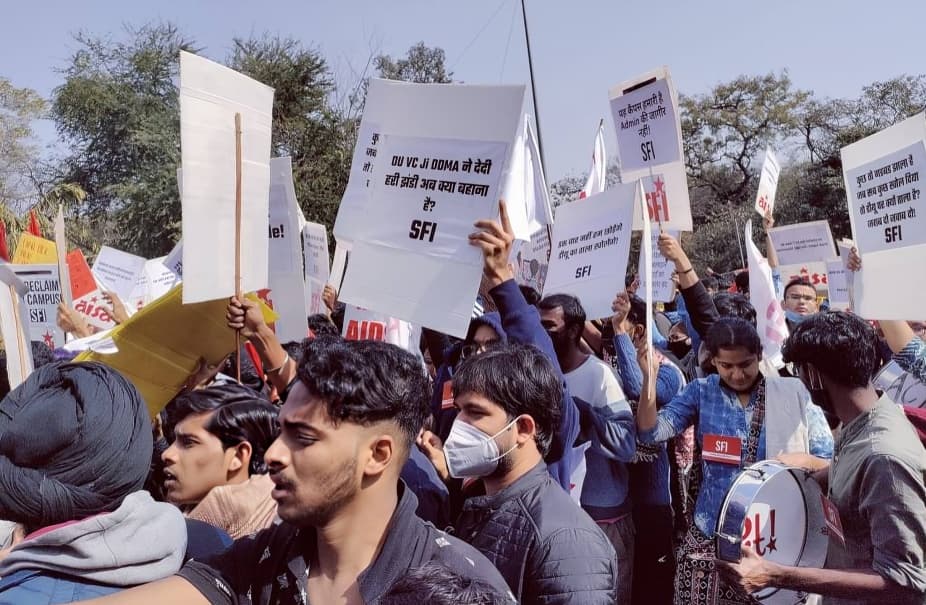
However, the walls of democracy have recently disappeared from the campus landscape. On Wednesday evening, two women students associated with the Students’ Federation of India (SFI) arrived near St. Stephen’s College to paste posters opposing the Viksit Bharat Shiksha Adhishthan Bill. They were surprised to find that the walls they had relied upon as a space for expression no longer existed. The removal of the walls marks a significant change in how student activism and political messaging are conducted on campus.
Observers note that the walls had historically served as a neutral ground, allowing groups with opposing ideologies to share space side by side. With their removal, students and campus organisations may need to explore alternative avenues for expression, whether through digital platforms or designated spaces sanctioned by university authorities.
The decision to remove the walls has sparked discussions on campus about the limits of student expression and the institutional management of public spaces. While some argue that removing the walls helps maintain campus decorum and avoids vandalism, others see it as curtailing a tradition of open political debate and dialogue among students.
Campus veterans recall how the walls facilitated healthy competition and engagement, especially during student elections. The removal may impact the visibility of smaller student groups, who previously relied on these walls to communicate with peers in a high-traffic area. Larger organisations with digital or other means of outreach may adapt more easily, highlighting questions about equity in campus political communication.
The walls of democracy at Delhi University symbolised not only freedom of expression but also the spirited exchange of ideas among students from diverse backgrounds. Their absence raises questions about how universities can balance the need for order with fostering a culture of debate and democratic participation.
As campus politics evolves, students and organisations may seek alternative forums to maintain visibility and continue discussions on policy, governance, and social issues. The removal of the walls could be a turning point in the history of student activism at North Campus, prompting reflection on both the symbolic and practical dimensions of campus democracy.