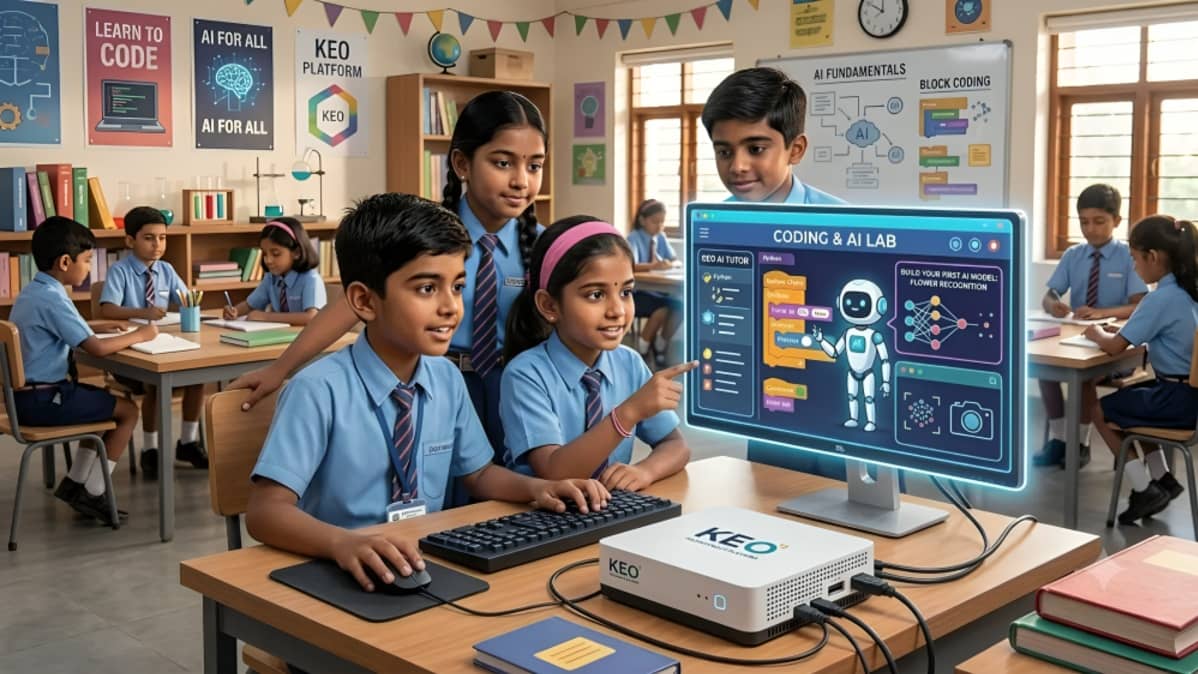
Karnataka is planning to expand Artificial Intelligence training in government schools to students from Class 6 as part of the state government’s efforts to strengthen technology-based education.
Chief Minister D K Shivakumar has directed officials to explore ways to extend the existing AI training programme to younger students. The direction was issued during a review meeting on the progress of the state government’s 100-day programmes, recruitment initiatives and other priority schemes.
According to the Chief Minister’s Office, AI training has already started for Class 9 students in Karnataka government schools. The latest proposal seeks to examine whether the programme can be extended to students from Class 6. The proposed expansion would introduce students to artificial intelligence at an earlier stage of their school education.
The government plans to involve the Information Technology department and private organisations in developing and implementing the programme. Officials have been asked to examine possible partnerships and identify suitable approaches for providing AI-related learning opportunities to students.
The government has also indicated that Google has expressed interest in providing AI training in schools. Officials have been asked to study initiatives undertaken by the company in Telangana as part of the process of developing a suitable model for Karnataka.
The Class 6 proposal is currently at the planning and exploration stage. The government has not announced a final statewide implementation date, detailed syllabus or specific curriculum for the proposed programme. Further details are expected after the concerned departments complete their assessment and prepare an implementation plan.
The move reflects the growing focus on artificial intelligence and digital skills in school education. As AI tools become increasingly common in education, business, technology and other sectors, governments and educational institutions are looking at ways to introduce students to the basic concepts and responsible use of emerging technologies.
Starting AI-related education at the school level could help students develop an understanding of how artificial intelligence works and how it can be used in practical situations. However, the exact content and teaching approach will be important because younger students require age-appropriate learning material.
The proposed expansion from Class 9 to Class 6 would also mean that students could begin learning about AI several years earlier. The programme could potentially cover areas such as basic AI concepts, digital literacy, problem solving and responsible technology use, depending on the curriculum eventually approved by the authorities.
At present, however, these details have not been formally announced. Therefore, students and parents should wait for an official notification before assuming that a specific AI subject or examination will be introduced from Class 6.
The Chief Minister has also directed officials to identify land for establishing an AI university in Karnataka. The proposal indicates that the state government is considering AI education not only at the school level but also through higher education and specialised institutions.
The proposed AI university could potentially contribute to the state’s broader technology and skills development plans. Details regarding its location, structure, courses and establishment timeline have not yet been finalised.
The government is simultaneously working on other education-related initiatives. During the review of the School Education Department, Shivakumar directed officials to organise educational visits for Class 9 and Class 11 students from 941 urban schools to progressive farmers’ fields. The programme is expected to provide students with exposure to agricultural practices and rural activities.
The Chief Minister also directed officials to make arrangements for students to stay overnight in villages using facilities such as community halls and hostels. The programme is expected to be completed by December, according to reports.
Another major education infrastructure initiative involves the development of 1,000 Karnataka Public Schools. Officials have been directed to complete preparations for laying the foundation stones by November 14. The implementation process has also been simplified, with deputy commissioners authorised to approve detailed project reports and tenders for the schools.
The Karnataka government also plans to develop 100 Karnataka Public Schools using corporate social responsibility funding. According to the government, companies have already expressed interest in developing 60 schools through CSR support.
Teacher availability is another issue being addressed by the state. The government is taking steps to recruit 956 teachers on an outsourcing basis, according to the Chief Minister’s Office.
The proposed AI training programme comes against this broader background of education and technology reforms in Karnataka. By considering AI education from Class 6, the state is looking at ways to expose students to emerging technologies earlier in their academic journey.
The involvement of technology companies could provide access to industry expertise and learning resources. At the same time, the government will need to ensure that the programme is accessible to students across government schools and that schools have the necessary digital infrastructure and trained teachers.
Teacher training will be an important part of any large-scale AI education programme. Introducing AI concepts to younger students requires teachers to have appropriate training, teaching materials and guidance. The final implementation model will therefore be important in determining how effectively the programme reaches students.
The government has not yet announced whether the proposed Class 6 AI training will be introduced as a separate subject, an additional course, a digital learning module or as part of existing subjects. These details are expected to become clearer once the government completes its discussions with the IT department and potential private partners.
For now, the confirmed development is that Karnataka is exploring an expansion of AI training from Class 9 to Class 6 in government schools. The existing Class 9 programme provides the foundation for the proposed expansion, while discussions with technology partners could shape the future structure of the initiative.
Students, parents and teachers should follow official announcements from the Karnataka government and the School Education Department for information about the final curriculum, implementation timeline, participating schools and training arrangements.
The initiative, if implemented, would represent another step in Karnataka’s efforts to bring emerging technology into school education. It could also provide younger students with an early introduction to one of the most significant areas of technological development, while helping them build digital skills relevant to future education and employment.