Ken Griffin’s $3 Billion Gift and Seven Other Landmark Donations in University Education History
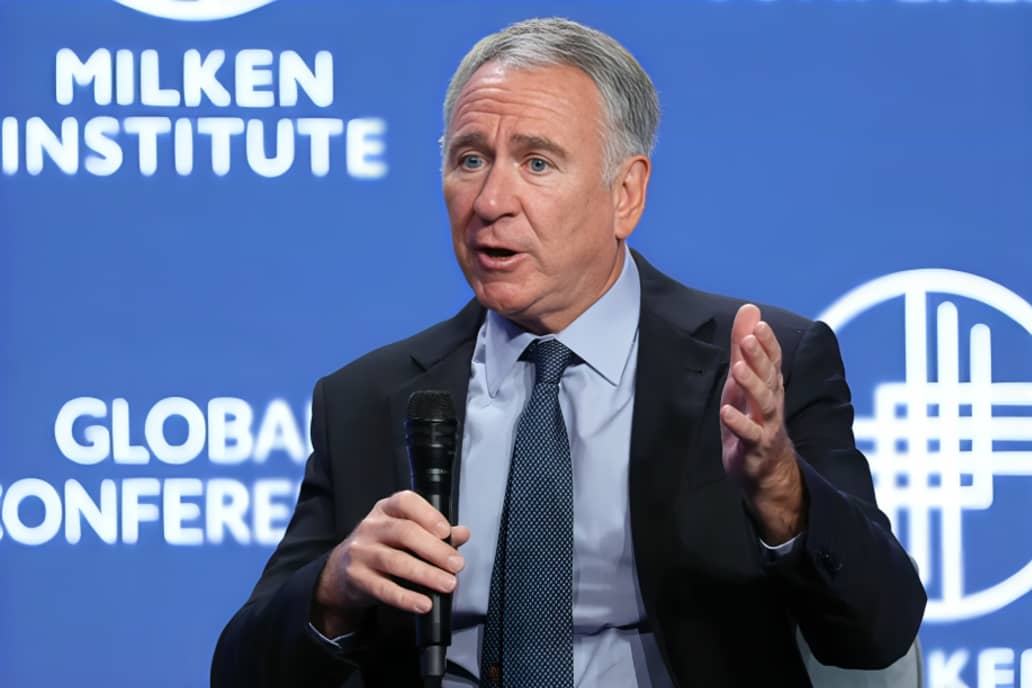
A record-breaking philanthropic commitment has brought renewed attention to the role of private donors in higher education. Ken Griffin, founder and chief executive of investment firm Citadel, pledged $3 billion to Carnegie Mellon University in September 2026. The gift will fund a new campus in Miami and support academic programmes, research and other priorities at the university’s existing campus in Pittsburgh.
The donation is the largest individual gift announced for a higher education institution, according to Carnegie Mellon University. It exceeds several major university contributions made by technology entrepreneurs, business leaders and philanthropists over the past two decades.
How Carnegie Mellon Will Use the $3 Billion Gift
The $3 billion commitment has two principal components. Carnegie Mellon will receive $2 billion to establish a new 35-acre campus in Miami’s Wynwood neighbourhood. The remaining $1 billion will support the Pittsburgh campus.
Of the Pittsburgh allocation, $500 million is intended for the university’s School of Computer Science, which will be renamed the Kenneth C. Griffin School of Computer Science. Another $500 million will provide flexible funding for university-wide priorities, including student financial aid and the recruitment of academic talent.
Construction of the Miami campus is expected to begin in 2027, subject to approvals. The university’s current plan is to enrol its first students there in 2028. The campus is intended to bring together education, research and industry partnerships to address challenges in areas such as human health, national security, energy and climate resilience.
Griffin did not graduate from Carnegie Mellon. He earned an economics degree from Harvard University in 1989. His donation demonstrates how major philanthropic commitments can support institutions beyond a donor’s own university.
Eight Landmark Donations to Higher Education
The following examples illustrate the scale and variety of major gifts to universities and academic institutions. They are not a strict global ranking because some are individual gifts, others are joint commitments, and some figures refer to cumulative donations rather than a single transaction.
1. Ken Griffin: $3 Billion to Carnegie Mellon University
Announced on September 30, 2026, Griffin’s gift will create the new Miami campus and strengthen Carnegie Mellon’s Pittsburgh operations. The university plans to use the funding to expand its academic reach and support computer science, research and student opportunities.
2. Phil and Penny Knight: $2 Billion to Oregon Health and Science University
Nike co-founder Phil Knight and his wife, Penny, pledged $2 billion to OHSU’s Knight Cancer Institute in August 2025. The commitment is intended to transform cancer care by connecting research, early detection, treatment, clinical trials and patient support. The institute plans to develop a more integrated model that supports patients throughout their care journey.
3. Michael Bloomberg: $1.8 Billion to Johns Hopkins University
In 2018, philanthropist and former New York City mayor Michael Bloomberg announced a $1.8 billion gift to Johns Hopkins University. The contribution supported undergraduate financial aid and enabled the university to strengthen its need-blind admissions policy and loan-free financial aid arrangements. The gift was designed to help students access education regardless of their financial circumstances.
4. John and Ann Doerr: $1.1 Billion to Stanford University
Venture capitalist John Doerr and his wife, Ann, committed $1.1 billion in 2022 to establish the Stanford Doerr School of Sustainability. The school focuses on climate change, sustainable development, energy and related global challenges. The donation supports research, academic programmes and efforts to develop practical solutions to environmental problems.
5. Phil and Penny Knight: $1 Billion to the University of Oregon
In September 2026, the Knights pledged $1 billion to establish an engineering college at the University of Oregon. The proposed college is intended to expand engineering education and research. This is separate from their $2 billion commitment to OHSU’s cancer institute and should not be combined with it when comparing individual gifts.
6. Michael and Susan Dell: Major Investments in the University of Texas at Austin
Michael and Susan Dell announced new investments in April 2026 to support an advanced research campus, a medical centre, scholarships, student housing and supercomputing at the University of Texas at Austin. The university said the couple had become its first billion-dollar supporters over their history of giving. This figure represents cumulative support and should not be described as one single billion-dollar donation.
7. Gordon and Betty Moore: $600 Million in Combined Gifts to Caltech
Intel co-founder Gordon Moore and his wife, Betty, were responsible for landmark support for the California Institute of Technology in 2001. The announcement involved two gifts totalling $600 million: $300 million from the couple and $300 million from the Gordon and Betty Moore Foundation. The funding supported scientific research and the institution’s academic mission. Because the total combines separate gifts, it is not directly comparable with a single personal donation.
8. Stephen Schwarzman: $350 Million to MIT
In 2018, Blackstone co-founder Stephen Schwarzman made a foundational $350 million gift to the Massachusetts Institute of Technology. The contribution helped establish the MIT Stephen A. Schwarzman College of Computing, which brings computer science and artificial intelligence together with other academic disciplines. MIT described the wider initiative as a $1 billion commitment, including additional fundraising beyond Schwarzman’s individual gift.
Why Major University Donations Matter
Large philanthropic gifts can help universities build research facilities, attract leading academics, expand scholarships and develop new areas of study. They can also support long-term projects that may be difficult to fund through tuition revenue or ordinary operating budgets alone.
At the same time, the value of a donation should not be measured only by its headline amount. Its impact depends on how the money is allocated, whether the institution meets its stated goals and how students, researchers and the wider community benefit over time.
Griffin’s $3 billion commitment is a significant new milestone in higher education philanthropy. Alongside other landmark gifts, it highlights the growing influence of private donors in shaping university campuses, research priorities and educational opportunities.