The Naga Students’ Federation has continued its protest against the compulsory singing and playing of Vande Mataram at official programmes in Nagaland, with the organisation demanding a resolution from the Nagaland Legislative Assembly on the issue.
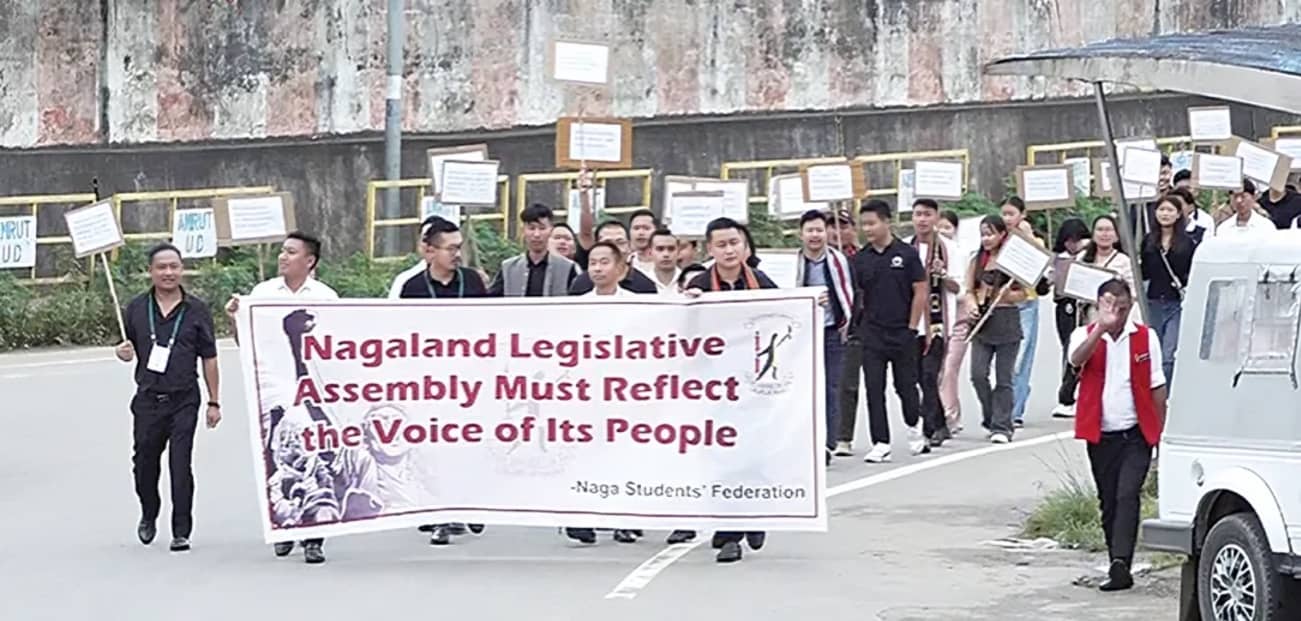
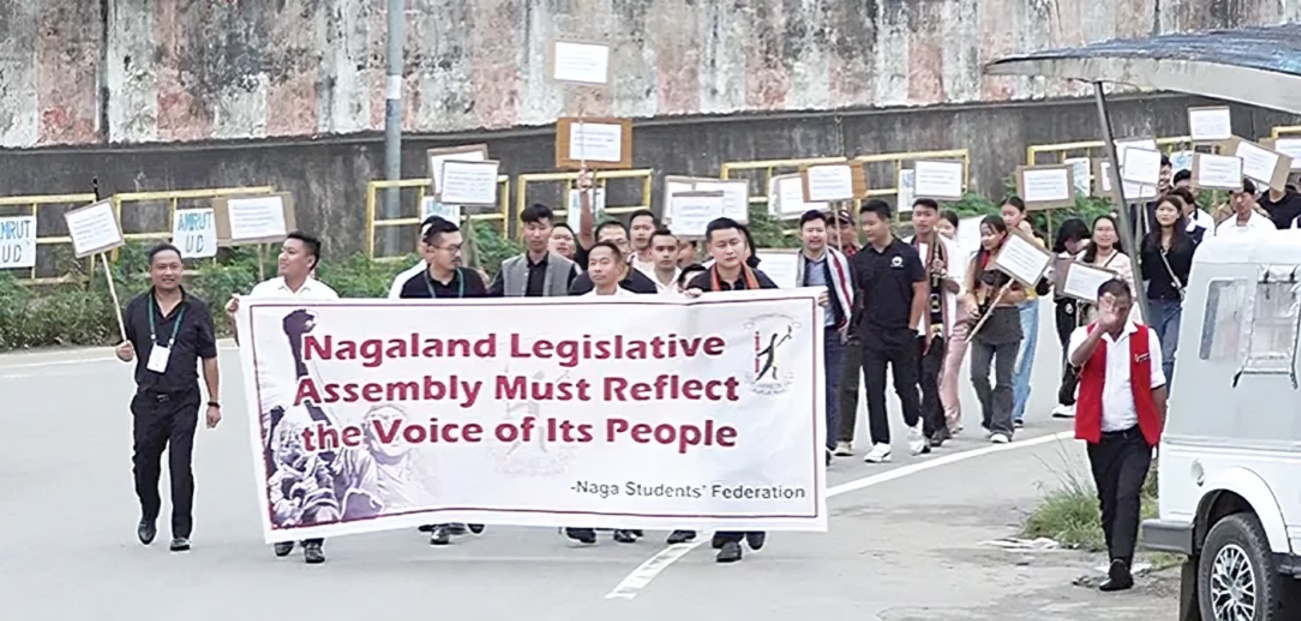
The protest entered its second day on September 3, 2026, when NSF members demonstrated outside the state Assembly in Kohima as legislators arrived for the ongoing Assembly session. The organisation has opposed what it describes as the compulsory imposition of Vande Mataram and has called for the matter to be addressed through a formal resolution of the House.
During the demonstration, NSF members sang Christian hymns as part of their protest. The organisation said its objection is related to concerns over freedom of conscience and religious beliefs rather than opposition to national unity or national symbols. The NSF has maintained that compulsory singing or playing of the song should not be imposed in a manner that conflicts with the religious convictions of people in Nagaland.
The issue was also raised during Zero Hour in the Nagaland Legislative Assembly. NPF MLA Achumbemo Kikon, who is a former NSF president, raised the matter and said the controversy was not restricted to a particular constituency. He said concerns had been expressed by legislators as well as various social and religious organisations in the state.
The controversy follows an administrative instruction issued by the Union Ministry of Home Affairs on January 28, 2026. According to the NSF and reports from the Assembly proceedings, the instruction directed states to ensure the compulsory singing of Vande Mataram during the arrival of important VVIPs at specified national functions, including the arrival of the Governor at the Assembly.
The issue has particular significance in Nagaland because of the constitutional provisions relating to the state. Article 371A provides special constitutional safeguards concerning certain matters in Nagaland. The applicability of laws passed by Parliament in relation to the state is therefore subject to specific constitutional considerations.
According to reports from the Assembly, the matter was referred to a committee constituted to examine the applicability of parliamentary laws in Nagaland in the context of Article 371A. The committee has completed its examination, but its report has not been presented in the Assembly for the time being.
The NSF has continued to press for a clear position from the state legislature. The organisation has demanded that the Assembly adopt a resolution against compulsory singing or playing of Vande Mataram at official and private programmes in Nagaland. The federation has argued that the matter should be considered in the context of religious freedom and freedom of conscience.
NSF President Mteisuding has said that the organisation's position is based on concerns about the religious implications of compulsory participation. The federation has also stated that it does not want individuals to be compelled to participate in an activity that they believe conflicts with their faith.
The organisation's latest protest also included a broader call to educational institutions and affiliated bodies. The NSF directed institutions across the Naga homeland not to invite or include government functionaries, including the Governor, in programmes where the revised Vande Mataram is to be sung or played.
The state government, meanwhile, has appealed to the NSF to withdraw its agitation. The government's position comes as the Assembly and its committee continue to consider the legal and constitutional aspects of the issue. The dispute therefore involves both a question of administrative implementation and a wider discussion about constitutional safeguards and freedom of conscience in Nagaland.
The controversy has generated debate among political representatives, student organisations, church groups, civil society bodies and other organisations in the state. Supporters of the NSF's position have emphasised the importance of respecting religious freedom, while the wider national debate concerns the status and use of Vande Mataram as India's national song.
The NSF has described its ongoing demonstration as a democratic protest. The organisation has indicated that it will continue seeking a formal response from the Nagaland Assembly. Its demand is specifically focused on preventing compulsory singing or playing of Vande Mataram in circumstances where participation may conflict with individual religious beliefs.
The situation remains under discussion within the state legislature. The committee examining the applicability of relevant parliamentary provisions has withheld its report for now, leaving the legal and constitutional questions open. Further developments are expected as the Assembly considers the issue and the state government responds to the NSF's demands.
For educational institutions, government departments and public organisations in Nagaland, the dispute could have implications for how official functions involving national symbols are conducted. Any future decision by the state government or Assembly will be important in determining how the issue is handled within the state's constitutional framework.
The NSF's continuing protest has therefore brought the Vande Mataram issue to the centre of political and public discussion in Nagaland. While the student organisation is seeking an Assembly resolution against compulsory participation, the government has urged the protesters to withdraw their agitation while the legal questions are being examined.
At present, there is no final Assembly resolution settling the dispute. The committee's report has also not been placed before the House. The next steps will depend on the legislative process, the government's position and any further decision regarding the applicability of the Centre's directive in Nagaland.
The controversy highlights the importance of balancing national observances with constitutional protections and individual freedom of conscience. As the Nagaland Assembly continues its proceedings, the demand raised by the Naga Students’ Federation remains an issue of ongoing political and public debate.