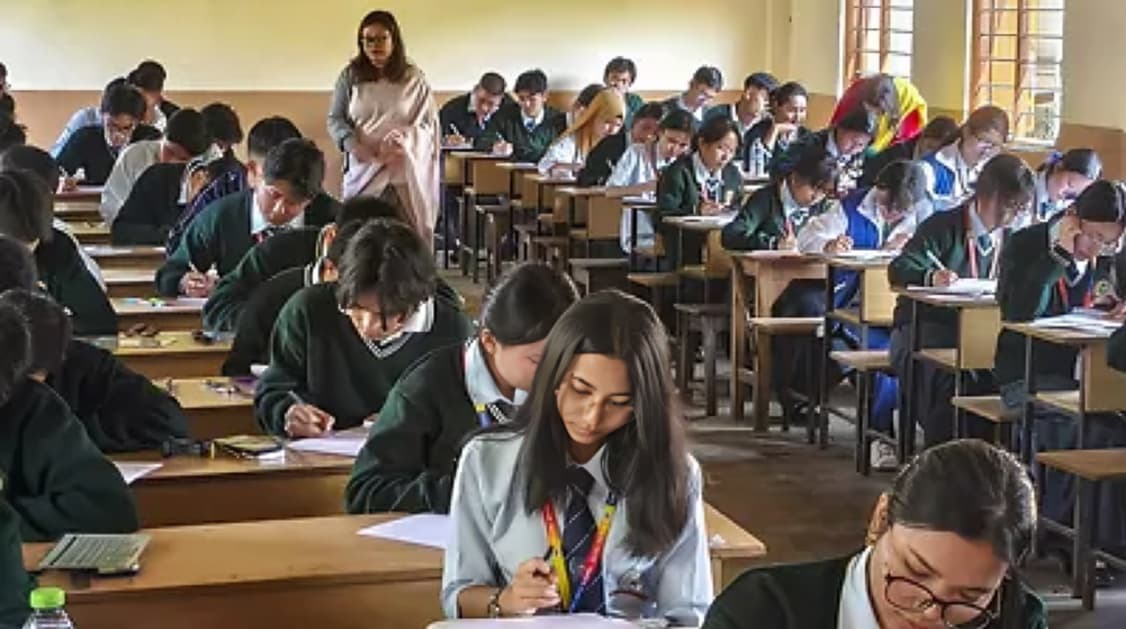
The Economic Survey 2025-26, presented in Parliament on Thursday by Union Finance Minister Nirmala Sitharaman, has raised concerns over secondary school enrolment in India, revealing that the age-specific net enrolment rate (NER) for secondary education stands at only 52.2 per cent. The survey, which analyses key economic and social indicators, noted that while India has made significant strides in improving enrolment at primary levels, retention beyond Class 8 remains a critical challenge.
The report highlights that a large number of students drop out after completing primary education, creating a gap in age-appropriate enrolment at secondary schools. Experts say this not only affects the overall quality of education but also impacts long-term skill development, employment prospects, and social mobility.
Challenges Affecting Secondary Enrolment
Several factors contribute to low secondary school participation in India. Economic constraints often force families to prioritise work over continued education, particularly in rural and semi-urban areas. Inadequate infrastructure, limited availability of secondary schools in remote regions, and a shortage of trained teachers also hinder retention. Additionally, social and cultural norms in some communities lead to early school leaving, especially for girls.
The survey emphasises that improving transition rates from primary to secondary education requires a multi-pronged strategy. Strengthening school infrastructure, increasing access to quality teachers, and providing incentives such as scholarships, midday meals, and transport facilities can encourage students to stay in school.
Government Initiatives and Recommendations
The Economic Survey 2025-26 points to ongoing government schemes such as Samagra Shiksha, which focuses on universal access and retention in school education from pre-primary to senior secondary levels. The survey recommends enhancing these initiatives with better monitoring and community involvement to ensure that more students progress to secondary education.
The survey also stresses the importance of vocational and skill-based programs to make secondary education more relevant and attractive for students. Integration of digital tools, flexible learning pathways, and mentorship programs can further reduce dropout rates and ensure students are better prepared for higher education and employment opportunities.
Looking Ahead
India’s progress in primary education has been commendable, with near-universal enrolment achieved in several states. However, the low secondary enrolment rate of 52.2 per cent underscores the need for urgent policy interventions. Retaining students beyond Class 8 is crucial not only for educational outcomes but also for long-term economic growth and human capital development.
Experts suggest that collaboration between central and state governments, along with active participation from local communities and NGOs, will be key to bridging the gap in secondary education enrolment. Ensuring that every child continues their education through secondary school will remain a critical priority for policymakers in the coming years.