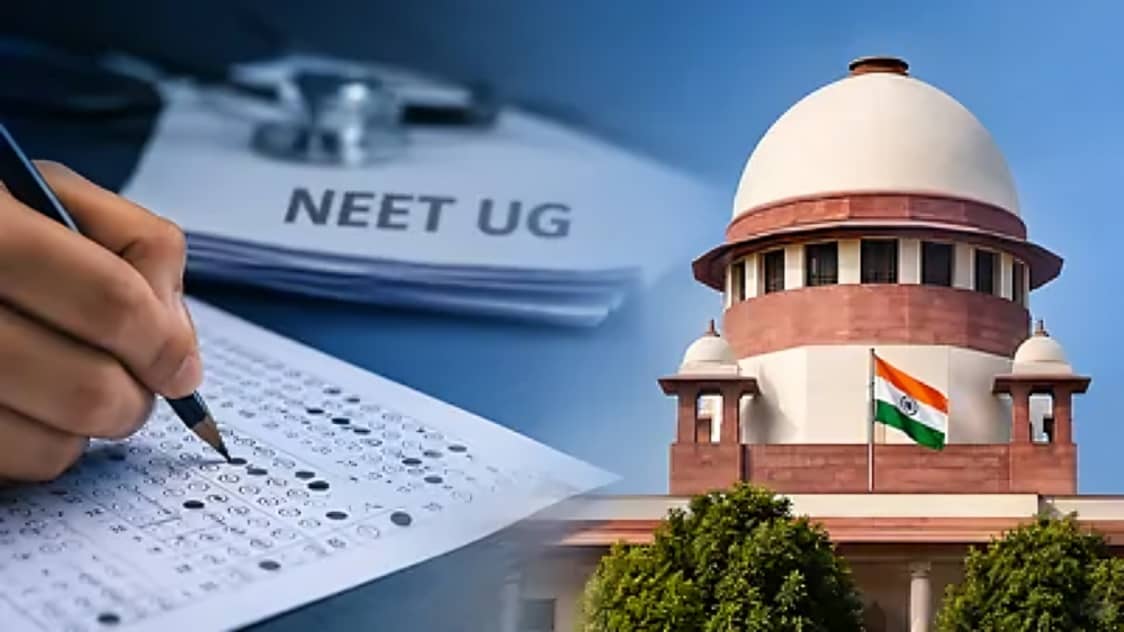
Supreme Court Agrees to Urgent Hearing in NEET UG 2026 OMR Sheet Dispute
The Supreme Court of India has agreed to urgently hear a petition concerning an alleged discrepancy in the Optical Mark Recognition answer sheet of a candidate who appeared for the National Eligibility cum Entrance Test Undergraduate 2026. The matter was brought before the court after the petitioner’s lawyer expressed concern that original examination records held by the National Testing Agency could be destroyed as the reported 90 day retention period approached its end.
During the proceedings on October 14, 2026, the lawyer requested an early hearing, arguing that the preservation of the original records was important for examining the candidate’s complaint. The court agreed to list the matter for October 15, according to reports by LiveLaw and India Today.
The case concerns the examination records maintained by the National Testing Agency, which conducts NEET UG for admission to undergraduate medical courses across India. The petitioner is challenging an OMR answer sheet and wants the disputed records to be examined through the legal process.
The urgent listing does not mean that the Supreme Court has accepted the allegations or ruled that any irregularity occurred. The central issue at this stage is the request for timely judicial consideration before the records could potentially be destroyed under the retention procedure cited by the petitioner.
Why the Petitioner Sought an Urgent Hearing
According to the reports, the petitioner’s counsel told the court that the National Testing Agency could destroy the original records once the 90 day period had expired. The lawyer argued that the matter required urgent attention because the records could be important evidence in resolving the OMR sheet dispute.
The counsel reportedly stated that the petitioner had pursued the issue through the appropriate legal channels before approaching the Supreme Court. The matter had previously been taken to the Gujarat High Court, where a division bench dismissed the intra court appeal on October 12, 2026.
The lawyer therefore asked the Supreme Court to consider the case before the stated record retention period expired. The court initially considered a later listing, but the urgency raised by the petitioner led to agreement for a hearing on October 15.
The timing is significant because original examination documents can be relevant when a candidate disputes the recorded responses or seeks verification of an answer sheet. Preserving the relevant material can allow the parties and the court to examine the evidence in accordance with the applicable legal procedure.
However, the petitioner’s concern about possible destruction of records should be distinguished from a confirmed decision by the NTA to destroy the specific documents in question. The reported hearing request was based on the retention period cited by the lawyer.
What Is an OMR Answer Sheet?
An Optical Mark Recognition answer sheet is a document used to record answers in examinations through marked circles or boxes. In multiple choice examinations such as NEET UG, candidates mark their selected answers on the prescribed sheet, which is then processed using scanning and evaluation systems.
The recorded responses are used to calculate candidates’ scores according to the examination rules and answer key. The NTA also provides candidates with access to scanned OMR images and recorded responses through its official NEET website.
A dispute over an OMR sheet can involve questions about whether the scanned image accurately reflects the original document, whether the recorded responses match the candidate’s markings or whether the evaluation process followed the applicable procedure.
Such claims need to be assessed using relevant evidence. An apparent difference in a score or a candidate’s disagreement with a recorded response does not, by itself, establish that an answer sheet was altered or tampered with.
In this case, the petitioner is seeking judicial consideration of a disputed OMR sheet. The Supreme Court’s decision to hear the matter urgently provides an opportunity for the issue to be considered through the legal process.
Role of the National Testing Agency
The National Testing Agency is responsible for conducting NEET UG, the national entrance examination used for admission to undergraduate medical education in India. The examination is used for admissions to MBBS programmes and other medical courses covered by the applicable national rules.
The agency manages examination registration, test administration, answer keys, recorded responses and results. It also publishes notices and instructions for candidates through its official website.
The handling and retention of examination records are important because such documents may be needed for candidate queries, legal proceedings and other permitted verification procedures. The specific rules applicable to the records in this case will be relevant to the court’s consideration.
The NTA’s official NEET UG website provides examination notices and information about scanned OMR answer sheets and recorded responses. Candidates seeking general examination information should consult official notices rather than relying only on social media posts or unverified claims.
The urgent hearing is expected to focus on the petition and the relief sought by the candidate. Any directions concerning preservation, production or examination of records will depend on the court’s proceedings and orders.
Earlier Proceedings Before the Gujarat High Court
Reports state that the candidate had previously approached the Gujarat High Court in connection with the disputed OMR sheet. The division bench reportedly dismissed the intra court appeal on October 12, 2026, after which the petitioner sought urgent consideration by the Supreme Court.
The earlier proceedings form part of the legal background to the latest request. The petitioner’s counsel reportedly explained this sequence when the Supreme Court questioned the timing of the approach.
The existence of previous court proceedings does not determine the outcome of the current petition. The Supreme Court will consider the submissions and the applicable law before deciding what further steps, if any, are warranted.
The matter also illustrates the procedural challenges candidates can face when examination disputes move through different levels of the judicial system. Timing may become particularly important when a party argues that documentary evidence could be lost or destroyed before the dispute is examined.
What Happens Next?
The Supreme Court is scheduled to take up the matter on October 15, 2026, according to reports published on October 14. The hearing will allow the court to consider the petitioner's request and the submissions made by the parties.
The outcome may depend on the documents placed before the bench, the applicable examination rules and the legal grounds raised by the petitioner. Any order issued by the court should be distinguished from the allegations in the petition.
Candidates following the case should look for reliable reports of the hearing and any subsequent court order. The official NEET UG website remains the primary source for examination notices and candidate information.
The urgent listing has brought renewed attention to the importance of preserving examination records when a dispute is under legal consideration. Nevertheless, the case remains subject to judicial scrutiny, and no conclusion about the alleged OMR discrepancy should be drawn before the court has considered the matter.