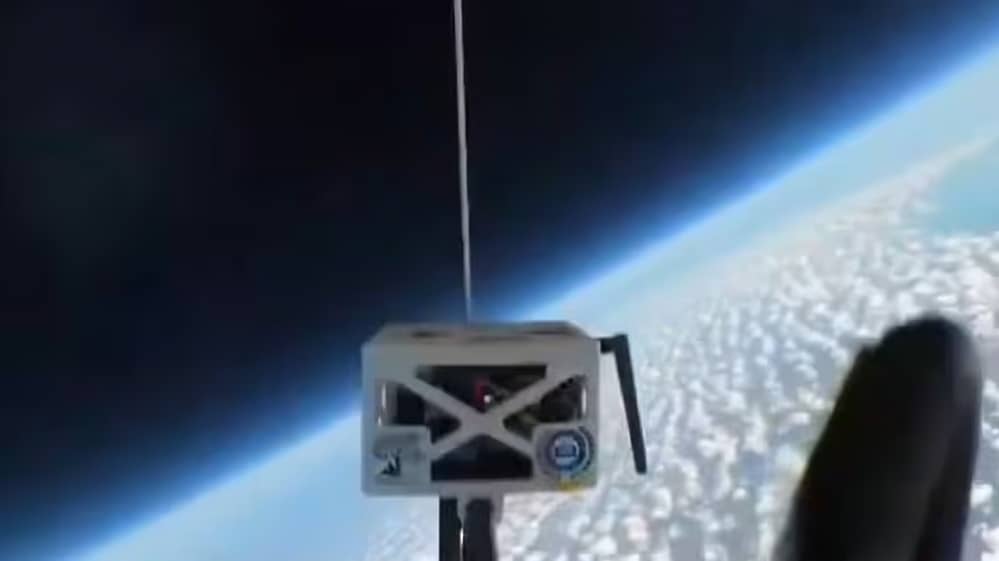

In a remarkable achievement, thirteen Class 11 students from Ariyakudi Government Higher Secondary School near Karaikudi in Tamil Nadu successfully designed and launched a mini satellite weighing just 600 grams to monitor fungal threats in the stratosphere. Named Vikko Sat 1, the satellite represents a unique blend of scientific innovation and environmental awareness by young minds concerned about the impact of fungal spores on agriculture.
The project was motivated by the need to detect fungal growth in the upper atmosphere, which could potentially affect crop health if these spores descended to Earth. Teachers and project mentors emphasised that early identification of such threats can aid farmers and help prevent agricultural losses, underscoring the social and scientific relevance of the initiative.
The team behind Vikko Sat 1 includes Vishnu, Bipin Kumar, Harishwar, Mithun, Manoj Kumar, Muthukaruppan, Rashid Ahmed, Muthukumar, Ashiq Rahman, Someshwar, Abhimanyu, Harikaran, and Pavendhan. Over six months, they collaborated to design, build, and test the compact satellite, incorporating five sensors and a specially designed adhesive surface to capture fungal spores during its journey through the stratosphere.
The satellite was officially launched on February 13, 2026, with the assistance of a helium balloon. The event was attended by Tamil Nadu’s Minister for Co-operation, K.R. Periakaruppan, who lauded the students’ efforts. Vikko Sat 1 ascended to around 22 kilometers above Earth, successfully reaching the second layer of the atmosphere. During its flight, the sensors and adhesive surface worked to detect and capture airborne fungal spores, providing critical data that can help scientists and agricultural experts better understand the spread of these microorganisms.
This project highlights the increasing role of young students in scientific research and environmental monitoring. It demonstrates that with determination, guidance, and innovation, students can contribute meaningfully to complex scientific initiatives, including space technology and atmospheric studies. The launch of Vikko Sat 1 also serves as an inspiration to other schools and educational institutions to encourage hands-on science projects that address real-world challenges.
The success of this satellite is not only a testament to the students’ technical skills but also to their teamwork, perseverance, and commitment to social impact. It shows how government school students, with access to proper mentorship and resources, can undertake projects that rival those of professional research teams. Teachers and mentors are hopeful that Vikko Sat 1’s findings will help predict agricultural threats posed by fungal spores, enhancing food security and promoting scientific curiosity among youth.
By combining innovation, research, and environmental awareness, the Tamil Nadu students have set a remarkable precedent in student-led space projects, positioning themselves as young contributors to India’s growing scientific and technological achievements.