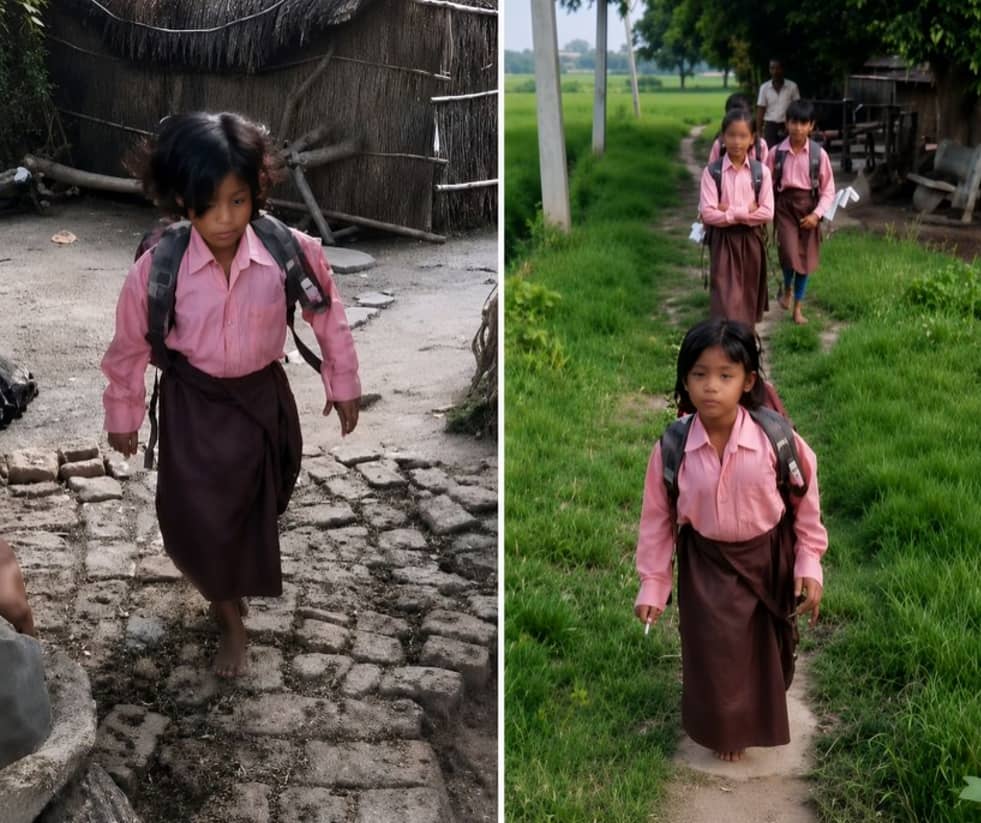
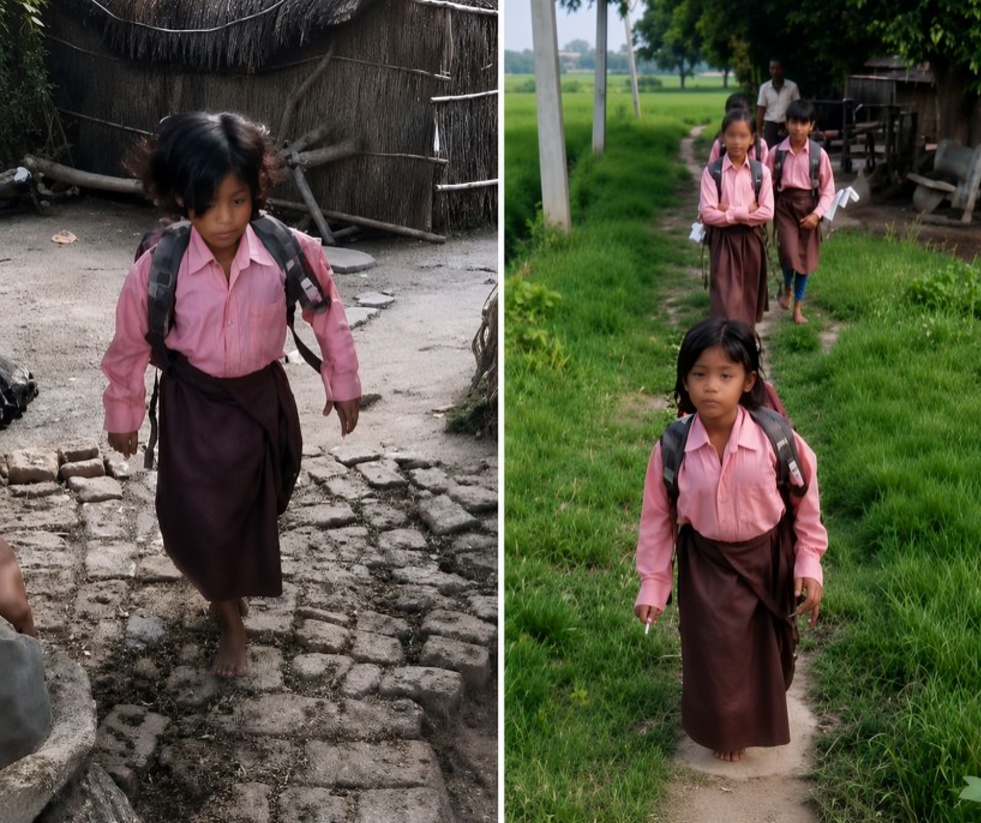
he Uttar Pradesh government has stepped in to provide medical support to seven-year-old Ragini, a Class 1 student from Ballia district, after her difficult journey to school attracted public attention. The child had been travelling nearly 400 metres from her home to Primary School Digheda, sometimes hopping on one leg and at other times receiving assistance from family members.
District Magistrate Mangla Prasad Singh said the administration had arranged for a medical examination of the girl. A team that included an orthopaedic surgeon and a senior doctor examined Ragini, following which she was referred for two tests at Banaras Hindu University in Varanasi. The medical assessment will help doctors determine the appropriate course of treatment.
According to the district magistrate, the Uttar Pradesh government will bear the expenses related to Ragini's treatment. Singh said efforts would be made to provide appropriate treatment, including surgery if recommended by doctors. The final medical decision will depend on the findings of the examinations and the advice of the medical team.
Ragini lives in Ranipur village in the Manier area of Ballia district. Her school is located approximately 400 metres from her home. Despite the difficulty caused by her injured leg, the young student continued to attend school. Her story gained attention after information about her daily journey emerged on social media.
According to her mother, Babita Devi, Ragini suffered a serious leg injury when she was around six months old. She was injured in a road accident while her mother was carrying her to obtain medicines. The injury severely affected the child's leg, and the family subsequently faced difficulties in arranging further treatment because of their financial circumstances.
Ragini's family said the child's determination to continue her education remained strong despite her physical difficulties. Her mother said Ragini would watch other children going to school with their bags and express her desire to study as well. At times, family members accompanied her, while on other occasions she made the journey by hopping on one leg.
The district administration became involved after the girl's situation was brought to its attention. The district magistrate initially directed officials, including the district empowerment officer for persons with disabilities and a doctor, to visit the family and assess her condition. Singh later visited Ragini's home and spoke with her mother and grandfather about her medical needs and family circumstances.
During the visit, the administration also provided assistance intended to support Ragini's mobility and education. Officials handed over two tricycles, books, a school bag and other items. The assistance was provided after the administration assessed the girl's immediate needs.
The case has also drawn attention to the difficulties that children with mobility challenges can face while accessing education. Although Ragini's school was relatively close to her home, the condition of her leg made even the short journey difficult. Her experience highlights the importance of ensuring that children with disabilities or serious physical limitations can attend school safely and receive appropriate support.
The district administration also examined the condition of the road near the village. Reports said the road was in poor condition, with officials instructed to take steps towards its improvement. The administration also informed the family that funds had been sanctioned for the construction of a toilet at their home.
The government's intervention is focused on both Ragini's medical treatment and her ability to continue her education. The immediate priority is the medical evaluation at Banaras Hindu University. Once the test results are available, doctors will determine whether surgery or another form of treatment is appropriate.
The case also illustrates the role of district administrations in responding to individual welfare concerns when they are brought to official attention. In Ragini's case, officials visited her home, spoke with her family, assessed her requirements and arranged medical evaluation.
The state government's decision to cover the treatment costs is particularly significant for the family because her mother said they had been unable to afford further medical treatment. Ragini's father works as a labourer, and the family has faced financial difficulties in meeting the expenses associated with her condition.
At the same time, the administration's support for her education is important because the child's physical condition should not prevent her from continuing her studies. Providing mobility assistance and educational materials can help reduce some of the immediate barriers she faces.
The next stage will depend on the medical assessment at Banaras Hindu University. Doctors will review the test results and determine what treatment may be required. The district administration has indicated that the government will meet the expenses associated with the treatment.
Ragini's story has therefore moved from a personal struggle to a case involving government intervention and medical assistance. What began as attention around a young student travelling to school under difficult circumstances has resulted in the district administration taking steps towards medical care, mobility support and educational assistance.
The case also underlines the broader need for accessible education and appropriate support for children facing physical challenges. For Ragini, the immediate focus remains receiving proper medical care while continuing her education.
The Uttar Pradesh government's intervention is expected to provide the family with financial relief during the treatment process. Further developments will depend on the medical tests and the recommendations made by specialists at Banaras Hindu University.