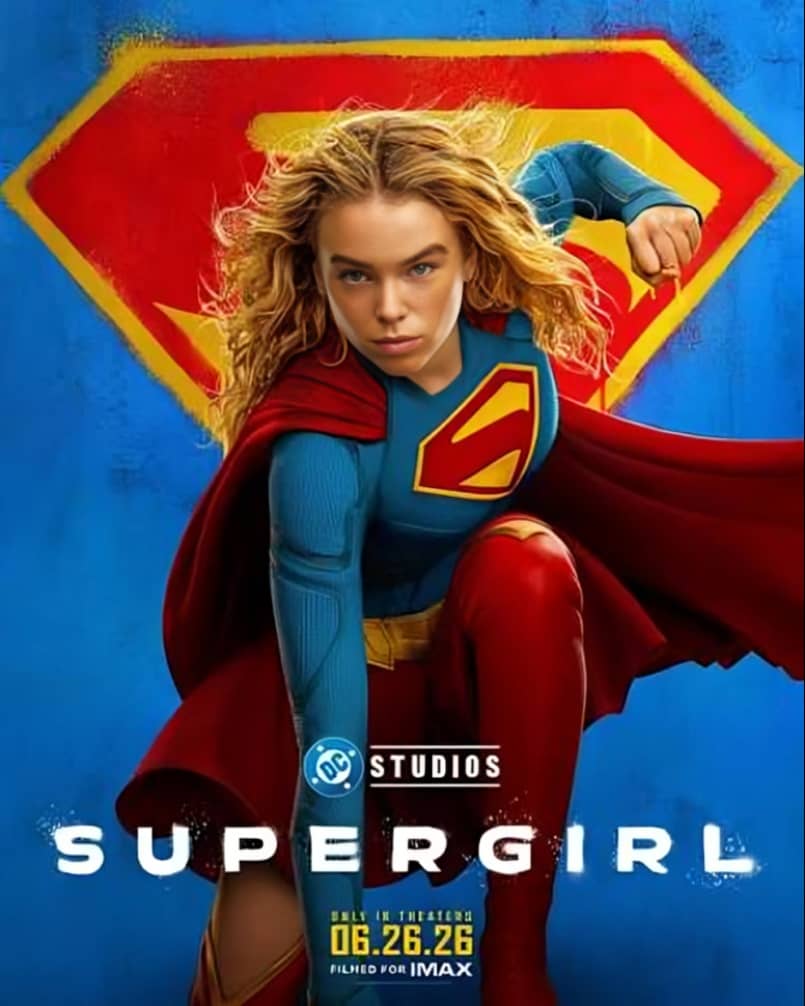

The announcement of Milly Alcock's debut as Supergirl in the evolving DC cinematic universe has sparked renewed discussion about the historical box office performance of female led superhero films. The debate has resurfaced as audiences and industry observers examine whether movies centered on female superheroes have traditionally faced greater challenges at the global box office.
Over the past two decades, superhero films have become one of the most successful genres in the entertainment industry. However, discussions surrounding female led entries have often focused on their commercial viability. Some critics have argued that such films face additional hurdles, while others point to numerous successful examples that challenge that perception.
One of the most notable success stories is Wonder Woman, which became a major global hit upon its release. The film received strong reviews from critics and audiences and generated significant box office revenue worldwide. Its success demonstrated that female led superhero stories could attract large audiences when supported by compelling storytelling, strong performances, and effective marketing.
Similarly, movies such as Captain Marvel achieved substantial commercial success and became part of the highest grossing superhero franchises. The film's strong global earnings indicated that audiences were willing to support female centered superhero narratives on a large scale.
At the same time, some female led superhero films have underperformed commercially. Recent examples include The Marvels, which faced challenges at the global box office despite being connected to one of the industry's most successful cinematic franchises. Other projects across different studios have also struggled to achieve expected financial results.
Industry experts caution against drawing broad conclusions from individual successes or disappointments. They argue that the performance of superhero films is influenced by multiple factors, including script quality, franchise momentum, audience interest, release timing, competition from other films, and marketing strategies.
Analysts note that male led superhero films have also experienced both major successes and significant failures over the years. Several high profile superhero movies featuring male protagonists have underperformed despite belonging to established franchises. This suggests that box office outcomes cannot be attributed solely to the gender of the lead character.
The arrival of Milly Alcock as Supergirl comes at an important moment for DC Studios as it seeks to expand and redefine its cinematic universe. Fans and industry observers are closely watching upcoming projects to see how new characters and storylines will be received by global audiences.
Supergirl has long been one of the most recognizable characters in comic book history. Her introduction into a new generation of films represents an opportunity for the studio to explore fresh narratives while attracting both longtime fans and new viewers.
The broader discussion surrounding female led superhero movies continues to evolve as the entertainment industry becomes more diverse and audiences increasingly seek a wider range of stories and characters. Recent years have shown that audience interest is often driven by the overall quality of a film rather than traditional assumptions about who leads the story.
As anticipation grows for Milly Alcock's portrayal of Supergirl, industry observers believe the film's performance will contribute to ongoing conversations about representation, storytelling, and commercial success in the superhero genre. Ultimately, the history of superhero cinema suggests that strong creative execution remains the most important factor in determining box office results.