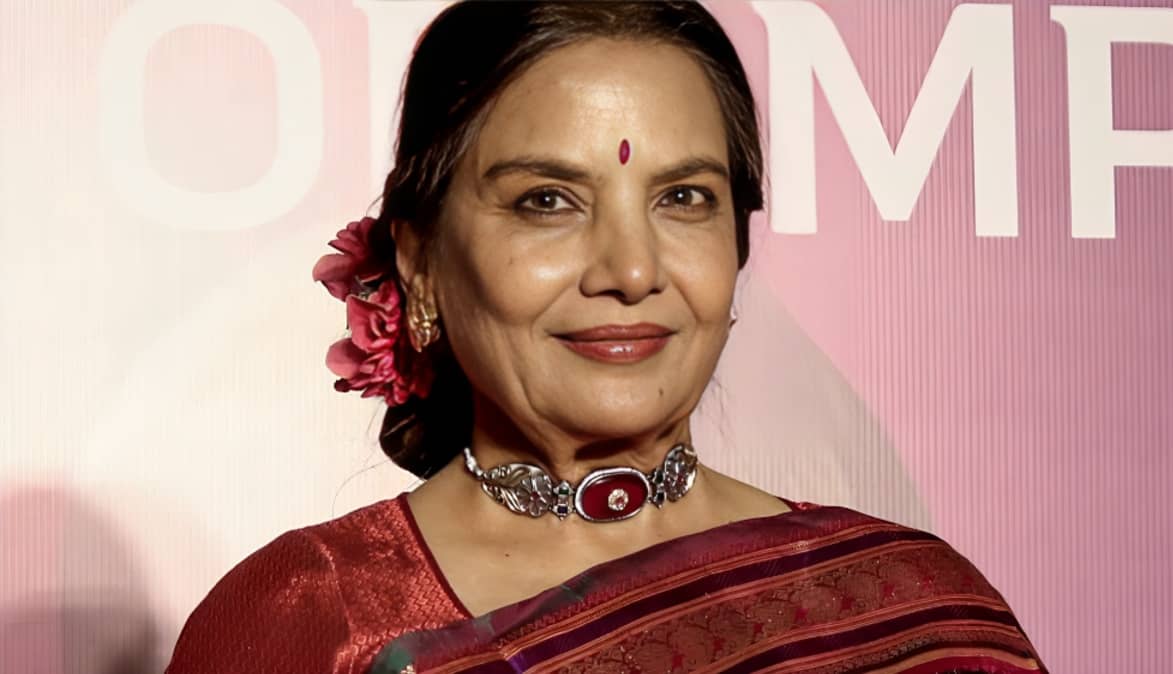
Veteran actress Shabana Azmi has once again drawn attention to the way women are portrayed in Hindi cinema, particularly through item numbers and highly sensual dance sequences.
Azmi has consistently maintained that she does not oppose women expressing or celebrating their sensuality. Her concern, she has explained, is with situations where sensuality is used as a justification for presenting women as objects for visual consumption.
The actress has previously spoken extensively about the subject and has criticised the way certain film songs use camera movements, lyrics and fragmented images of female performers. According to Azmi, there is an important distinction between portraying a woman as confident and sensual and presenting her primarily for the pleasure of the male gaze.
Her comments have become part of a broader conversation about the representation of women in Indian cinema. Over the years, Bollywood has featured numerous dance numbers in which actresses are presented in glamorous costumes and highly choreographed performances. While such songs have often become popular with audiences, they have also attracted criticism over their treatment of female performers.
Azmi has argued that the intention behind a scene is important. A sensual scene, according to her view, does not automatically amount to objectification. The manner in which a filmmaker frames the performer, edits the sequence and presents the character can change the meaning of the scene.
She has previously used the example of Katrina Kaif’s bikini scene in Zindagi Na Milegi Dobara to explain this distinction. Azmi noted that the scene could have been filmed differently, with the camera focusing excessively on specific parts of the actress’s body. Instead, the sequence was presented in a way that maintained the character’s context and allowed the audience to see her as a complete person.
For Azmi, this difference is central to the debate surrounding sensuality in cinema. She believes that a woman can be presented as attractive, confident and sensual without the filmmaking turning her into an object.
Her criticism has particularly focused on item numbers that have little connection to the main narrative of a film. She has argued that when such sequences are inserted primarily to attract attention or create commercial appeal, the female performer can become a visual commodity rather than an integral part of the story.
Azmi has also expressed concern about the influence of popular film songs on young audiences. In a 2026 discussion, she spoke about children singing lyrics from popular dance numbers and said this was troubling because the words and their implications can sometimes be overlooked when audiences treat such songs simply as entertainment.
The actress has maintained that the debate should not be reduced to whether women are allowed to appear glamorous or sensual on screen. Instead, she believes the larger issue is how women are represented and whether they retain agency within the scene.
The concept of the male gaze has become an important part of discussions about gender representation in cinema. It refers broadly to the way visual media can frame women primarily from a heterosexual male perspective, potentially reducing female characters to objects of visual attention.
Azmi has argued that certain filmmaking techniques can contribute to this problem. Camera movements that focus disproportionately on specific parts of a woman's body, along with suggestive lyrics and voyeuristic presentation, can influence how audiences perceive the character.
At the same time, Azmi has acknowledged that cinema has the ability to celebrate women's sexuality and individuality. Her objection is therefore not to sensuality itself but to the commercial and visual treatment that can turn sensuality into objectification.
The veteran actress has been vocal about women's rights and social issues throughout her career. She has also used her public platform to discuss gender equality, representation and the cultural influence of cinema.
Her views come at a time when the Hindi film industry is seeing changing representations of women. Female actors are increasingly taking on a wider range of roles, including characters that are complex, independent and professionally ambitious. The age and career opportunities available to women in mainstream cinema have also expanded compared with previous decades.
Azmi has previously acknowledged these developments while continuing to express concern about certain aspects of popular cinema. She has said that women today have access to a broader range of roles, but has remained critical of item numbers and the way some of them present female performers.
The discussion also raises questions about the responsibilities of filmmakers. Directors, cinematographers, writers and producers all influence how a female character is presented to audiences. The same performance can appear very different depending on the framing, editing, music, lyrics and narrative context.
Azmi's comments suggest that filmmakers should consider these factors while creating sensual or glamorous sequences. Her argument is that visual appeal and artistic expression can coexist with respect for the performer and the character.
The debate is not limited to Bollywood. Questions surrounding the representation of women, sexualisation and the male gaze have been discussed across film industries worldwide. Audiences have also become increasingly vocal about how women are depicted on screen.
Social media has further changed the conversation. Film sequences that may once have received little scrutiny can now generate immediate public discussion. Audiences frequently debate whether a particular scene empowers a character or simply uses the actor's appearance for commercial attention.
Azmi's long-standing position adds another perspective to this discussion. Rather than rejecting sensuality in cinema altogether, she has repeatedly emphasised the difference between sensual expression and objectification.
Her comments also highlight the importance of context. A woman appearing in revealing clothing or performing a sensual dance does not automatically mean that she is being objectified. The way the scene treats her character, the camera's perspective and the purpose of the sequence can all influence how it is perceived.
This distinction has become particularly relevant as Indian cinema explores more diverse portrayals of women. Modern audiences increasingly expect female characters to have agency, individuality and meaningful roles within narratives.
Shabana Azmi's remarks therefore continue to contribute to a wider discussion about cinema and gender representation. Her position is that sensuality can be celebrated, but it should not be used as a cover for reducing women to objects.
The veteran actor's comments have once again placed the spotlight on the responsibilities of the film industry and the choices made while portraying women on screen.
Ultimately, the debate surrounding item numbers and sensuality reflects a larger question about how cinema influences cultural attitudes. Azmi's argument is that filmmakers can create visually appealing and sensual performances without compromising the dignity or agency of female performers.
Her views continue to generate discussion because the question of representation remains relevant to both filmmakers and audiences. As Bollywood evolves, the distinction between celebrating a woman's sensuality and objectifying her is likely to remain an important part of conversations about gender and cinema.