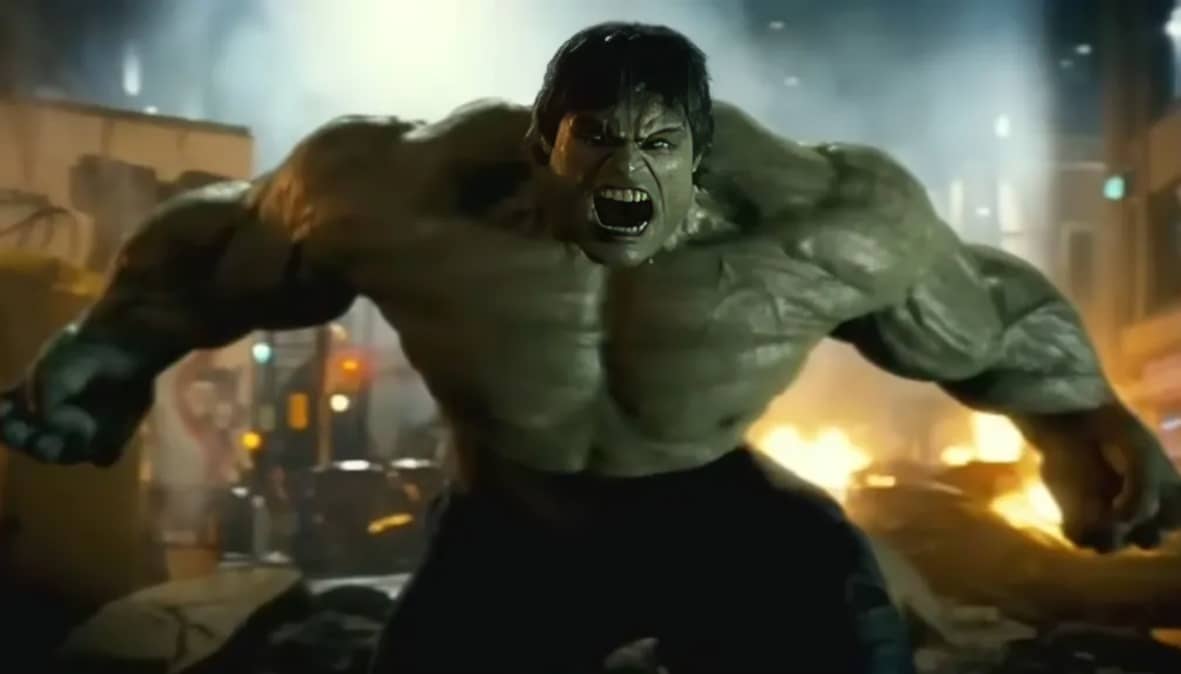

Director Louis Leterrier has revealed new details about the original version of The Incredible Hulk, suggesting that the 2008 Marvel film was initially planned as a darker and more expansive story with stronger connections to the wider Marvel Cinematic Universe.
The Incredible Hulk was released in 2008 and starred Edward Norton as Bruce Banner, the scientist who transforms into the powerful Hulk. The film arrived during the early development of the Marvel Cinematic Universe, shortly after the release of Iron Man.
Although The Incredible Hulk eventually became part of the MCU's larger continuity, several elements from the original production were changed or removed before the film reached theatres. Leterrier has now discussed some of the material that did not make it into the final version.
According to the director, the original cut was longer and had a darker tone. Some scenes reportedly explored Bruce Banner's character and his relationship with the Hulk in greater detail. The earlier version also contained additional material intended to strengthen connections between the film and other Marvel stories.
The timing of the movie was important for the development of the MCU. Marvel Studios was beginning to establish a connected universe in which individual superhero films would eventually lead to larger crossover stories. Iron Man had already introduced audiences to the idea, while The Incredible Hulk was positioned as another part of the expanding franchise.
One of the most notable aspects of The Incredible Hulk was its connection to the Avengers storyline. The film included a post credit scene featuring Tony Stark, played by Robert Downey Jr, who appeared to discuss the creation of a team with General Thaddeus Ross. The sequence helped establish the direction Marvel was taking with its interconnected films.
However, Leterrier's comments suggest that the planned connections could have been even stronger. Material from the earlier version reportedly included additional references and characters that were eventually removed.
The director has previously spoken about the production and the challenges involved in bringing the Hulk to the screen. The character presented particular difficulties because the filmmakers had to balance computer generated effects with a human story centred on Bruce Banner.
Edward Norton also had a significant role in developing the screenplay. The final movie focused on Banner's attempt to control his transformation while being pursued by military forces and confronted by Emil Blonsky, who eventually becomes the Abomination.
The darker version of the film reportedly explored some of these themes more extensively. A longer cut could have provided additional context for Banner's psychological struggle and the consequences of his transformation.
The film's connection to other Marvel characters was also an important part of its place within the MCU. While later Marvel films developed a much larger interconnected storyline, the early movies relied on smaller references and appearances to establish continuity.
The presence of Tony Stark in The Incredible Hulk was particularly significant because it linked the movie directly to Iron Man and the emerging Avengers project. At the time, audiences were only beginning to understand the scale of Marvel's plans.
The Avengers was eventually released in 2012, bringing together Iron Man, Captain America, Thor, Hulk, Black Widow and Hawkeye. Mark Ruffalo subsequently took over the role of Bruce Banner from Edward Norton.
Despite the change in actor, The Incredible Hulk remained part of the MCU's history. Several elements from the film continued to influence later stories, particularly the character of General Ross and the introduction of the Abomination.
The revelations about the original cut are therefore significant for fans interested in how the MCU developed during its earliest years. The film was made before Marvel had fully established the formula that would later define its interconnected storytelling.
The darker material reportedly reflected a different approach to the character. Hulk stories often involve themes of anger, isolation, fear and loss of control, and a darker tone can allow filmmakers to explore those ideas more deeply.
The theatrical version, however, had to balance those elements with the expectations of a major studio superhero film. Decisions about pacing, runtime and audience accessibility can result in substantial changes between an early cut and the final release.
Deleted scenes and alternate versions are common during major film productions. Directors may shoot more material than is ultimately required, while studio decisions can affect the final structure of a movie. Scenes may be removed because they slow the story, create continuity problems or no longer fit the desired tone.
In the case of The Incredible Hulk, the removal of additional MCU connections may also have reflected the fact that Marvel's long term plans were still evolving. The studio was developing its shared universe step by step, and some early ideas did not necessarily fit into later plans.
The film nevertheless played an important role in establishing the MCU. It introduced audiences to another major Marvel character and demonstrated that different superhero stories could exist within the same cinematic universe.
The appearance of Robert Downey Jr's Tony Stark helped reinforce that idea. It also created anticipation for the eventual Avengers crossover.
Over time, Marvel Studios expanded the universe through numerous films and television projects, introducing new heroes, villains and interconnected storylines. The early movies remain important because they established the foundation for that expansion.
Leterrier's comments offer fans an opportunity to consider what the MCU might have looked like if more of the original material had survived into the final film.
A darker and longer version could potentially have given audiences a different understanding of Bruce Banner and his relationship with the Hulk. Additional connections to other characters could also have changed how the movie fit into the broader Marvel timeline.
However, the released version remains the official theatrical presentation of the film, and not every element from an earlier cut necessarily represented a completed storyline.
The director's revelations nevertheless provide an interesting look behind the scenes at one of Marvel's earliest cinematic projects. They also demonstrate how much a major franchise film can change during production and editing.
For MCU fans, the information is particularly notable because The Incredible Hulk was created at a time when Marvel was still building the interconnected universe that would eventually become one of the biggest franchises in modern cinema.
The film's darker original concept, longer runtime and reportedly stronger Avengers connections provide another perspective on the creative process behind the early MCU.