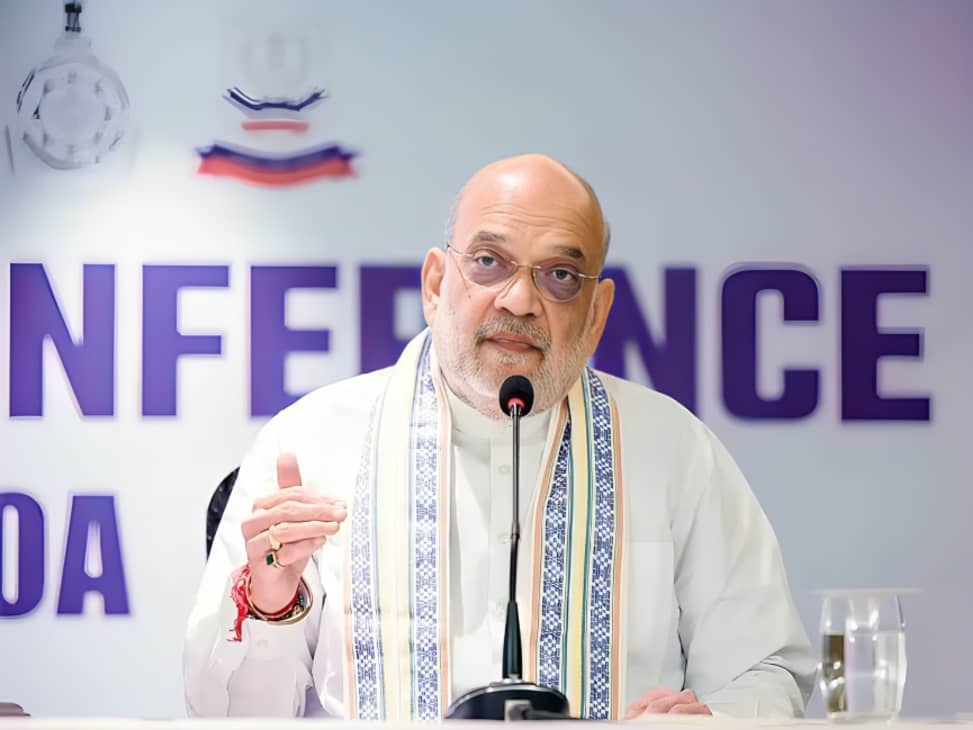
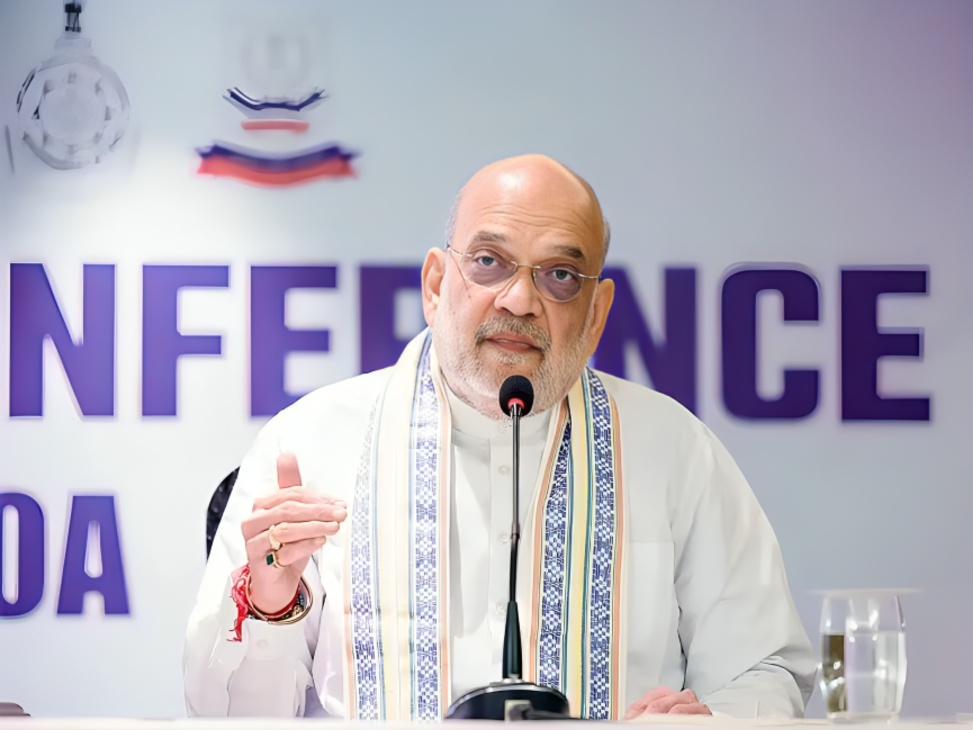
Union Home Minister and Minister of Cooperation Amit Shah has described India’s western region as the WEST engine of the country’s economic growth, highlighting the region’s contribution to finance, trade, startups, semiconductors, tourism and the blue economy.
Shah made the remarks while addressing the 28th meeting of the Western Zonal Council in Panaji, Goa, on September 7. The meeting was attended by Goa Chief Minister Pramod Sawant, Gujarat Chief Minister Bhupendra Patel, Maharashtra Chief Minister Devendra Fadnavis and the administrator of Dadra and Nagar Haveli and Daman and Diu, Praful K Patel, along with senior officials from the central and state governments.
Explaining his WEST formulation, Shah said the letter W represents wealth and finance generated in the region. E represents exports and ports, while S refers to startups and semiconductors. T represents tourism and the blue economy. According to Shah, the western region has a major share in these areas and therefore plays an important role in India's broader economic development.
The Western Zonal Council consists of Gujarat, Maharashtra and Goa, along with the Union Territory of Dadra and Nagar Haveli and Daman and Diu. Shah described the region as one of the country's largest economic, industrial and financial centres.
During his address, Shah linked the economic performance of the western region with India's overall growth. He referred to India's reported 7.8 percent growth in the first quarter of the financial year 2026 to 2027 and said the western states and Union Territory had made a significant contribution to the national growth story.
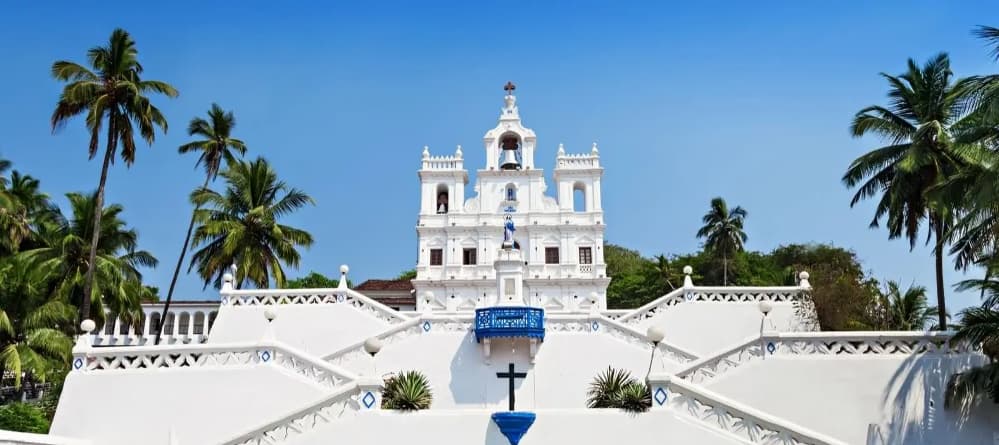
Goa was one of the examples highlighted by the Home Minister. Shah said more than one crore tourists visit Goa annually, including around five lakh foreign tourists. He also said tourism contributes about 16 percent of Goa's Gross State Domestic Product. The figures were cited to underline the importance of tourism to the state's economy and its contribution beyond the state's relatively small geographical size.
Maharashtra's startup ecosystem was another major point highlighted during the meeting. Shah said the state has 33,872 startups and has emerged as a leading centre for entrepreneurship and innovation. Maharashtra is also home to Mumbai, which has long served as India's financial capital. Shah said Mumbai is increasingly developing as a hub for global capital, further strengthening the state's position within India's financial and business landscape.
Gujarat's growing semiconductor sector was also highlighted. Shah referred to Dholera as an emerging semiconductor hub, reflecting the state's increasing focus on advanced manufacturing and technology-related industries. The development of semiconductor infrastructure is part of India's wider effort to build domestic capabilities in chip manufacturing and reduce dependence on overseas supply chains.
Ports and logistics also form an important part of the economic profile of western India. Shah highlighted Gujarat's Mundra Port for its cargo-handling capacity and referred to Deendayal Port as one of the country's leading ports in terms of cargo volume. The presence of major ports provides the region with strong connections to domestic and international markets and supports manufacturing, exports and logistics activity.
The Home Minister's remarks came during a meeting that covered several economic, administrative and security-related issues affecting the western region. The Western Zonal Council discussed subjects including railway development, environmental clearances, banking access, food safety, healthcare schemes, electricity supply, urban planning, agricultural credit societies, cybercrime and digital infrastructure.
The meeting also reviewed issues related to fast-track courts for cases involving crimes against women and children, the Emergency Response Support System and implementation of various central government programmes. These discussions demonstrate that the Zonal Council functions not only as a platform for resolving disputes between states but also as a mechanism for monitoring development and governance issues.
Shah said the Zonal Council mechanism has become more effective in addressing inter-state matters. According to figures cited during the meeting, 1,893 issues have been discussed through the council process, with 1,445 reported as resolved. He attributed the progress to cooperation between state governments, Union Territories, central ministries and the Inter-State Council Secretariat.
The Home Minister also said that there are currently no major disputes among the states of the western region. Several inter-state issues, including water-related disputes, have reportedly been resolved through discussions under the Zonal Council framework.
Beyond economic issues, Shah called on western states to play a leading role in implementing India's new criminal laws and strengthening the country's campaign against narcotics. He also stressed the importance of improving cybercrime prevention and strengthening digital security systems.
Coastal security was another major issue discussed during the meeting. Shah said the Ministry of Home Affairs would give serious attention to coastal security over the next two years. The focus is significant for western India because the region includes a long coastline and several major ports that are important to India's trade and economic activity.
Shah's description of the western region as the WEST engine therefore combines several sectors rather than focusing on a single industry. Finance and wealth creation are concentrated around major commercial centres such as Mumbai, while Gujarat contributes through manufacturing, ports and emerging semiconductor investments. Maharashtra has a large startup ecosystem, while Goa's tourism industry remains a significant contributor to its economy.
The region's importance is also connected to its position as a major gateway for India's international trade. Large ports, industrial centres, financial institutions and tourism destinations together create a diverse economic base. The combination of traditional industries and emerging sectors such as semiconductors and startups is expected to remain important as India seeks to expand its manufacturing and technology capabilities.
The discussions at the Western Zonal Council also highlight the importance of cooperation among states and the Union government. Issues involving transport, infrastructure, environmental approvals, banking, security and digital systems often require coordination across administrative boundaries.
Shah's WEST formulation places these different sectors within a single economic narrative and presents the western region as a major contributor to India's growth. While the assessment reflects the Union government's view of the region's economic role, the figures and examples cited by Shah provide an overview of the sectors that currently drive economic activity across western India.
The western region's future economic growth is likely to depend on continued investment in infrastructure, technology, logistics, finance, tourism and manufacturing. The development of semiconductor facilities in Gujarat, the expansion of startup activity in Maharashtra, the continued importance of Mumbai's financial sector and Goa's tourism economy are among the areas identified by Shah as significant components of the region's contribution.
The 28th Western Zonal Council meeting therefore brought together economic development, governance and security priorities for the region. Shah's WEST engine description placed wealth, exports, startups and tourism at the centre of the western region's role in India's economic growth, while the council's broader discussions focused on improving coordination and addressing development-related challenges.