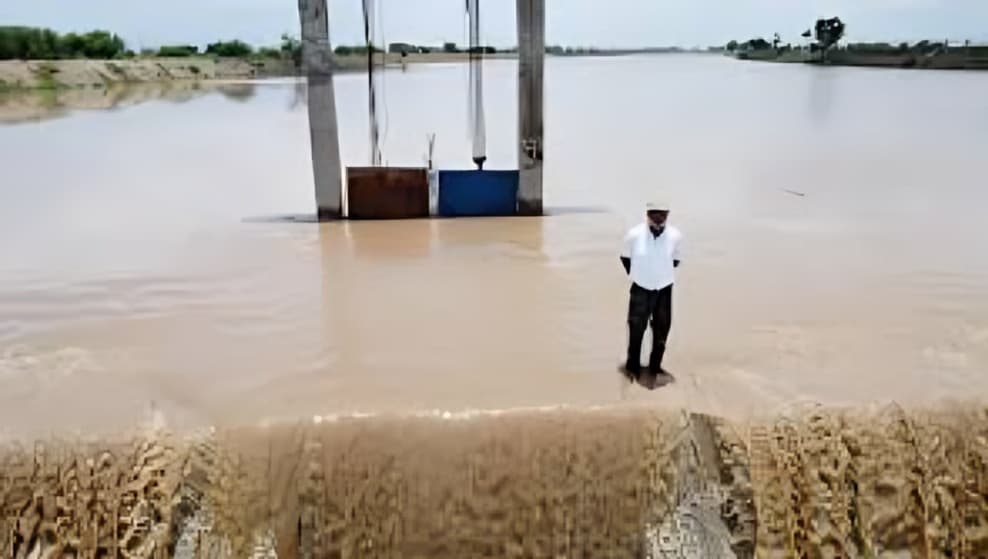
Gujarat is facing severe flooding as the Sabarmati River has risen to critical levels, inundating the Kheda-Dholka highway and surrounding areas. Heavy rainfall across the region, combined with water release from upstream reservoirs, has caused the river to overflow, affecting transport, agriculture, and residential communities. The rising water has disrupted normal life and prompted authorities to issue warnings for commuters and nearby villages.
The Kheda-Dholka highway, a major route connecting several districts, has been completely submerged, forcing authorities to halt traffic and redirect vehicles. Visuals from the area show water covering the entire roadway, making it impassable for cars, buses, and two-wheelers. Officials are monitoring the situation constantly, warning residents to avoid the highway until the water recedes and safety is restored.
Villages near the river are at risk of severe waterlogging, with some low-lying areas already partially submerged. Families have been advised to relocate to safer ground, and temporary shelters have been prepared for those affected. Emergency response teams are working to ensure the safety of residents, providing essential supplies such as food, drinking water, and medical aid to vulnerable communities.
The floods have caused widespread disruption in agricultural activities. Crops standing in fields near the riverbanks have been damaged or destroyed, threatening the livelihoods of farmers. Livestock owners are also facing challenges as animals are moved to higher ground to prevent loss. Local markets and businesses have experienced disruptions, with transportation difficulties affecting the supply of goods and essential services.
Authorities have deployed disaster management teams to assess damage, conduct rescues if needed, and coordinate relief operations. The state government has appealed to residents to remain vigilant and cooperate with emergency measures. Relief centers have been established in nearby towns to accommodate displaced individuals, and additional personnel have been mobilized to monitor flood-prone areas.
Experts point out that excessive rainfall in catchment areas, combined with rapid urban development along the riverbanks, has contributed to the severity of flooding. There is also growing concern over soil erosion and weakening of embankments, which may exacerbate the impact of rising water levels. Urban planning and long-term river management measures have been recommended to mitigate future risks.
The flooding of the Kheda-Dholka highway highlights the immediate challenges faced by the state, from ensuring transportation connectivity to safeguarding residents and property. Authorities continue to provide regular updates to the public through alerts and advisories, urging caution and cooperation. As waters slowly begin to recede in some areas, recovery efforts are expected to be extensive, requiring coordinated action from government agencies, local communities, and disaster management teams.
The Sabarmati River flooding serves as a reminder of the vulnerability of infrastructure and communities in flood-prone regions. While emergency measures provide immediate relief, long-term planning, including better drainage systems, embankment reinforcement, and sustainable urban development, will be essential to reduce the impact of future floods.