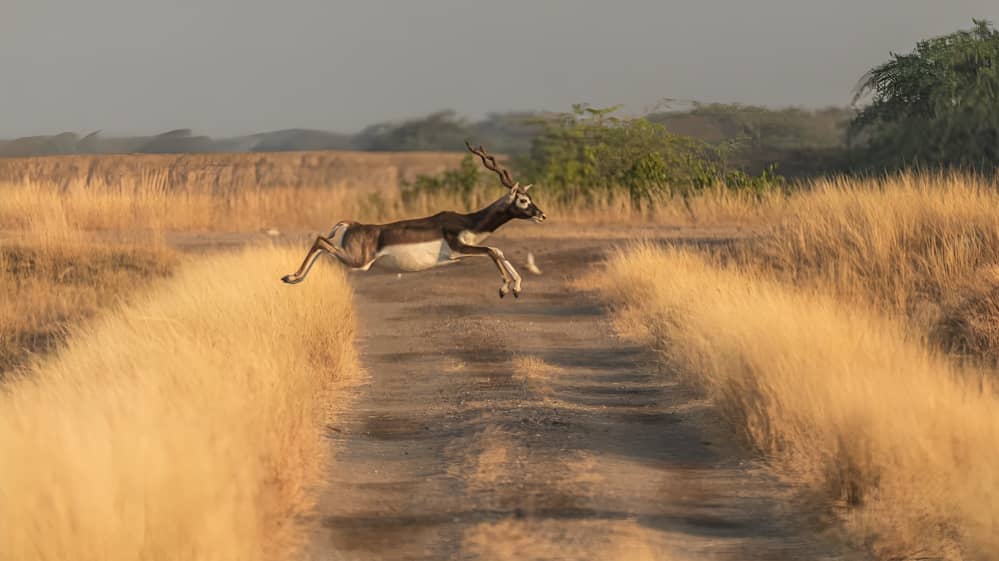
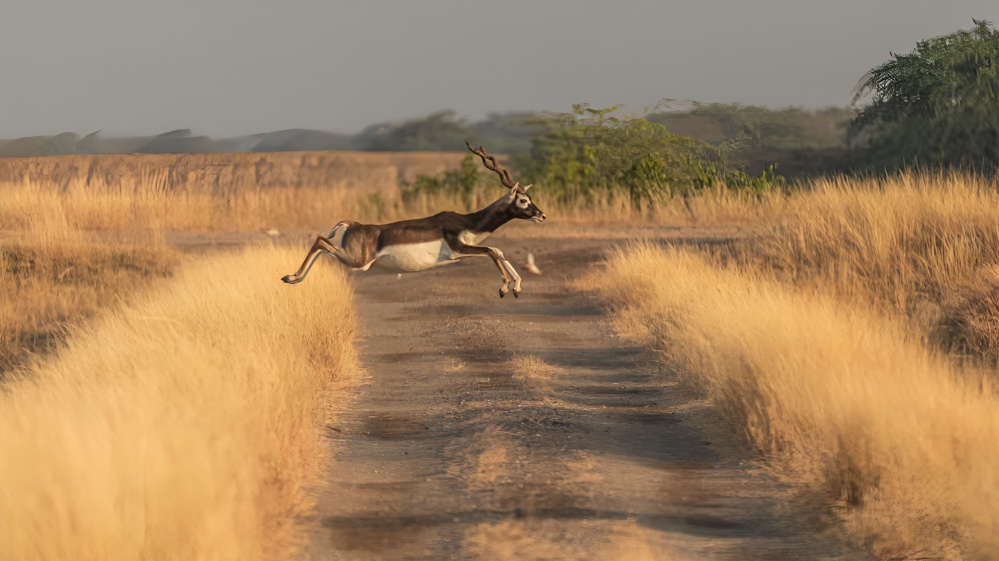
Velavadar National Park, located in Gujarat’s Bhavnagar district, is gaining recognition as a model for blackbuck conservation in India. Known for its vast grasslands and diverse wildlife, the park has successfully implemented conservation strategies that not only protect blackbucks but also promote eco-tourism and benefit local communities.
Blackbucks, once threatened by habitat loss and poaching, have seen significant population growth in the park due to dedicated conservation efforts. Authorities at Velavadar National Park have implemented measures such as habitat restoration, anti-poaching patrols, and scientific monitoring to ensure the long-term survival of this iconic species. The park provides a safe and suitable environment for breeding, feeding, and social interactions among blackbucks, contributing to stable population growth.
Beyond conservation, Velavadar has become a hub for eco-tourism, attracting wildlife enthusiasts, photographers, and researchers. Increased tourism has opened new avenues for local employment. Villagers in surrounding areas are employed as park guides, hospitality staff, craft sellers, and drivers, providing a steady source of income while promoting awareness of wildlife conservation. Community involvement has strengthened the bond between local populations and the park authorities, creating a cooperative framework for environmental protection.
Educational programs and workshops organized by the park aim to engage students and visitors, highlighting the importance of blackbuck conservation and the ecological value of grasslands. These programs also emphasize responsible tourism practices, ensuring minimal disturbance to wildlife while enhancing visitor experience.
The park’s efforts have also drawn attention at the national level, with conservationists recommending Velavadar as a benchmark for similar initiatives across India. Its success demonstrates that biodiversity protection can coexist with socio-economic development, serving as an example for other protected areas.
Authorities continue to focus on long-term strategies, including habitat management, community participation, and monitoring of wildlife health. Anti-poaching measures remain a top priority, with regular patrolling and surveillance to deter illegal hunting. Simultaneously, eco-tourism guidelines ensure that visitors respect the natural environment, maintaining the delicate balance between tourism and conservation.
In conclusion, Velavadar National Park exemplifies how effective wildlife conservation, especially for endangered species like the blackbuck, can be harmonized with local economic development. By providing safe habitats, promoting community employment, and fostering awareness, the park is setting a model for sustainable conservation practices. The success of Velavadar underscores the importance of integrating ecological protection with human development for the benefit of both wildlife and local populations.